How to Fix Uneven Pulley Movement: Step-by-Step
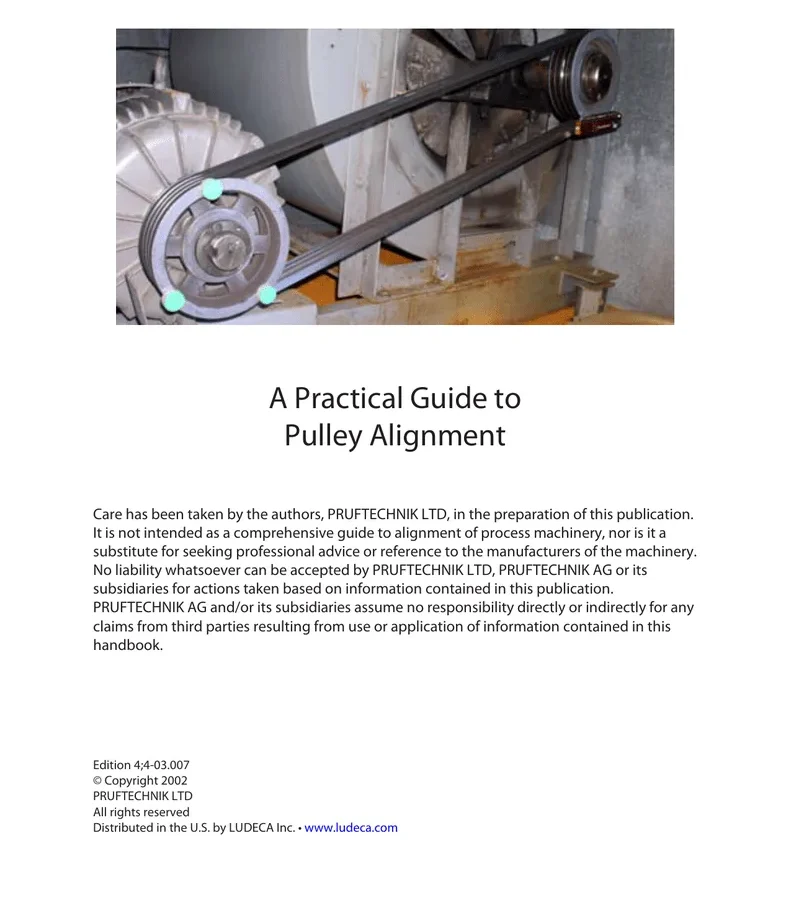
A jerky, wobbling, or noisy sheave disrupts your entire drive system. Learning how to fix uneven pulley movement starts with identifying whether the issue is mechanical misalignment, bearing wear, or improper cable tension. Addressing the mechanical fault immediately prevents snapped cables, damaged belts, and premature motor failure.
According to drive design standards from the American National Standards Institute, an angular misalignment of just 0.5 degrees can accelerate component wear by over 300 percent. Pinpointing the root cause requires a systematic diagnostic approach before you start turning any adjustment bolts.
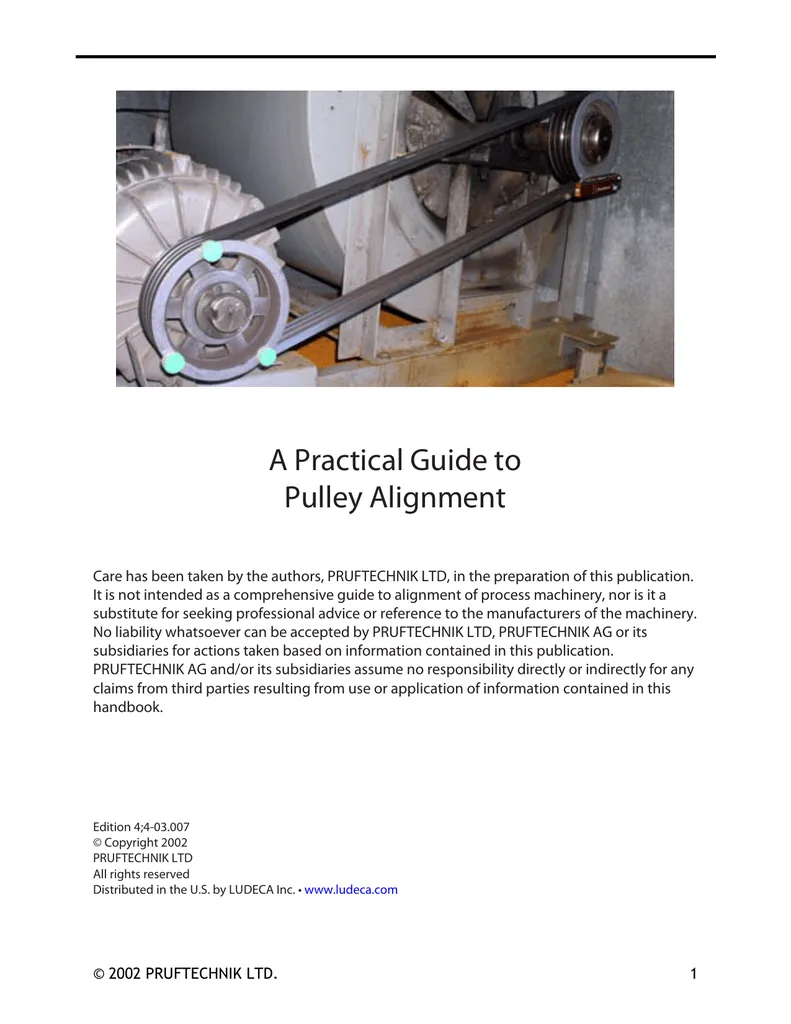
Image source: Web (Bing) / storage.googleapis.com (Web image (fair-use with source credit))
Quick Answer
To fix uneven pulley movement, first inspect the sheave for wobble or offset. Release cable or belt tension completely. Check the internal bearing for rough spots or play.
Align the pulley faces using a straightedge or laser tool. Adjust mounting bolts or add shims to level the bracket. Re-tension the drive to manufacturer specifications.
Quick Diagnostic: What Uneven Pulley Movement Actually Means
Uneven pulley movement describes any condition where a pulley wheel fails to rotate cleanly along its intended rotational plane. When a sheave tracks off-center, it creates uneven friction, erratic resistance curves, and accelerated groove wear.
Mechanically, this issue falls into three distinct categories:
- Axial wobble: The pulley weaves side-to-side during rotation, often called lateral runout.
- Tracking drift: The belt or cable rides up against one flange instead of staying seated in the groove center.
- Rotational drag: The pulley binds intermittently, creating a jerky motion known as stick-slip.
| Symptom | Primary Cause | Immediate Check |
|---|---|---|
| Pulley wobbles side to side | Bent shaft or loose hub bushing | Measure axial runout with a dial indicator |
| Belt climbs the sheave flange | Angular or parallel shaft misalignment | Place a straightedge across both pulley faces |
| Cable binds under heavy load | Seized internal bearing or groove wear | Spin pulley by hand with tension removed |
| Squealing during startup | Low tension or glazed belt surface | Measure belt deflection between spans |
Step 1: Isolate the Motion Failure (Wobble, Drift, or Resistance)
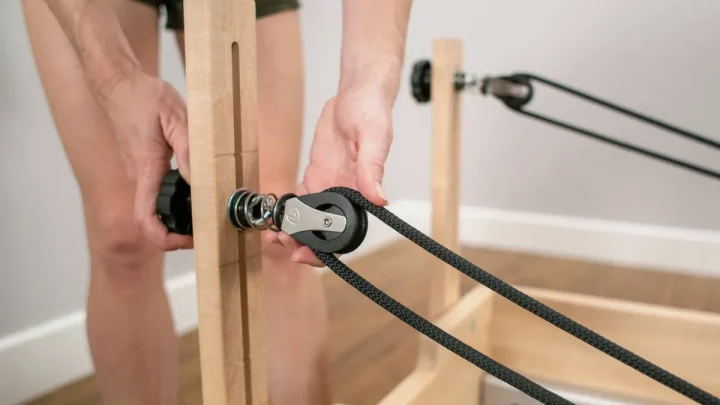
Begin by removing all drive tension. Take the belt or cable off the sheave completely. This separates external load forces from mechanical faults inside the pulley hub itself.
Spin the bare pulley by hand. A healthy pulley should rotate smoothly with zero audible grinding, clicking, or gritty resistance. If the rotation stops abruptly or feels notched, the internal rolling elements are damaged.
Next, grip the outer rim of the sheave and push back and forth along the shaft axis. Any detectable play or rocking motion indicates excessive bearing clearance or a loose hub fit.
Finally, check dynamic runout. Reinstall the drive and rotate the system slowly by hand while watching the outer rim against a fixed reference point. If the rim moves toward and away from the reference point by more than 0.015 inches (0.38 mm), the issue is axial runout.
If the rim stays true but the belt walks toward one edge, the problem is system alignment.
Step 2: The Alignment Decision Tree (Parallel vs. Angular Misalignment)
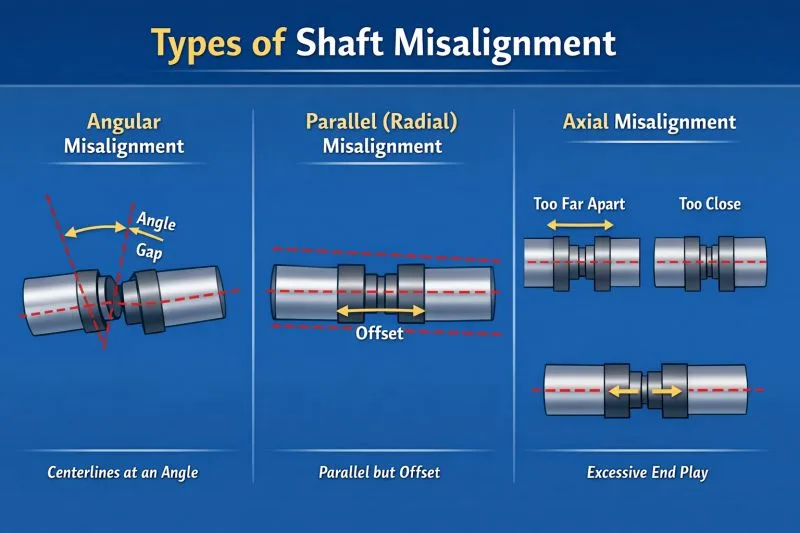
Image source: Web (Bing) / linkedin.com (Web image (fair-use with source credit))
Pulley misalignment takes two primary forms. You must correct the exact type of offset present to stop uneven tracking.
If You Have Parallel Misalignment (Offset)
Parallel misalignment occurs when both shafts are parallel, but the pulley grooves do not sit on the same centerline. The belt travels in a straight line between sheaves, but at an offset angle.
- Place a precision straightedge across the outer faces of both pulleys.
- Check if the straightedge touches all four contact points on the outer pulley rims.
- If the straightedge contacts only the driver pulley, loosen the set screws or bushing bolts on the driven sheave.
- Slide the sheave axially along the shaft until all four rim points touch the straightedge flush.
- Re-torque the shaft fasteners in an alternating pattern.
If You Have Angular Misalignment (Tilt or Pitch)
Angular misalignment occurs when the shafts sit at non-parallel angles, tilting the pulley faces relative to each other.
- Measure the gap between the straightedge and the pulley face using feeler gauges.
- If the gap varies between the top and bottom of the sheave, the shaft has vertical tilt. Loosen the mounting feet of the motor or bracket and insert slotted stainless steel shims underneath.
- If the gap varies between the front and back edges, adjust the horizontal position of the mounting bracket pivot bolts.
- Re-check alignment until the total angular variance is under 0.5 degrees (roughly 1/16 inch per foot of center distance).
Step 3: Inspecting Internal Components (Bearings, Bushings, and Shafts)
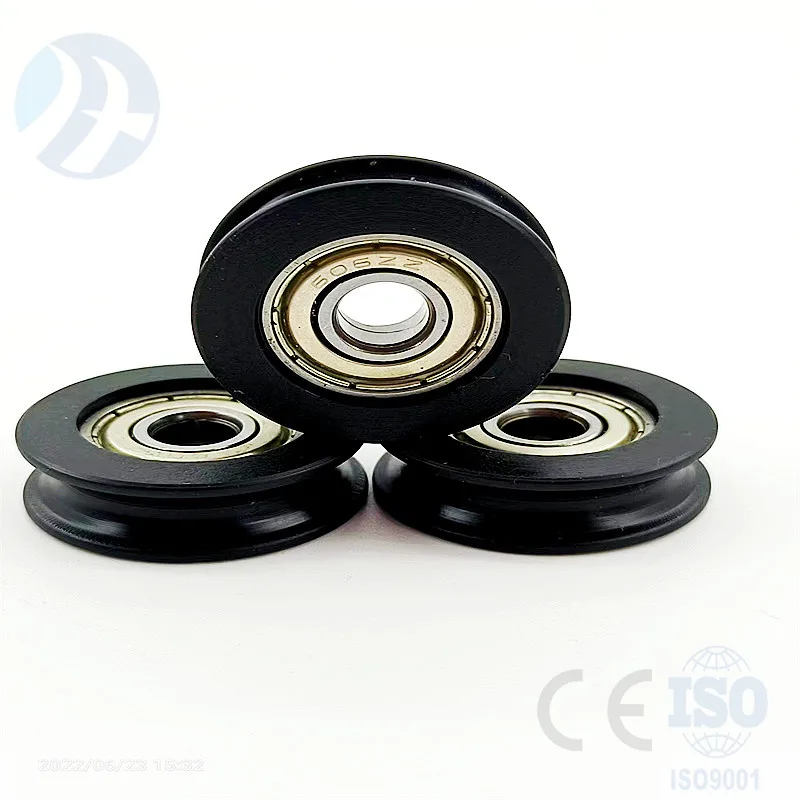
Image source: Web (Bing) / haibite-bearing.en.made-in-china.com (Web image (fair-use with source credit))
Internal wear inside the sheave assembly is a leading cause of persistent wobble. Even a perfectly aligned mounting bracket cannot compensate for a collapsed bearing race or a worn shaft seat.
Remove the sheave from its mounting shaft or arbor. Clean the shaft surface using fine-grade emery cloth to clear rust, debris, and fretting corrosion. Inspect the bare shaft for grooving or scoring.
If a shaft is worn undersize, the inner bearing race will rock, creating dynamic wobble during rotation.
Check the bearing assembly. As of 2026, most modern fitness machines and light industrial drives use sealed deep-groove ball bearings (such as 6000-series or 6200-series units with rubber 2RS contact seals).
- Press your fingers into the inner race and rotate it while holding the outer sheave stationary.
- Feel for micro-vibrations, flat spots, or dry metal-on-metal rubbing.
- Inspect the rubber seals for tearing, bulging, or grease leakage.
- If the bearing feels loose or gritty, press it out using an arbor press or bearing puller and install a new sealed cartridge. Never hammer directly on the inner or outer race during installation.
For pulleys with tapered locking bushings (like QD or Taper-Lock systems), inspect the split bushing mating surfaces. Tighten the bushing bolts evenly. Uneven torque on bushing bolts pulls the sheave crooked on the shaft taper, introducing severe runout.
Step 4: Correcting Belt and Cable Tracking Under Load
Once the pulley rotates true on its shaft, the final step is setting the correct operating tension. Incorrect tension forces belts and cables to climb groove sidewalls, producing tracking drift.
For belt-driven systems, measure the span length between pulley centers. Apply a standard belt tension gauge to the center of the span. Standard drive design dictates a deflection of 1/64 inch for every 1 inch of span length under manufacturer-recommended force.
If the belt is too loose, it whips side-to-side and walks off the pulley. If it is too tight, it overloads the bearings and flexes the bracket.
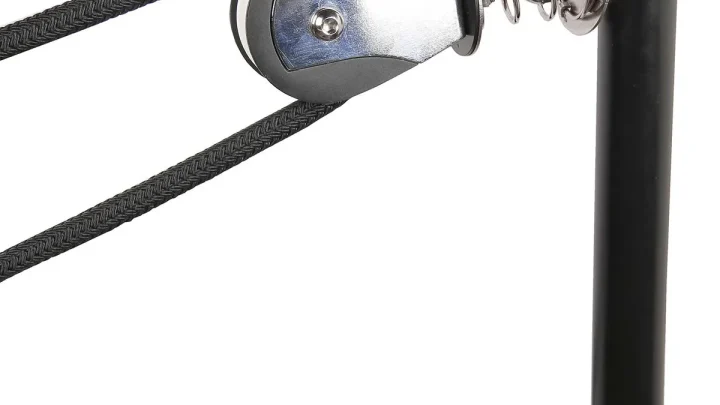
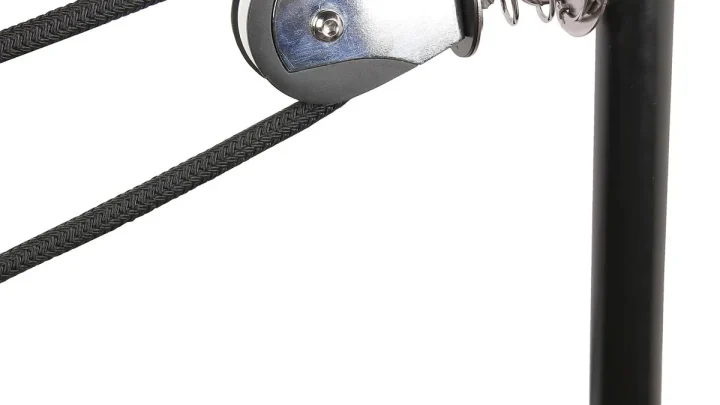
For cable systems (such as functional fitness trainers or industrial hoists), check the wire rope path:
- Verify that the cable enters each sheave dead-center without rubbing the side flanges.
- Inspect the vinyl coating or wire strands for birdcaging, flattening, or peeling.
- Check the cable-to-sheave diameter ratio. The sheave pitch diameter should ideally be at least 20 times the cable diameter to prevent mechanical fatigue.
- Always follow OSHA safety guidelines by locking out electrical power or resting weight stacks completely before adjusting tension bolts.
Field Tolerances, Torque Specs, and Alignment Benchmarks
Precision matters when setting up any rotating assembly. Guessing by eye often leaves minor angular errors that create vibration and premature component failure.
To achieve smooth tracking, match your setup to standard mechanical tolerances:
- Maximum Angular Misalignment: 0.5 degrees total variance across the drive span.
- Maximum Parallel Offset: Under 0.015 inches (0.38 mm) per foot of center distance.
- Total Dynamic Runout: Less than 0.010 inches (0.25 mm) measured at the sheave rim.
- Belt Span Deflection: 1/64 inch per inch of span distance under rated test force.
| Fastener / Component Type | Typical Thread Size | Recommended Torque | Notes |
|---|---|---|---|
| Set Screws (Knurled Cup Point) | 1/4-20 to 5/16-18 | 75 to 165 in-lbs | Apply medium-strength blue threadlocker |
| Split Taper / QD Bushing Cap Screws | 1/4-20 to 3/8-16 | 9 to 30 ft-lbs | Tighten evenly in alternating stages |
| Bracket Pivot / Foot Mounting Bolts | 3/8-16 to 1/2-13 | 30 to 50 ft-lbs | Use flat hardened washers over slotted holes |
| Idler Sheave Shoulder Bolts | 3/8-16 thread | 25 to 35 ft-lbs | Do not overtighten against bearing inner race |
When torquing bushing bolts, never tighten one bolt fully before starting the others. Uneven bolt draw pulls the bushing cocked against the shaft taper, instantly creating runout. Tighten each fastener progressively in a star or cross pattern.
Mistakes That Ruin New Pulleys and Belts
Most recurring tracking failures stem from avoidable installation errors. Skipping basic prep work or using the wrong tools creates hidden stresses that damage components quickly.
- Hammering directly on the sheave or bearing: Striking the pulley face bends the rim and causes permanent axial wobble. Striking an outer bearing race creates indentation marks (brinelling) across the internal track.
- Over-tightening belts to cure slip: Cranking tension beyond specification strains the shaft and cooks the internal bearings. If a belt slips at standard tension, clean the sheave grooves or replace glazed belts instead.
- Ignoring frame and bracket flex: An alignment check done without load can change once tension is applied. If mounting brackets are thin or unbraced, the shaft pulls crooked under working tension.
- Spraying belt dressing on misaligned sheaves: Belt dressing is a temporary friction band-aid. It does not correct crooked pulleys and creates sticky residue that collects abrasive debris.
- Reusing worn hardware: Reinstalling stretched bolts or rounded set screws prevents you from reaching proper clamping torque, leading to shaft slip.
Frequently Asked Questions About Pulley Troubleshooting
Why does my pulley wobble even with a brand-new bearing installed?
A new bearing will still wobble if the shaft is worn undersize or bent. If the bore-to-shaft fit is loose, the inner race rocks during rotation. Check shaft straightness and diameter using a micrometer before pressing in new bearings.
Can a worn belt cause uneven pulley movement?
Yes, a belt with uneven sidewall wear or missing cogs creates erratic tracking. As the worn section passes through the sheave groove, belt tension drops momentarily. This tension spike causes the pulley to shudder or track off-center under load.
How do I know if the sheave groove itself is worn out?
Inspect the groove sidewalls with a sheave profile gauge. If the sidewalls appear concave, dished, or polished unevenly, the pulley is worn out. A V-belt should ride on the groove sides, never bottoming out against the base.
What is the best way to lubricate a sticky gym pulley?
Use a dry PTFE or silicone spray on external pivot pins. Never use heavy oil or WD-40, which attracts dust and degrades synthetic sheaves. If the internal cartridge bearing is seized, replace the sealed bearing unit rather than spraying it.
🧘 Technician Recommended: Reformer Stability & Floor Protection Gear
To eliminate dangerous machine sliding during dynamic footwork while protecting hardwood and tile finishes, our studio tests recommend high-density rubber equipment mats and vulcanized gripper pads:
- High-Density Rubber Reformer Mat:Check Heavy-Duty Reformer Floor Mats on Amazon →
- Non-Slip Anti-Vibration Gripper Pads:Check Non-Slip Equipment Gripper Pads on Amazon →
*FTC Disclosure: As an Amazon Associate, Smart Body Pilates earns from qualifying purchases. Learn more about our hands-on testing methodology.*
📖 Related Reformer Stability & Floor Care Guides:

Similar Posts