Why Your Reformer Pulley Resistance Feels Uneven
Pulling on your Pilates straps should feel smooth, balanced, and controlled. If you find yourself asking why does reformer pulley resistance feel uneven during your workout, you are not imagining things. Even a subtle tug on one side can throw off your balance and strain your shoulders.
Equipment standards from the National Pilates Certification Program emphasize equal tension to protect your joints during dynamic exercises. A variance as small as 0.5 centimeters in rope length can noticeably shift your alignment. Let us break down how to isolate the problem and fix it fast.
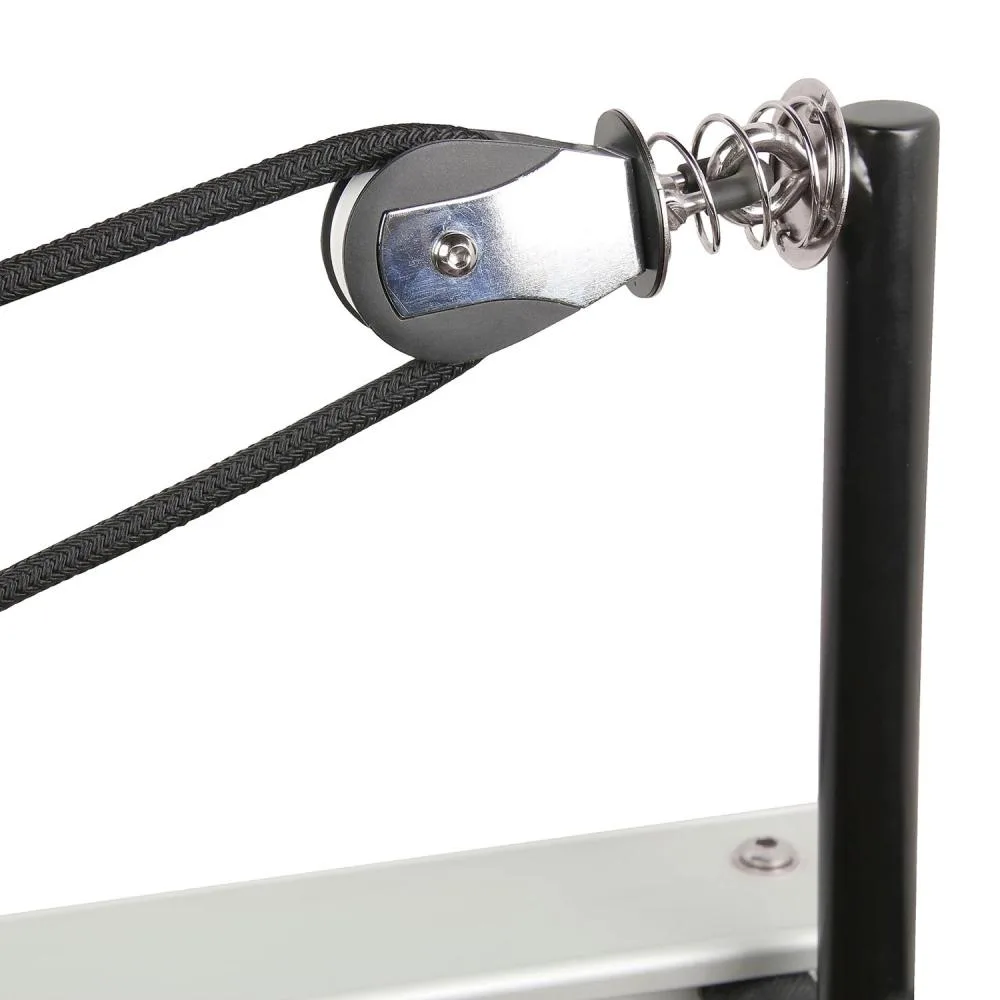
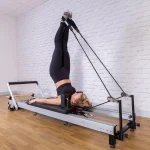
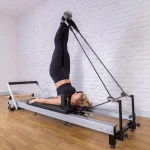
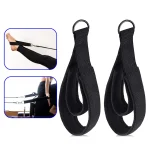
Image source: Web (Bing) / bodynova.de (Web image (fair-use with source credit))
Quick Answer
Reformer pulley resistance feels uneven due to mismatched rope lengths or sticky pulleys. Slipping cam cleats can let one rope slide longer under heavy load. Uneven riser heights change the pulling angle on one side.
Worn carriage springs also create asymmetrical drag across the frame. Biomechanical muscle imbalances can make equal resistance feel heavier on one side.
The Quick Isolation Test: Is It Your Reformer or Your Body?
Before grabbing a wrench or ordering replacement parts, you need to isolate the root cause. The issue either lives in the machine hardware or in your body mechanics. A quick three-step diagnostic test will pinpoint the culprit immediately.
First, perform the Loop Level Test. Stand behind the reformer carriage while it rests against the carriage stoppers. Pull both strap handles straight forward toward the footbar until the ropes are taut.
Check if the loop ends line up evenly. If one loop sits further forward than the other, you have a mechanical rope discrepancy.
Second, perform the Single-Arm Switch Test. Sit on the carriage and perform five single-arm rows with your right arm using the right strap. Then, grab that exact same right strap with your left arm and do five rows.
If the movement feels noticeably heavier with your left arm, your body has a muscular imbalance. If the resistance feels identical, the machine is the issue.
| Diagnostic Step | Hardware Fault Indicator | Biomechanical Fault Indicator |
|---|---|---|
| Loop Level Test | Strap handles do not line up at the footbar | Strap handles match evenly at resting tension |
| Single-Arm Switch | One side feels heavy regardless of which arm pulls | The same arm struggles on both reformer straps |
| Pulley Spin Test | One pulley wheel stops spinning early or squeaks | Both pulley wheels spin freely without friction |
Third, run the Pulley Spin Test. Take the ropes off the pulley wheels and spin each wheel by hand. Both wheels should spin freely and quietly for several seconds.
If one wheel drags, sticks, or squeaks, mechanical friction is stealing your resistance.
Mechanical Cause 1: Rope Length Discrepancies and Cam Cleat Slippage
The most common reason for uneven pulley tension is uneven rope length. Even if the ropes looked identical when the reformer was brand new, repetitive dynamic pulling stretches fibers unevenly over time.
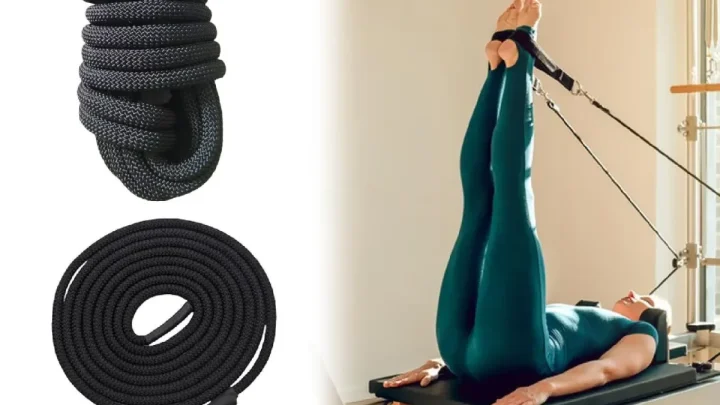
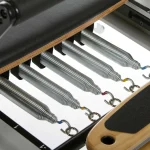
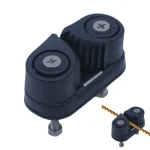
Modern reformers secure ropes using cam cleats, which grip the cord with spring-loaded, ridged teeth. As of 2026, aggregate maintenance reports show that rope slippage inside cam cleats accounts for over 60 percent of resistance complaints. If you do not push the rope firmly down into the cleat jaws, the rope can slide a few millimeters during heavy leg work.
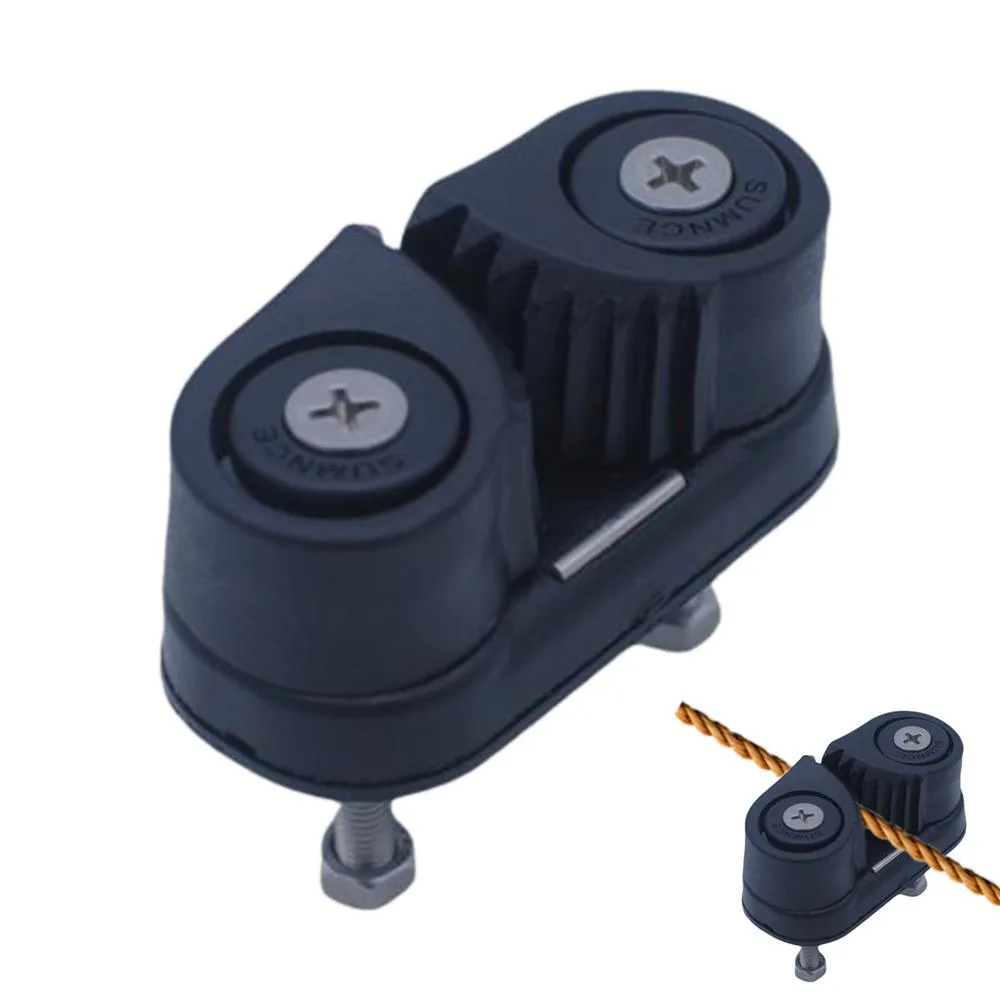
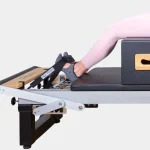
Image source: Web (Bing) / amazon.co.uk (Web image (fair-use with source credit))
Inspect how your ropes are anchored beneath or behind the carriage. Check for these common cleat issues:
- The rope is sitting on top of the cleat teeth instead of being locked deep in the channel.
- The internal spring of the cam cleat is weak, letting the rope slip under load.
- The rope diameter has worn down, reducing the cleat's biting grip.
- Knot slippage has occurred on traditional rope configurations.
To fix this, pull both ropes taut against the shoulder rests. Open the cleats, pull the ropes to equal length, and snap them firmly into place. Tie a safety stopper knot directly behind each cleat to prevent future slippage.
Mechanical Cause 2: Pulley Wheel Drag and Riser Misalignment
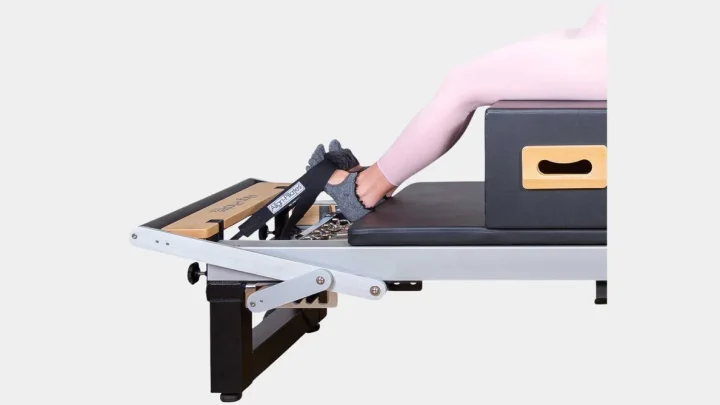
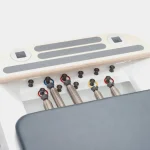
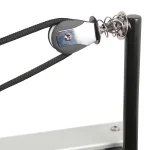
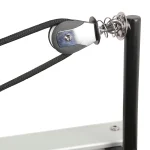
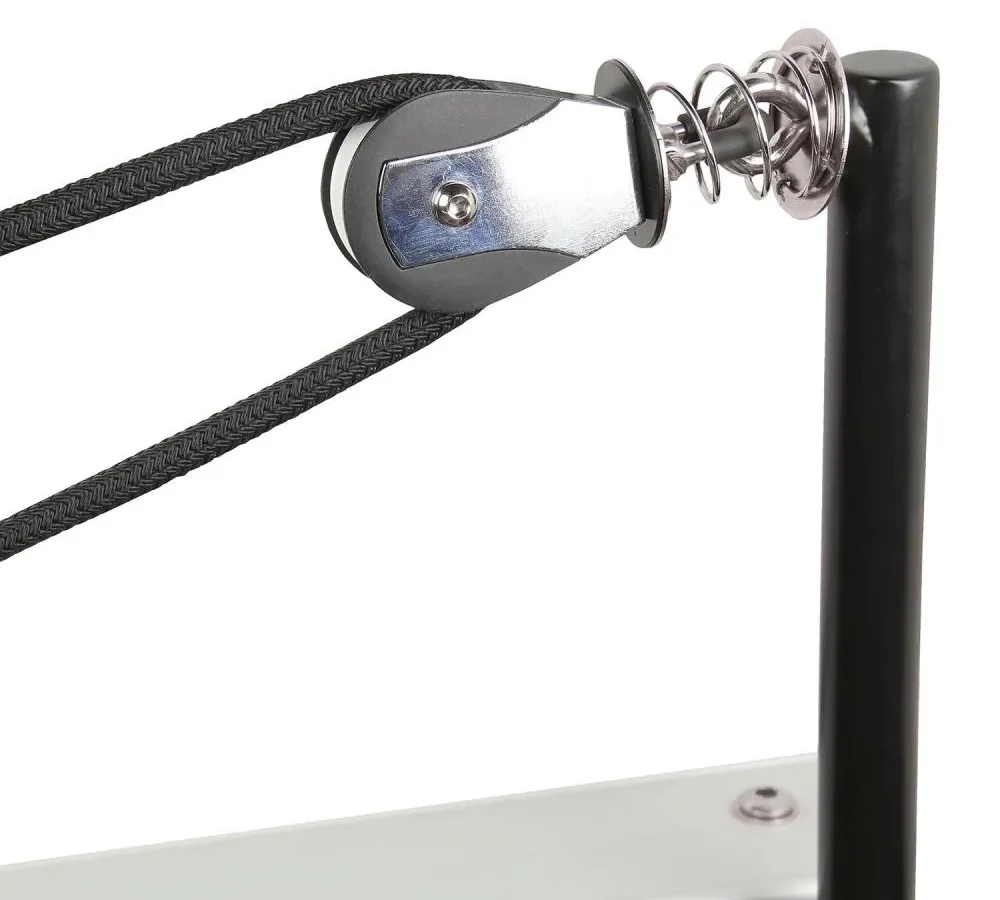
Your pulley risers determine the angle of pull and the freedom of carriage travel. If one riser is set higher than the other, the resistance vector changes completely. A higher pulley reduces the initial felt load, while a lower pulley makes the initial pull feel heavier.
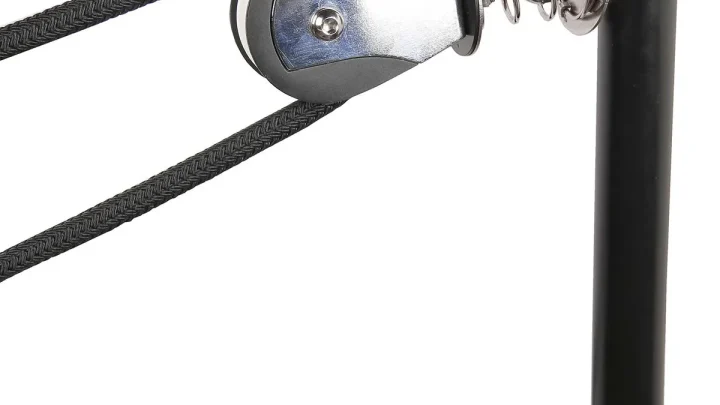
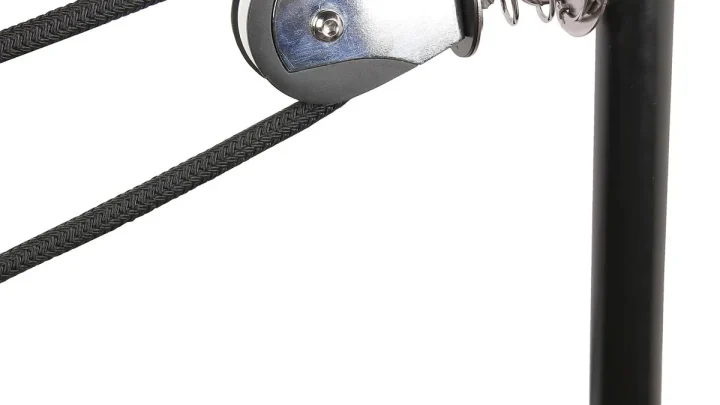
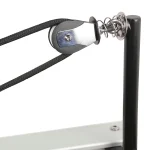
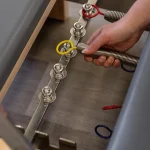
Pulley wheels also accumulate debris inside their bearings. Studio dust, hair, and clothing fibers easily wrap around the pulley axle. This debris creates mechanical drag that mimics heavy spring tension on just one side.
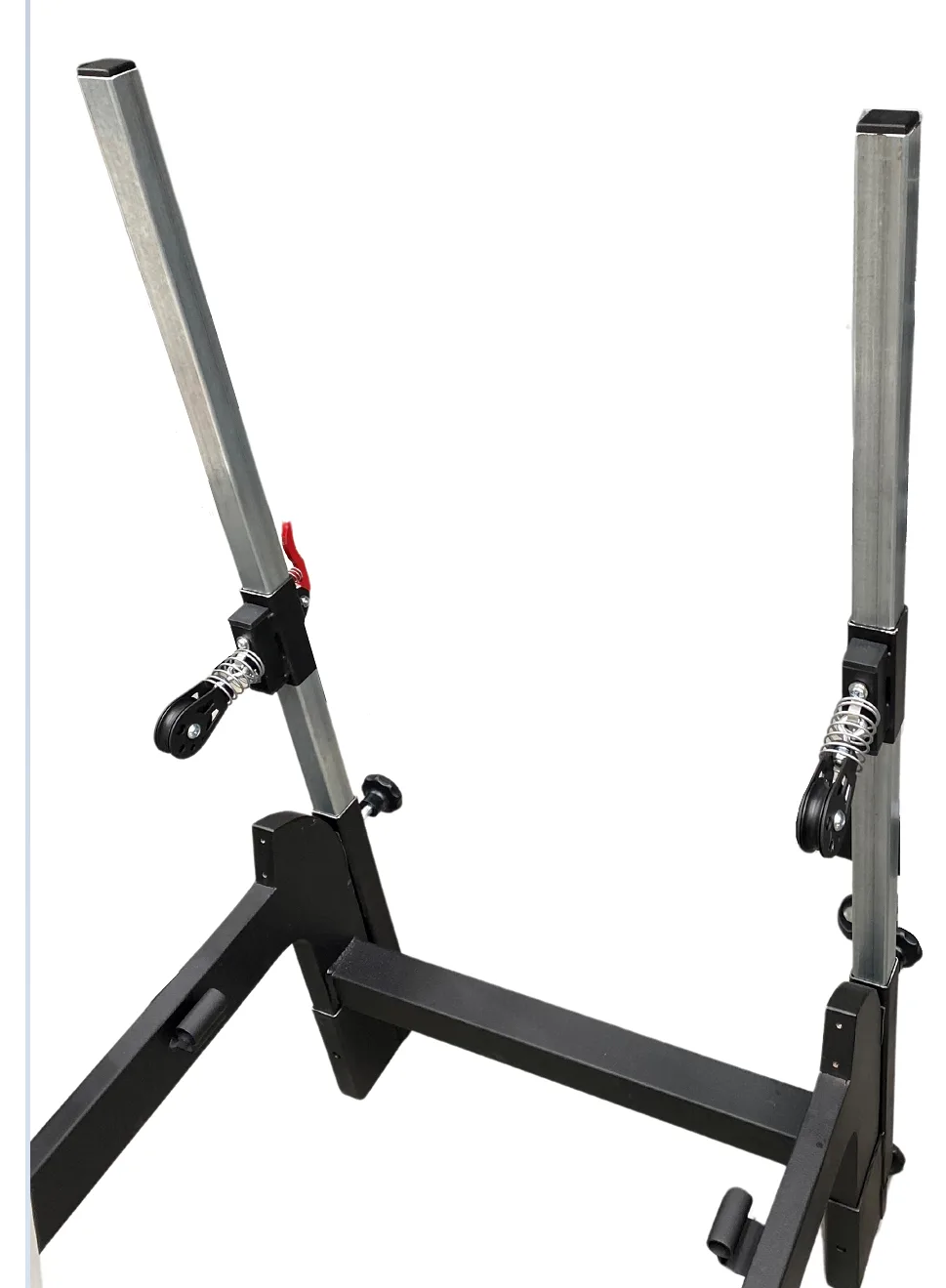
Image source: Web (Bing) / shop.dmapilates.com (Web image (fair-use with source credit))
Check the hardware on both risers carefully:
- Verify that both risers sit in the exact same pin hole or height slot.
- Look for hair wrapped around the internal brass bushing or ball bearing.
- Ensure the swivel pulley block can pivot freely from side to side.
- Check that the rope is tracking directly inside the pulley groove rather than rubbing against the metal bracket.
If a pulley wheel feels stiff, remove the retaining bolt and clean the axle thoroughly. Avoid thick grease that attracts more studio dust. A dry silicone lubricant keeps the wheel spinning silently.
Mechanical Cause 3: Asymmetrical Spring Wear and Carriage Glide Friction
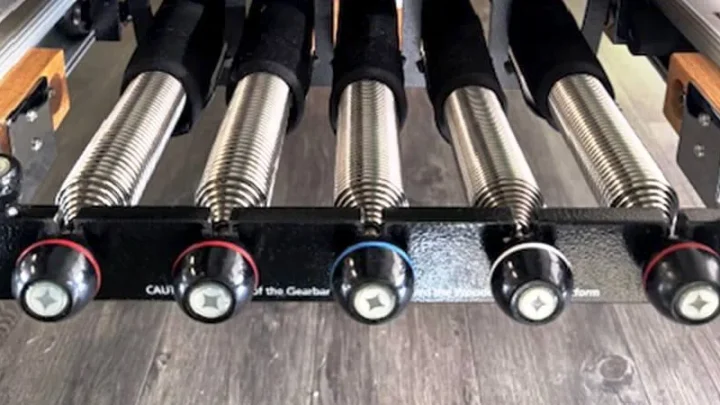
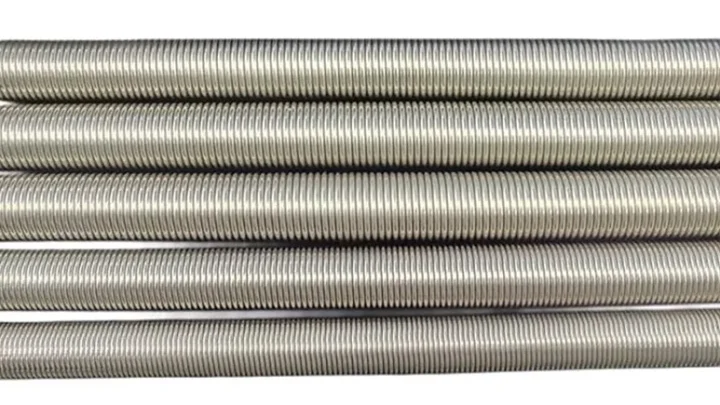
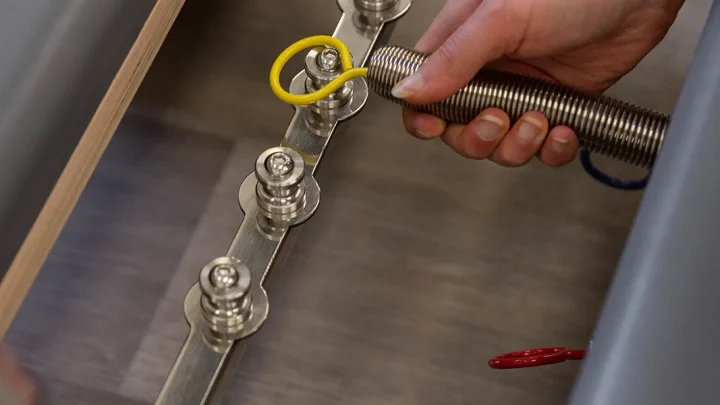
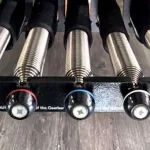
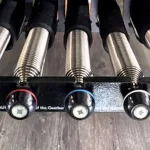
Reformer springs do not always wear out at the same rate. If you consistently hook your favorite red or blue spring on the right side of the gear bar, that spring will lose its tension faster than its counterpart.
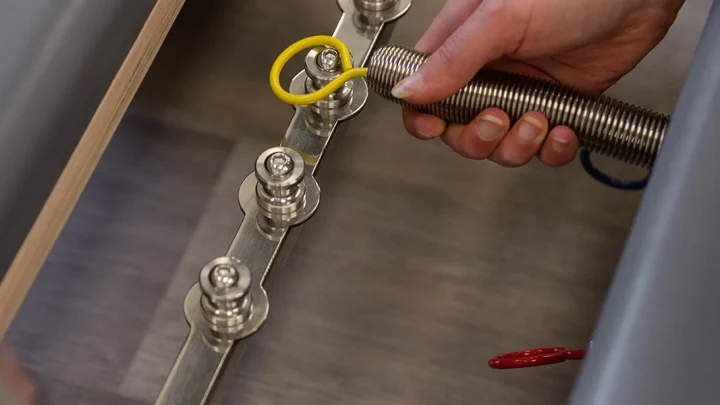
Official maintenance documentation from Balanced Body recommends rotating and inspecting springs regularly. A fatigued spring develops pitch deformation, where the coils separate unevenly even at rest. If one spring loses elasticity, the carriage will pull unevenly across the frame.
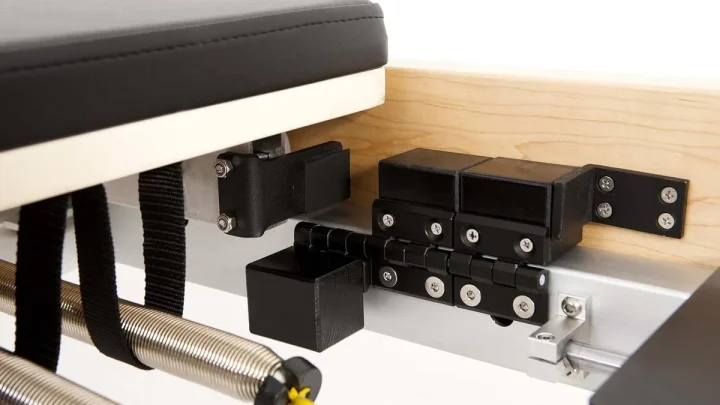
Carriage wheel alignment can also produce false pulley tension. If dirt coats one side of the aluminum rails, the carriage wheels on that side will drag. You will feel that friction directly through the straps as an uneven pulling load.
Wipe down both aluminum guide rails with a microfiber cloth and warm soapy water. Check the four load-bearing carriage wheels for flat spots. Ensure all active springs are attached to matching hooks on the gear bar.
Biomechanical Causes: When the Hardware Is Fine but Muscle Recruitment Is Uneven
When your reformer passes every mechanical test, the uneven sensation comes from your nervous system and musculature. Most people have a dominant side that stabilizes better under load.
During upper body pulling exercises, scapular stabilization plays a massive role. If your dominant side retracts the shoulder blade smoothly, the pull feels effortless. If your non-dominant side relies on the upper trapezius instead of the latissimus dorsi, the strap will feel significantly heavier.
Common biomechanical causes include:
- Latissimus dorsi strength asymmetry from daily carrying habits.
- One shoulder sitting in slight internal rotation, altering the lever arm.
- Pelvic rotation that places one hip closer to the footbar than the other.
- Unequal ankle mobility during feet-in-straps exercises.
To correct this during practice, slow your movement tempo down. Focus on engaging your core and stabilizing your shoulder blades before initiating the pull. Doing unilateral work will gradually balance out your strength differences.
Step-by-Step Calibration Workflow to Reset Your Reformer
Resetting your reformer hardware takes less than ten minutes. Follow this systematic calibration sequence to eliminate tension variations and restore balance to your carriage travel.
- Park and inspect the carriage. Disengage all springs except one center spring. Ensure the carriage rests flush against both rubber frame stoppers. If the carriage sits crooked at rest, adjust the gear bar or clean debris off the rails first.
- Level the pulley risers. Check the height locking pins on both riser posts. Make sure both sides rest on the exact same notch number. Tighten the collar knobs completely so the risers do not wobble under dynamic load.
- Reset the rope cleats. Release both ropes from their cam cleats. Pull both rope ends all the way through until the double loops hang loosely over the shoulder rest pegs.
- Equalize cord tension. Pull both cords firmly from the bottom until the metal clips or leather straps touch the shoulder posts at the exact same point. Push the cords straight down into the cleat teeth.
- Set safety stopper knots. Tie a secure figure-eight knot directly behind each cleat. This prevents the cord from slipping through the cam teeth during high-tension exercises.
Once you lock the cords, pull both handles simultaneously toward the footbar. If the carriage glides forward evenly without twisting, your machine is calibrated.
Common Maintenance Mistakes That Throw Off Pulley Resistance
Small maintenance oversights can create major resistance problems over time. Avoiding a few common mistakes will keep your machine balanced and prevent premature wear on expensive parts.
The most frequent error is using petroleum-based sprays like standard WD-40 on pulley wheels. Petroleum lubricants attract dust, lint, and pet hair like a magnet. Within weeks, that buildup forms a thick grime that seizes the pulley bearings.
Use only dry silicone spray or wipe bearings clean with a dry rag.
Leaving ropes pulled taut over the shoulder rests when the reformer is not in use also causes trouble. Constant tension stretches the synthetic cord fibers unevenly. Store your straps with slack in the ropes so the core fibers retain their original elasticity.
Another major mistake is replacing only one worn spring. If you replace a stretched red spring on the left but leave a two-year-old red spring on the right, the carriage will pull unevenly. Always replace resistance springs in complete, matched pairs to ensure uniform tension.
Finally, avoid over-tightening the pulley mounting bolts. If you crank the bolt down too hard against the riser frame, you pinch the swivel housing. Pulleys need a slight amount of play so they can pivot smoothly with your natural line of pull.
Frequently Asked Questions About Reformer Pulley Resistance
How often should I replace reformer ropes and springs?
Manufacturer standards suggest replacing springs every two years or roughly 3,000 hours of studio use. Ropes should be inspected weekly for fraying and replaced every one to two years. If you notice persistent slack or core fraying inside the braided sheath, replace both ropes immediately.
Can uneven reformer resistance cause shoulder injuries?
Yes, uneven resistance forces one shoulder to compensate by recruiting smaller stabilizer muscles like the supraspinatus. Over time, this imbalance causes rotator cuff strain, neck tightness, and scapular winging. Calibrating your equipment prevents unnecessary joint strain during heavy pulling movements.
Why do my reformer pulleys squeak when I pull the straps?
Pulley squeaks occur when dust coats the inner bushing or the wheel rubs against its metal bracket. Hair wrapped around the central axle also causes loud rubbing noises. Clean the axle with a cloth and apply one drop of non-greasy silicone lubricant to quiet the squeak.
How do I know if my cam cleats are worn out?
Look closely at the ridged teeth inside the cleat jaws. If the teeth appear rounded, chipped, or clogged with cord lint, the cleat cannot grip properly. If your rope regularly slips longer during footwork despite being pushed down firmly, replace the cam cleat assemblies.
Should reformer ropes always be replaced in pairs?
Yes, always replace ropes in pairs even if only one side looks frayed. A new rope has fresh elasticity and zero fiber stretch, while an old rope has already elongated under load. Using one old rope and one new rope guarantees uneven resistance across your straps.
🩰 Technician Recommended: Commercial Straps, Ropes & Springs
Eliminate rope bunching and uneven spring drag with studio-grade double-loop straps and calibrated replacement springs:
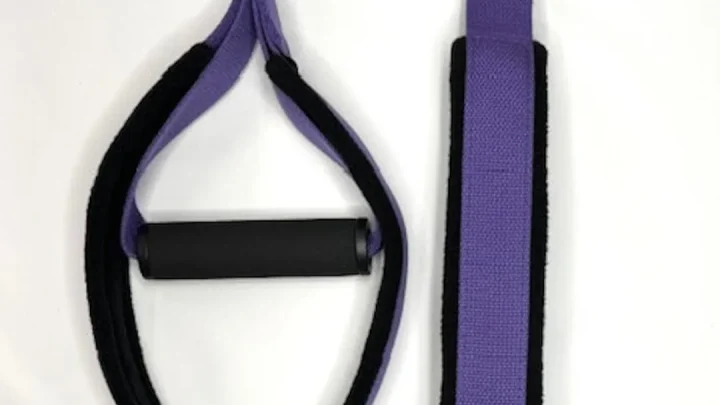
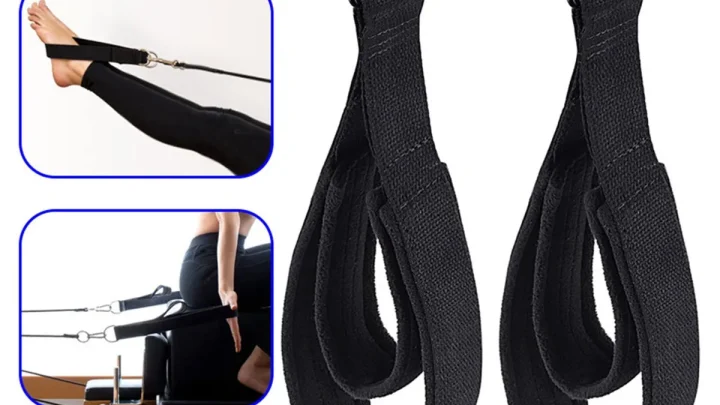
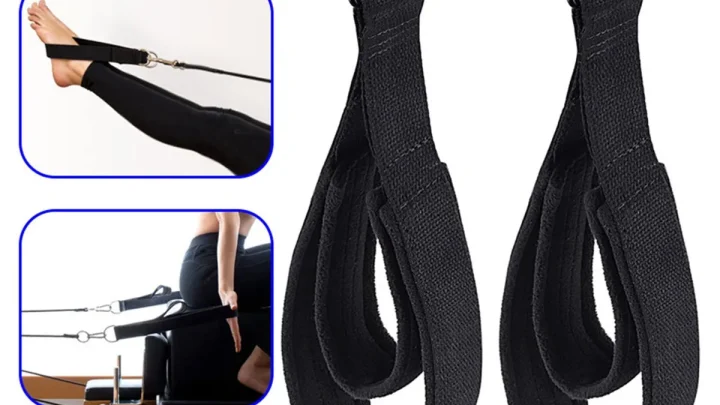
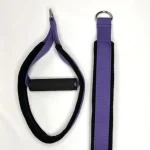
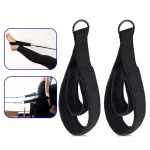
- Commercial Double-Loop Reformer Straps:Check Double-Loop Pilates Straps on Amazon →
- Replacement Reformer Springs (Calibrated):Check Replacement Reformer Springs on Amazon →
*FTC Disclosure: As an Amazon Associate, Smart Body Pilates earns from qualifying purchases. Learn more about our hands-on testing methodology.*

Similar Posts