Why Is Your Reformer Footbar Pin Stuck? How to Fix It
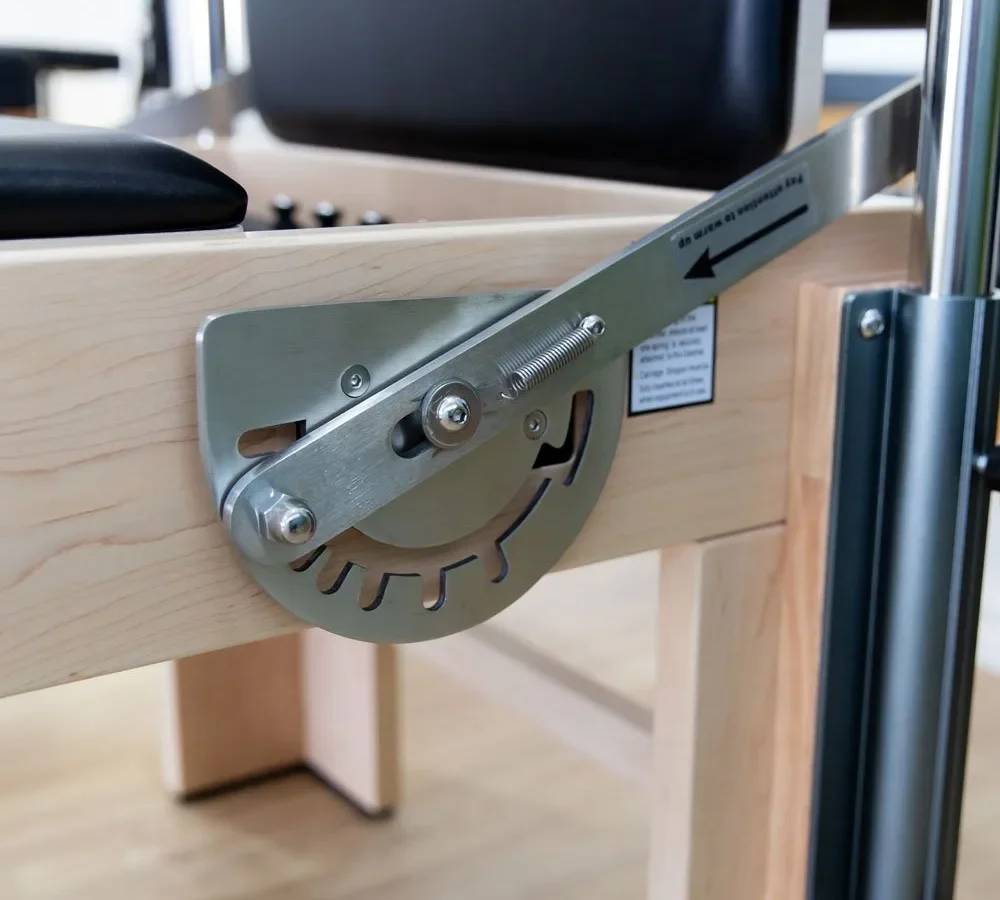
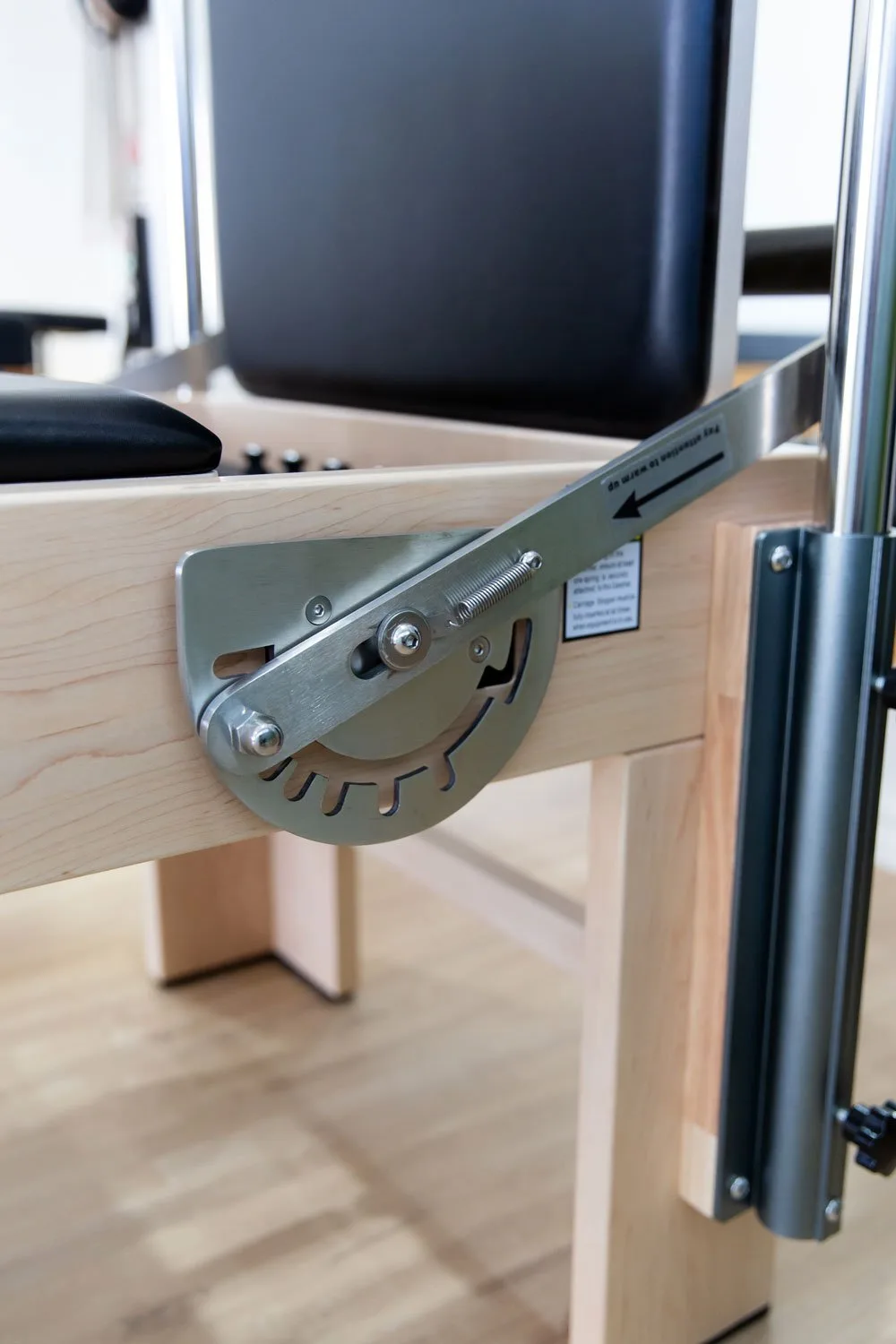
Image source: Bing (Web (fair-use with source credit))
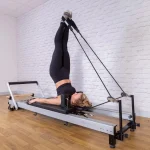
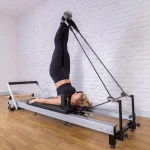
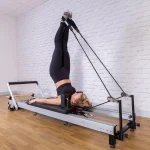
Few things disrupt a workout faster than asking yourself why is my reformer footbar pin stuck when you try to change positions. You pull the knob, but the steel plunger refuses to budge from the selector plate. This lockup usually happens when directional force pinches the pin inside its channel, or when debris builds up inside the housing.
Commercial and home reformers rely on tight tolerances to keep users safe during heavy loading. According to ASTM International standards for fitness equipment design, adjustment mechanisms must securely withstand repeated dynamic loads without slipping. A tiny shift in frame alignment or continuous spring tension can wedge the pin tight.
Quick Answer
A reformer footbar pin gets stuck when carriage springs pull against the frame.
Dirt, dried sweat, and grip sock lint also clog the plunger mechanism.
Misaligned selector plates can wedge the steel pin tightly in place.
Releasing carriage spring tension immediately frees most stuck footbar pins.
Never force the pull pin with heavy tools.
The Anatomy of the Footbar Locking Mechanism
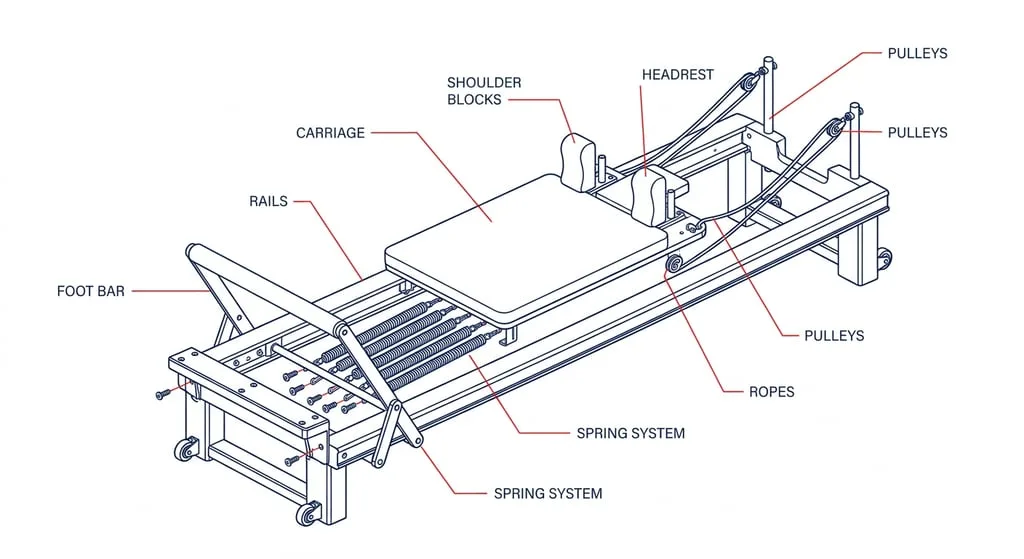
Image source: Bing (Web (fair-use with source credit))
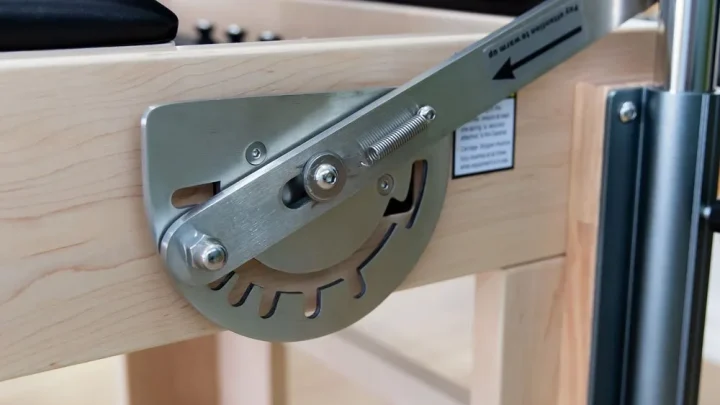
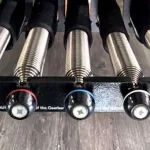
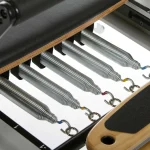
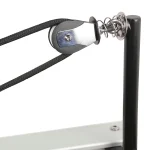
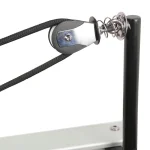
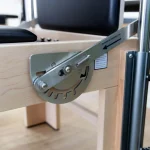
Understanding how your footbar locks in place makes troubleshooting straightforward. Most modern reformers from makers like Balanced Body or Merrithew use a spring-loaded plunger pin system, often called a pop-pin or pull-pin.
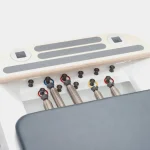
The assembly contains a hardened steel pin, an internal return spring, and an outer threaded barrel. When you pull the knob, the pin retracts from a hole in the selector plate or trunnion bracket. Letting go allows the internal spring to push the pin back into the next indexed hole.
| Component | Primary Function | Common Failure Mode |
|---|---|---|
| Plunger Pin | Locks footbar arm into the frame bracket | Binds from angled load or bent shaft |
| Internal Spring | Drives the pin into the locking hole | Snaps, corrodes, or loses tension |
| Retaining Barrel | Houses spring and guides pin travel | Loosens or collects internal dirt |
| Selector Plate | Features indexing holes for height angles | Scratches, galls, or shifts out of square |
| Nylon Bushing | Reduces friction inside the slide channel | Wears thin or swells from wet cleaners |
When these parts work in harmony, adjustments take seconds. However, if any piece shifts out of alignment, the mechanical clearances vanish.
Diagnostic Decision Tree: Identifying Your Specific Pin Issue
Before grabbing any tools, identify the exact reason the pin is stuck. Follow this simple decision workflow to pinpoint the root cause.
Condition 1: Carriage springs are attached to the carriage.
- Symptom: The pin feels cemented in place with zero wiggle.
- Cause: Active carriage tension is pulling the footbar against the pin.
- Action: Unhook all carriage springs and test the pin again.
Condition 2: The pin turns slightly but will not pull outward.
- Symptom: The knob rotates, but you cannot retract the shaft.
- Cause: Mechanical binding from frame twist, or a sheared internal spring coil.
- Action: Apply counter-pressure to the footbar frame while pulling.
Condition 3: One side releases, but the opposite side stays locked.
- Symptom: The footbar wiggles unevenly across the reformer width.
- Cause: The footbar assembly is racked (twisted out of square).
- Action: Realign both sides simultaneously before pulling the stuck pin.
Condition 4: The knob pulls back, but the footbar will not move.
- Symptom: The pin clears the hole, but the arm remains frozen.
- Cause: Debris or galling in the slide channel rather than a pin failure.
- Action: Inspect the slide tracks for dried sweat and track residue.
Step-by-Step Fixes Based on What's Jamming the Pin
Once you know why the mechanism is stuck, you can apply the correct mechanical fix. Always work gently to avoid stripping aluminum threads or bending pivot hardware.
Scenario A: The Pin is Bound Under Directional Carriage Tension
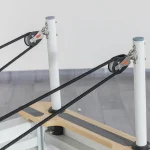
Carriage springs exert continuous pressure toward the rear of the reformer. If a previous user adjusted the footbar while springs were engaged, the locator pin gets wedged against the edge of the indexing hole.
First, disconnect all springs from the springbar. Next, firmly pull the main footbar frame toward the carriage with one hand while pulling the plunger knob with the other. This rocking motion takes the sheer load off the pin, allowing the internal spring to retract smoothly.
Scenario B: Mechanical Misalignment or a Twisted Footbar Frame
If users consistently press off-center during single-leg exercises, the footbar frame can rack slightly out of square. When the two sides are not parallel, the locator pin enters the bracket hole at an angle and binds.
To correct this, stand at the foot end of the reformer. Grasp both upright arms of the footbar. Give the bar a gentle, rhythmic jiggle forward and backward while applying outward pressure on the stuck pin knob.
Once free, check the bracket mounting bolts to ensure both sides sit at equal measurements along the frame.
Scenario C: Debris Buildup, Dried Sweat, and Lint Intrusion
Studios generate a steady mix of grip sock lint, airborne dust, and dried sweat. Over months of use, this mixture migrates into the plunger barrel and forms a sticky paste that stops the pin from sliding.
Flush the pin housing using a generous spray of 90 percent isopropyl alcohol. Work the pin back and forth rapidly to break up the dried residue. Wipe away the grime with a clean microfiber cloth as it drains out.
Avoid using thick oils, which only trap more lint over time.
Scenario D: Broken Internal Spring or Cross-Threaded Plunger Barrel
As of 2026, most modern commercial reformers use replaceable plunger assemblies. If the internal spring breaks or the barrel threads back out of the bracket, the pin can jam permanently in either the open or closed position.
Inspect the outer barrel where it threads into the footbar bracket. If the barrel has loosened, use an adjustable wrench or the correct hex key to snug it down. If the internal spring has failed, you will feel zero resistance when pushing the pin inward.
In that case, unscrew the entire assembly and install an original equipment manufacturer replacement cartridge.
Critical Safety Checks Before Putting the Reformer Back in Service
A stuck footbar pin is frustrating, but an improperly locked footbar is dangerous. The footbar supports significant body weight during planks, lunges, and jumping exercises. Never return a reformer to service until you verify positive mechanical engagement.
- Audible Engagement: Listen for a crisp, solid click when the pin drops into the selector hole.
- Visual Confirmation: Inspect the pin collar to ensure the steel shaft sits fully flush inside the bracket hole.
- The Push Test: Grasp the footbar firmly with both hands and shove it toward the carriage, then away from the carriage. It must not slip or rock.
- Downforce Load Check: Apply firm downward pressure onto the top of the footbar padding to verify that the support brackets remain stable under direct vertical weight.
Maintenance Rules: Keeping Footbar Pins Gliding Smoothly

Image source: Bing (Web (fair-use with source credit))
Preventing footbar pin jams takes far less effort than fixing a seized mechanism during a busy class. Routine care keeps sliding tolerances clear and stops grit from wearing down internal springs.
Never use standard wet lubricants like traditional WD-40 or heavy grease on your reformer pins. Wet oils attract dust, hair, and clothing fibers, turning them into a thick sludge that binds the plunger. Instead, use a specialized dry PTFE spray or dry silicone lubricant.
Dry film lubricants spray on wet, evaporate within seconds, and leave a micro-thin friction shield that repels debris.
Follow this simple monthly maintenance routine:
- Wipe: Clean the exposed locator pin shafts and selector plates with a dry microfiber rag.
- Flush: Spray isopropyl alcohol directly into the pin barrel to flush out settled dust.
- Lube: Apply a quick burst of dry PTFE spray directly onto the pin shaft and cycle the spring five times.
- Inspect: Check mounting bolts on the bracket to confirm the frame remains square.
Frequently Asked Questions About Stuck Footbar Hardware
Can I use standard WD-40 on a stuck reformer pin?
No, standard WD-40 multi-use formula should not be used on reformer pins. It leaves behind an oily residue that attracts studio lint and dry skin flakes. That buildup creates a thick paste that eventually jams the pin.
Use a dry PTFE spray instead.
Why does my footbar pin only stick on one side?
One-sided sticking happens when the footbar is racked out of square. Uneven foot placement during single-leg exercises places twisting forces on the frame. This slight twist wedges one pin against the bracket wall while the other pin moves freely.
How often should I lubricate the reformer footbar pins?
Commercial Pilates studios should clean and lubricate pull pins once a month. Home reformer owners generally only need to service the pins once every three to four months. High-humidity environments may require more frequent cleanings to stop surface corrosion.
Is it safe to exercise on a footbar if the pin is stuck?
No, you should never exercise on a footbar with a jammed pin. A stuck pin may look engaged while only resting on the edge of the hole. Under heavy load, the pin can slip completely and cause the bar to collapse during weight-bearing movements.
When should I replace the footbar plunger assembly?
Replace the assembly if the internal spring loses tension, if the pin shaft bends, or if the barrel threads strip out. Most equipment manufacturers sell modular replacement plunger kits that thread directly into the existing bracket within minutes.

Similar Posts