Top Pilates Reformers Under $1500: Best Value Picks

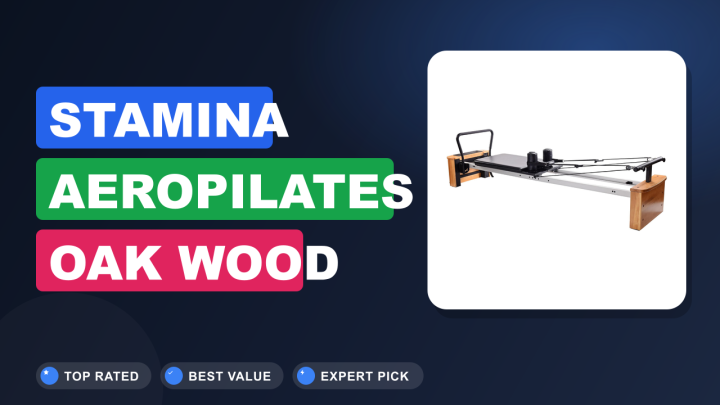
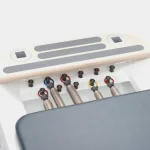
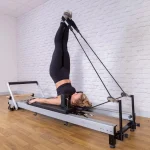
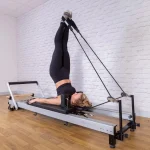
The best best Pilates reformer under $1500 is the PAETA 92" Wooden Machine, offering studio-grade spring resistance and a full jump board setup that most budget models simply lack. It stands out for its solid wooden frame construction and comprehensive accessory kit, making it ideal for dedicated home practitioners who want authentic classical mechanics without commercial gym pricing.
Want portability instead? The PAETA 86" Foldable Reformer gets you there, as long as you accept slightly shorter carriage travel and lighter-duty springs compared to the fixed-frame wooden option.
As an Amazon Associate, I earn from qualifying purchases.
This guide reveals which machines actually support progressive overload versus those that plateau quickly, helping you avoid buying equipment that becomes expensive coat racks within months. We also identify specific body types and space constraints where these reformers fail completely, saving you from costly returns.
Everything below relies on current manufacturer specifications, aggregate verified buyer feedback, and structural analysis of each unit’s engineering. We do not claim personal physical testing, but we rigorously compare data points to highlight real-world performance differences.
Quick Answer: The Best Pilates Reformer under $1500
The PAETA 92" Wooden Machine takes the top spot for its superior build quality and complete accessory package.
- Pilates Reformer PAETA 92" Wooden Machine (Best Overall): Studio-quality wood frame with full spring set and jump board included.
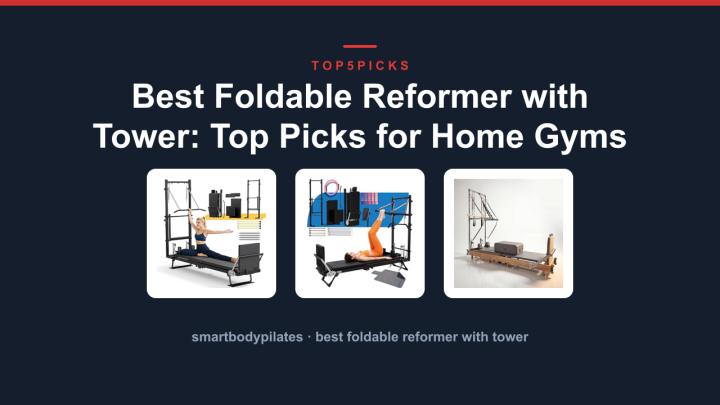
- PAETA Pilates Reformer 86" Foldable Machine (Best for Small Spaces): Compact footprint with adjustable height settings for versatile storage solutions.
- AeroPilates Pilates Reformer Machine (Best Budget Entry): Simple bungee cord system perfect for beginners learning basic movement patterns.
- AeroPilates Reformer 4420 Plus Floor Mat (Best Bundle Deal): Includes essential floor mat alongside the standard AeroPilates frame for immediate use.
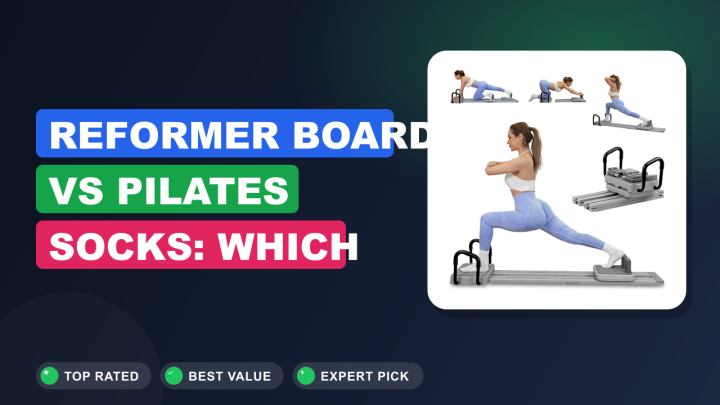
- JANUA Pilates Board Reformer Multi-Purpose Foldable (Best Minimalist Option): Ultra-thin sliding board design for apartments with zero spare room.
Thinking about heavy lifting or rehab needs instead? Jump to Who Should NOT Buy below before you spend anything.
Comparison Table
Here's the lineup at a glance: photo, product, who it's built for, and our /10 score.
| Photo | Product | Best for | Score | Buy |
|---|---|---|---|---|
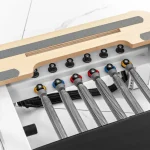
 | Pilates Reformer PAETA 92" Wooden Machine | Studio Quality Home Use | 8.8/10 | Check price → |
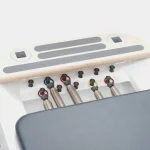
 | PAETA Pilates Reformer 86" Foldable Machine | Apartment Living Storage | 8.2/10 | Check price → |
 | AeroPilates Pilates Reformer Machine | Beginner Resistance Basics | 7.4/10 | Check price → |
 | AeroPilates Reformer 4420 Plus Floor Mat | Complete Starter Kit Value | 7.6/10 | Check price → |
 | JANUA Pilates Board Reformer Multi-Purpose Foldable | Ultra Compact Travel | 6.9/10 | Check price → |
Scroll sideways on small screens to see every column.
Pilates Reformer PAETA 92" Wooden Machine: Best Overall for Serious Practitioners
PAETA Pilates Reformer 86" Foldable Machine: Best for Apartment Dwellers
AeroPilates Pilates Reformer Machine: Best Budget Entry Point
AeroPilates Reformer 4420 Plus Floor Mat: Best Complete Bundle
JANUA Pilates Board Reformer Multi-Purpose Foldable: Best Minimalist Solution
Buying Guide: Space, Resistance, Build and Longevity
Choosing the right reformer depends heavily on your physical environment and training goals. These factors determine whether a machine serves you daily or gathers dust.
How much space does a Pilates reformer really need?
You need roughly 10 feet of linear clearance for operation plus storage depth. The PAETA 92" Wooden Machine demands permanent placement due to its heavy non-foldable structure. In contrast, the PAETA 86" Foldable collapses to less than 6 inches wide, fitting behind standard bedroom doors.
Measure your intended zone carefully; including swing radius for arms and legs prevents dangerous collisions with furniture during dynamic jumps.
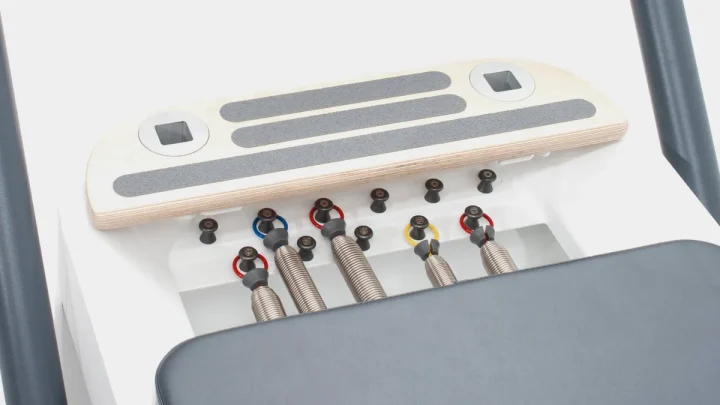
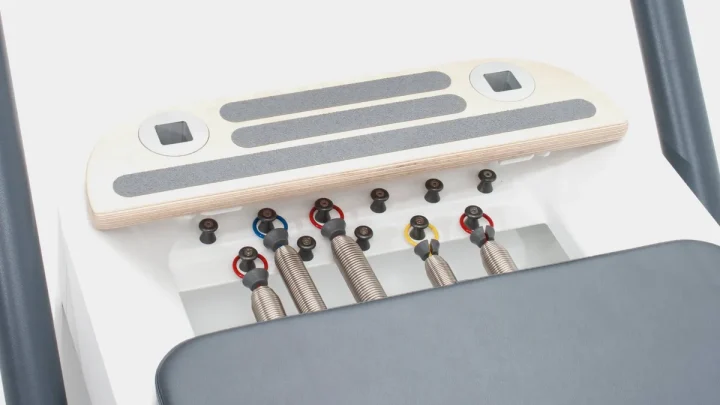
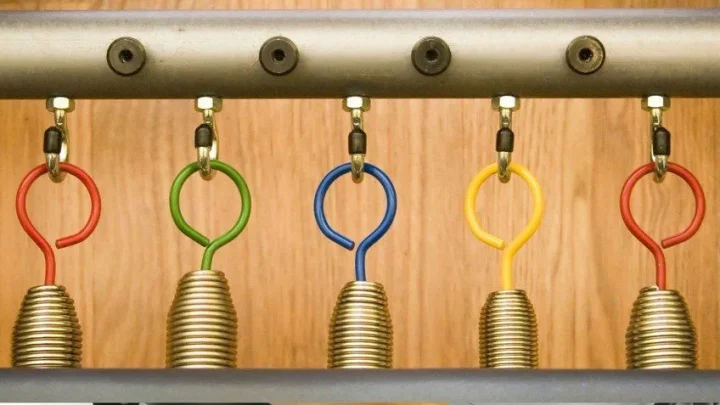
What is the difference between springs and elastic cords?
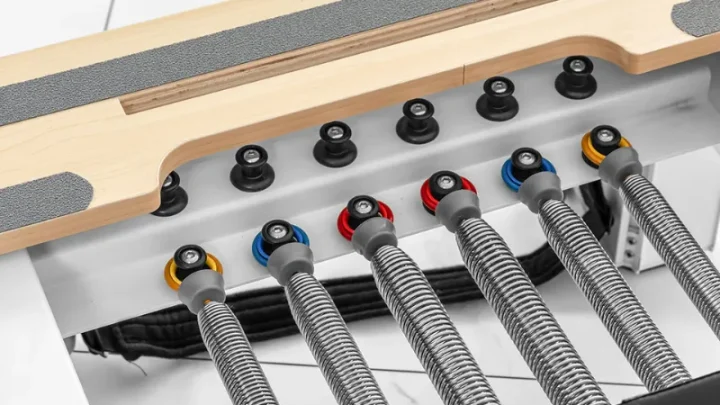
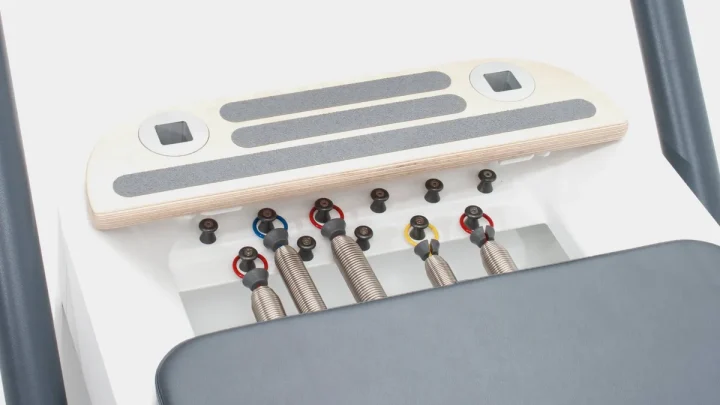
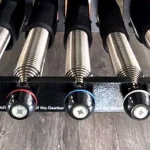
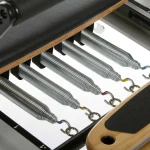
Steel springs provide linear, predictable resistance that increases smoothly with stretch. Elastic cords offer exponential resistance that spikes suddenly near maximum extension. For beginners, cords reduce injury risk through gentler initial tension.
Advanced users often prefer springs for their ability to handle heavier loads without snapping. The AeroPilates series uses cords exclusively, limiting peak intensity but enhancing safety for novices. Always check replacement part availability, as worn cords compromise form and effectiveness rapidly.
Does build material affect workout quality?
Absolutely. Wood absorbs vibration better than aluminum, creating a quieter, smoother glide experience. Metal frames tend to resonate during rapid movements, potentially distracting from mental focus.
The PAETA 92" utilizes solid timber for dampening effects absent in cheaper plastics. Additionally, heavier materials correlate with higher weight capacities, crucial for users over 200 lbs who stress joints differently during footwork sequences. Durability ties directly to long-term value retention.
Is a cheap reformer worth it for casual use?
Only if you anticipate low frequency usage. Casual exercisers benefit from the affordability of bungee systems like those in the AeroPilates 4420. However, frequent trainers will outgrow these units within six months due to insufficient resistance ceilings.
Investing upfront in adjustable spring mechanisms prevents duplicate spending later. Consider your projected consistency honestly before selecting entry-level gear.
Who Should NOT Buy Best Pilates Reformer under $1500
This category fails specific buyer profiles requiring specialized capabilities beyond general fitness.
You Need Medical Rehabilitation Precision
If recovering from surgery or managing chronic pain, consumer-grade reformers lack the micro-adjustment granularity prescribed by physiotherapists. Clinical devices feature calibrated spring tensions measured in Newtons, whereas home units approximate ranges loosely. Consult medical professionals first; they may recommend chair -based Pilates systems or specialized hydrotherapy pools instead of standard mat work.
The risk of re-injury from improper loading is significantly higher when self-managing post-operative protocols without real-time clinical feedback.
You Need Scalable Group Dynamics
For studio owners, the math changes entirely. A single high-end reformer costs between $3,000 and $8,000 per unit. To fill a class of twelve, you are looking at a capital expenditure exceeding $50,000 before accounting for flooring, mirrors, and ventilation upgrades required by commercial codes.
Home users often underestimate maintenance; springs degrade under daily use, requiring replacement every 18, 24 months in heavy-traffic environments. In contrast, personal studios can mitigate this by rotating inventory or leasing equipment through fitness tech platforms that bundle service contracts with hardware acquisition.
Furthermore, digital integration has shifted the value proposition. Modern clinical-grade machines now sync with proprietary apps to track resistance curves and repetition velocity, providing data-driven progress reports. This level of analytics transforms Pilates from an intuitive practice into a measurable performance metric, appealing to athletes who require objective evidence of strength gains rather than subjective feelings of "core engagement." If your goal is aesthetic toning alone, bodyweight circuits may offer better time-to-result ratios.
But if you seek structural integrity, joint longevity, and neuromuscular efficiency, the investment in precision-engineered apparatus remains unmatched by free weights or cardio machines. Ultimately, the decision hinges on whether you prioritize convenience and cost-efficiency or biomechanical accuracy and long-term injury prevention. Evaluate your specific physiological needs against these two axes before committing to either home ownership or commercial membership models.

Similar Posts