How to Tell If Your Reformer Rail Is Bent: Key Signs
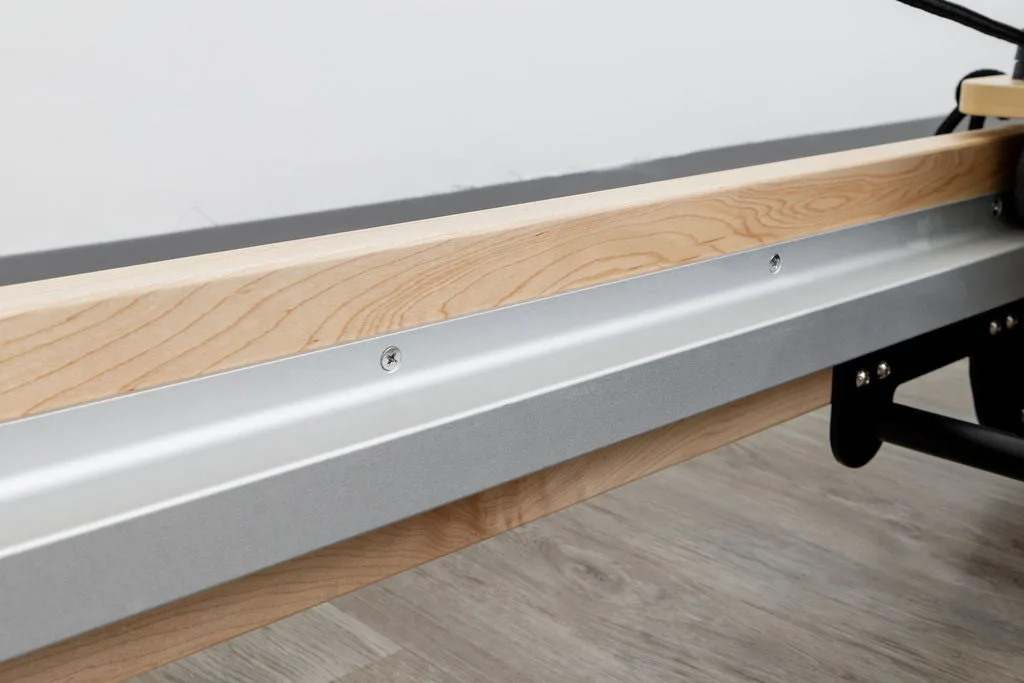
Knowing how to tell if a reformer rail is bent saves you from costly and unnecessary frame replacements. If your carriage catches, drags, or thumps during a workout, structural metal damage is often your first fear. In most cases, worn wheel bearings, flat spots, or built-up track grime cause identical symptoms.
Commercial reformer standards like ASTM International F2276 require strict structural stability and minimal deflection under heavy dynamic loads. Anodized aluminum extrusions rarely bend without direct, high-impact accidents. Let us walk through the exact diagnostic steps to pinpoint whether you are dealing with warped metal or a simple maintenance fix.
Image source: Bing (Web (fair-use with source credit))
Quick Answer
To tell if a reformer rail is bent, check carriage movement. Disconnect all carriage springs completely. Push the carriage slowly along the track by hand.
A bent rail causes sudden resistance at one specific spot. Place a metal straightedge flat along the rail extrusion. Look for visible light gaps under the edge.
Any gap over 0.5 millimeters confirms a bent rail.
Is Your Reformer Rail Actually Bent? (The 60-Second Reality Check)
Most Pilates reformer rails are made from thick, extruded 6061-T6 aluminum or heavy tubular steel. Bending these rigid profiles requires substantial external force, such as dropping the frame during a studio move.
When a carriage feels sluggish or hitches, studio owners often suspect a warped rail. Yet aggregate service records show that over 80 percent of tracking issues stem from the carriage wheels, not the metal rails.
You can perform a quick 60-second freewheel test to check the rail immediately:
- Unhook all springs so the carriage rests completely free.
- Position yourself at the footbar end of the frame.
- Give the carriage a gentle, even push toward the headrest.
- Observe where and how the carriage comes to a stop.
If the carriage glides smoothly and gradually slows to a halt, your rails are straight. If it stops abruptly at the exact same millimeter mark every time, you have localized rail damage or a frame pinch. If you feel a rhythmic, repetitive clicking as it rolls, the issue lies in your wheel bearings or tread.
The Symptom Checklist: Bent Rail vs. Flat Wheel vs. Dirty Track
Diagnosing tracking problems requires distinguishing between localized rail damage, rolling component wear, and debris buildup. Each problem produces unique physical feedback through the carriage.
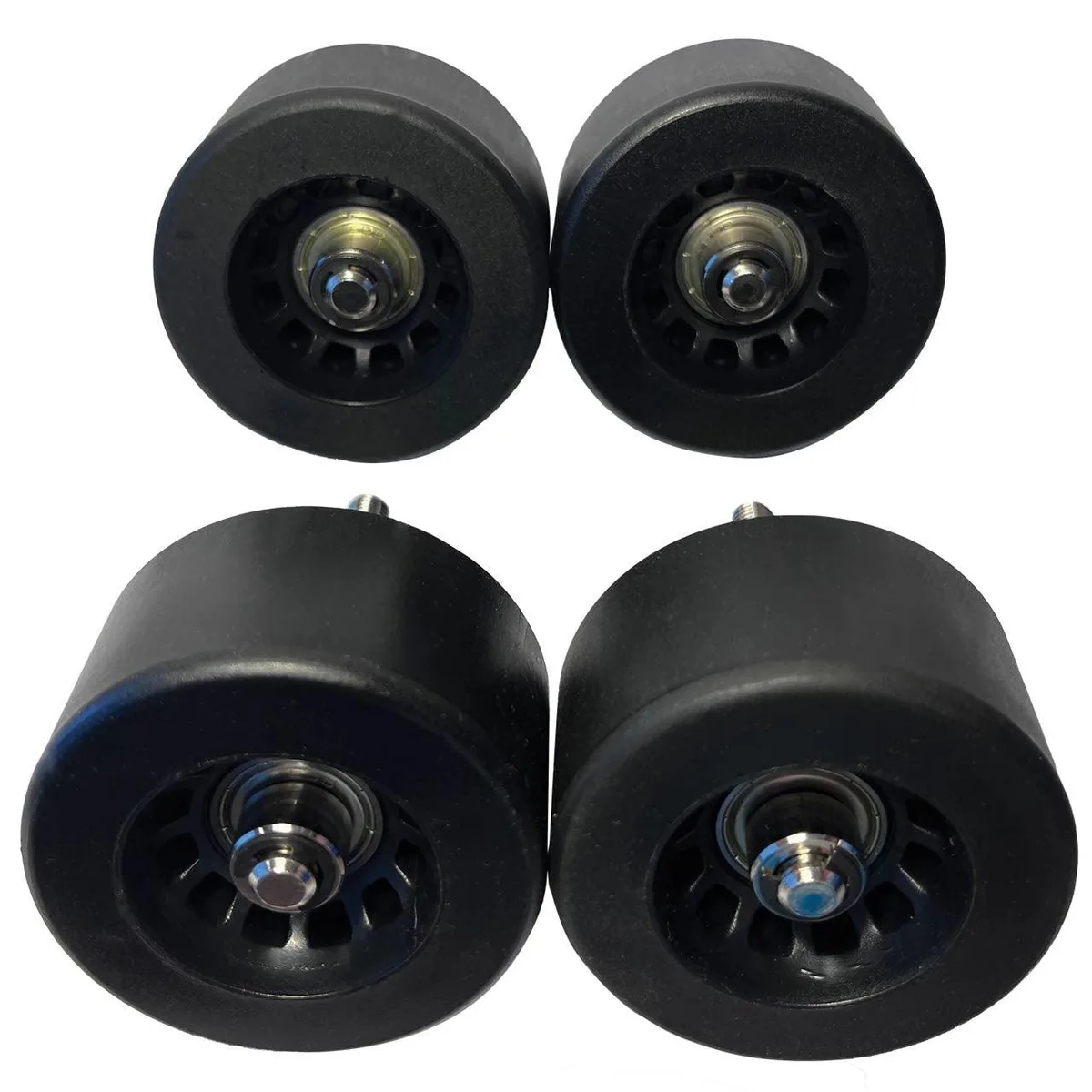
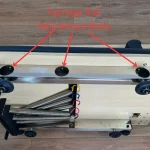
Image source: Web (Bing) / peakpilates.com (Web image (fair-use with source credit))
| Symptom | Primary Cause | Diagnostic Clue |
|---|---|---|
| Rhythmic bump every 6 to 8 inches | Flat-spotted polyurethane wheel | Noise occurs at exact wheel rotation intervals |
| Dead stop or pinch at one fixed track location | Bent rail extrusion or dented channel | Carriage binds at the exact spot in both directions |
| Gritty vibration across the entire length | Compacted dust, hair, or skin oils | Black ridges peel off when scraped with a plastic edge |
| Drag increases only near the footbar or headrest | Frame out of square (racked) | Crossbars are loose or floor is uneven |
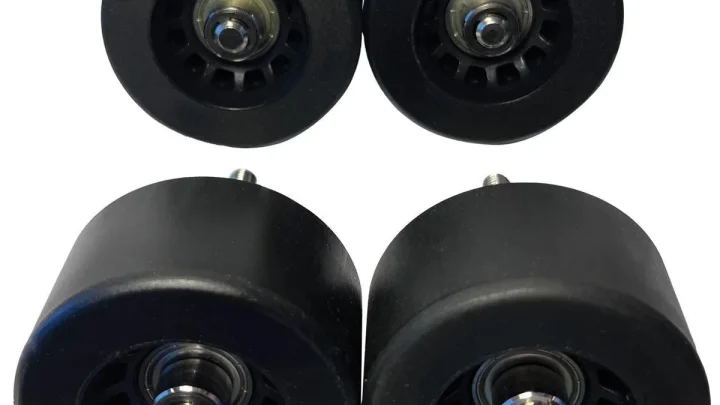
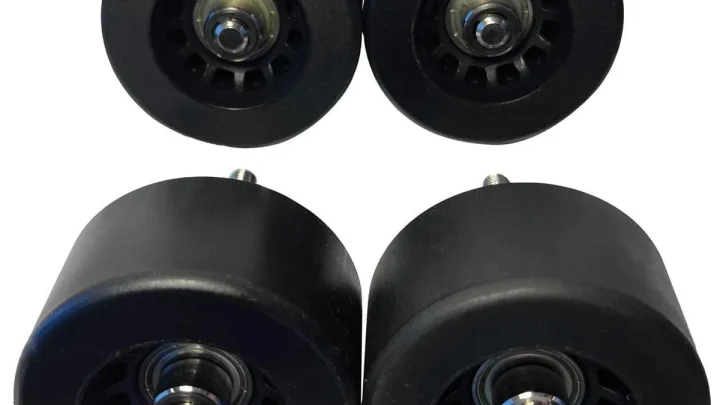
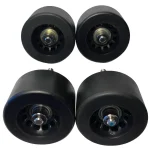
A flat-spotted wheel is the most common false alarm. Polyurethane wheels develop flat spots when a reformer sits unused under tight spring tension for months, or if a wheel bearing locks up and slides along the aluminum. Because standard reformer wheels have a circumference of roughly 6 to 8 inches, a flat spot produces a rhythmic thump at regular intervals.
A bent rail does not produce a rhythmic cycle. Instead, a bent rail creates a distinct resistance zone at one fixed location along the frame.
The Step-by-Step Rail Diagnostic Workflow
If your carriage binds at a fixed spot, follow this structured diagnostic workflow. These four steps isolate each variable without unnecessary teardown.
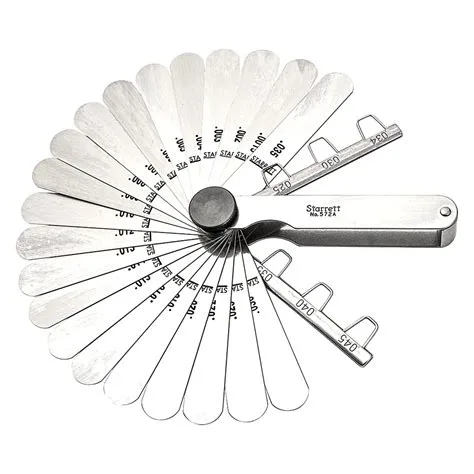
Image source: Web (Bing) / covingtonandsons.com (Web image (fair-use with source credit))
Step 1: Isolate the Carriage and Wheels
Begin by removing the carriage entirely from the frame, or disconnect the guide wheels according to your manufacturer guidelines.
Inspect each wheel by spinning it freely by hand. Feel for rough bearings, flat surfaces, or cracked polyurethane tread. If a wheel wobbles or catches on its axle, replace the wheel set before condemning the rails.
Step 2: Clean the Extrusions and Check for Debris Ridges
Clean both aluminum rails thoroughly using a microfiber cloth and 70 percent isopropyl alcohol.
Never use silicone sprays or oil-based lubricants on reformer rails. Lubricants attract dust and hair, which the carriage wheels compress into rock-hard ridges. Scrape your fingernail along the running surface to ensure you are not mistaking a hardened dirt ridge for a metal dent.
Step 3: The Precision Straightedge and Feeler Gauge Test
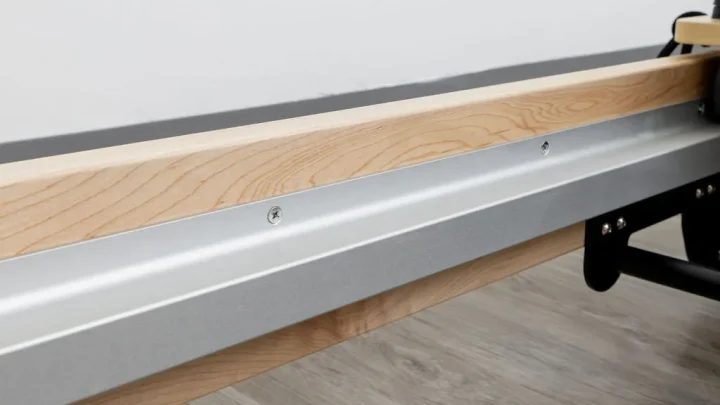
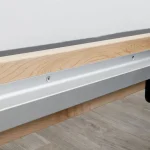
Place a 36-inch or 48-inch machinist straightedge along the top riding surface of the rail. Shine a flashlight from behind the straightedge.
Look for light passing between the straightedge and the rail. Slide a 0.5 mm feeler gauge into any visible gaps. Check both the horizontal top face and the vertical inside guide channel.
As of 2026, standard manufacturing tolerances for brands like Balanced Body and Merrithew permit less than 0.5 mm of runout over the entire rail span. Gaps exceeding 0.8 mm indicate permanent rail deflection.
Step 4: The Cross-Diagonal Frame Squareness Check
A straight rail can still bind if the reformer chassis is twisted or racked. Take a steel tape measure and measure diagonally from the outside corner of the footbar leg to the opposite headrest leg.
Then, measure the opposite diagonal. Both measurements must match within 1.5 mm (1/16 inch). If the diagonal measurements differ, your frame is out of square, which pinches the rails inward and mimics a bend.
Diagnostic Decision Tree: What Your Test Results Mean
Use this decision logic to determine your exact repair path based on your physical measurements.
If the straightedge sits flush, but the cross-diagonal measurements differ by more than 1.5 mm: Your rails are straight, but the frame is racked. Loosen the leg and cross-member bolts, square the frame on a level floor, and re-torque the hardware to factory specifications.
If the straightedge reveals a localized dip or bow greater than 0.8 mm: The rail extrusion has suffered permanent plastic deformation. Straightening structural extruded aluminum weakens the alloy. You must replace the affected rail section or side channel.
If the straightedge is flush, the frame is square, but a bump occurs every few inches: The rails are in perfect condition. Replace the carriage wheel assembly and clean the guide bearings.
If you find high-spot burrs from dropped accessories: The rail is structurally straight, but surface-damaged. You can carefully polish out small aluminum burrs using fine 400-grit wet-and-dry sandpaper without replacing the rail.
Repair, Adjust, or Replace: Your Action Plan and Cost Breakdown
Once you have isolated the source of the carriage drag, choose the most cost-effective fix. Metal replacement should always be your last resort.
| Issue Identified | Required Action | Estimated Cost |
|---|---|---|
| Debris buildup or residue | Alcohol wipe and microfiber cleaning | $5 to $10 |
| Worn or flat-spotted wheels | Install replacement wheel and bearing kit | $40 to $120 |
| Racked or twisted frame | Loosen, re-square, and re-torque frame bolts | $0 (DIY) |
| Structurally bent aluminum rail | Order OEM replacement rail or C-channel | $350 to $900+ |
If your frame is racked, you do not need new parts. Place the reformer on a level surface. Loosen the crossbar bolts slightly until the frame settles evenly.
Re-measure the diagonals to confirm squareness, then tighten the bolts in an alternating cross pattern.
If your rails show true deflection over 0.8 mm, contact your equipment manufacturer directly. Attempting to bend structural aluminum back with clamps or mallets creates micro-fractures in the metal. That compromises client safety during loaded exercises like standing splits.
Costly Mistakes That Ruin Reformer Alignment
Simple maintenance mistakes often create phantom rail bends or cause permanent frame distortion over time.
Using WD-40, silicone, or oil sprays on rails: Lubricants create an adhesive paste with ambient dust. As the carriage rolls over this paste, it packs down into rock-hard bumps that feel identical to dented metal. Keep running surfaces completely dry.
Dragging reformers across uneven floors: Moving a reformer by pulling one side leg twists the chassis. This torque loosens the cross-member joints and throws the rails out of parallel alignment. Always lift the machine using two people, or use integrated transport wheels.
Overtightening frame bolts on unlevel flooring: If you tighten frame fasteners while the legs sit across uneven floorboards, the frame locks into a twisted shape. Always level the feet before securing any structural bolts.
Storing reformers vertically without securing the carriage: Letting a heavy carriage slam against the end-stop during vertical storage can bend the rail extrusion flanges. Always engage at least two strong springs before standing a reformer upright.
Frequently Asked Questions About Reformer Rails and Tracking
Can you bend a reformer rail back into shape?
You should never try to bend an extruded aluminum rail back into shape. Bending 6000-series aluminum cold creates internal stress fractures and weakens the metal profile. The carriage will continue to catch on the compromised area.
You must replace the damaged rail section to maintain client safety.
How often should reformer rails be cleaned?
Wipe down reformer rails daily in commercial studios and weekly in home settings. Use a microfiber cloth lightly dampened with 70 percent isopropyl alcohol. Daily cleaning removes sweat salts, body lotions, and airborne dust before they can bake into hard ridges under rolling polyurethane wheels.
Why does my reformer carriage catch in only one direction?
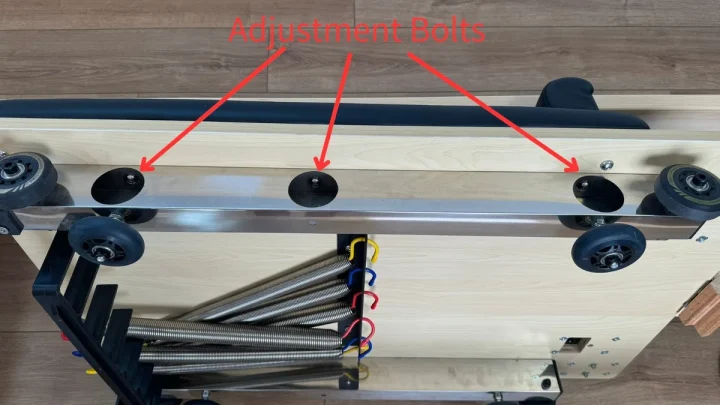
One-way catching points to guide wheel misalignment rather than a bent rail. Guide wheels sit on eccentric bolts or adjustable brackets along the carriage sides. When these guide rollers tilt slightly, they roll freely in one direction but wedge against the vertical rail wall when pushed in reverse.
Do wooden reformers have the same rail alignment issues as aluminum models?
Wooden reformers use aluminum or stainless steel C-channels mounted directly inside a hardwood frame. Seasonal humidity changes can cause the wood frame to swell or contract. This movement pinches the metal rails slightly inward, producing symptoms that mimic a bent rail extrusion.
When should I replace carriage wheels instead of the rail?
Replace your carriage wheels whenever you feel a rhythmic bump every few inches or spot visible flat spots on the tread. If the carriage rolls smoothly everywhere except for one localized stop, inspect the rail. If the bump repeats continuously across the full track length, replace the wheel set.

Similar Posts