How to Protect Reformer Rails from Costly Damage
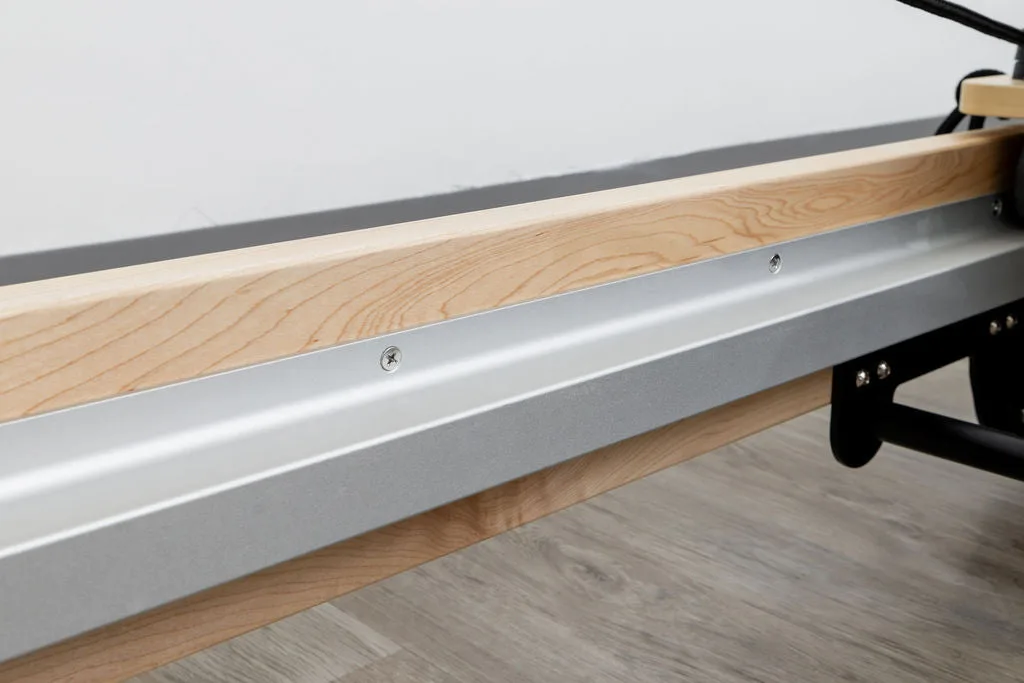
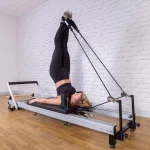
If your carriage feels bumpy or sluggish, learning how to prevent reformer rail damage is the fastest way to protect your studio investment. Pilates tracks endure intense friction during every workout session. When dust and grit settle on the metal, carriage wheels grind those particles directly into the running surface.
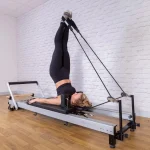
Manufacturer specifications indicate that studio reformers log hundreds of miles each year under dynamic body weight. Per safety guidelines from organizations like the Pilates Method Alliance, routine track care preserves mechanical safety and extends equipment life. Here is the exact process to keep your reformer rails gliding smoothly.
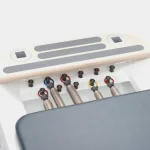
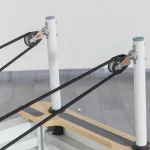
Image source: Bing (Web (fair-use with source credit))
Quick Answer
To know how to prevent reformer rail damage, wipe tracks daily with a dry microfiber cloth.
Never spray lubricants like WD-40 onto carriage rails.
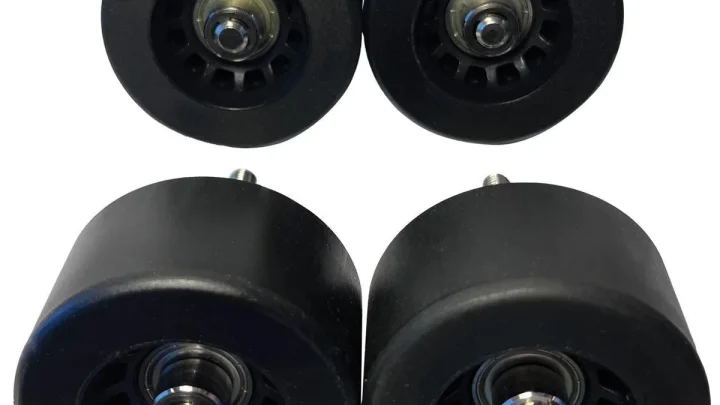
Keep carriage wheels clean and free of trapped hair.
Maintain a 1 mm gap on side-guide wheels.
Clean anodized aluminum weekly using mild dish soap.
The Real Culprits Behind Reformer Rail Wear and Black Track Dust
That sticky black residue on your reformer tracks is not just everyday floor dirt. It is a mix of shed polyurethane wheel material, skin oils, studio lint, and microscopic aluminum particles. When dirt enters the track channel, the heavy roller wheels crush it against the metal.
This friction creates a grinding compound. Over time, the wheels strip away the protective anodized finish on aluminum rails. Once that hard anodized layer wears through, the softer underlying aluminum scratches easily.
Sweat accelerates this destruction. Salt from perspiration corrodes bare metal surfaces and pits the tracks. If hair wraps around the wheel axles, the bearings bind and drag instead of spinning freely.
A skidding wheel quickly grinds flat spots and leaves heavy gouges in your track.
Diagnostic Workflow: Pinpointing Your Rail and Wheel Issues
Follow this diagnostic workflow to find and fix track problems before permanent metal damage occurs.
- If the carriage feels bumpy or clicks during movement: Check the load-bearing wheels for flat spots. Run a clean finger over each wheel circumference to feel for flat areas or embedded metal burrs.
- If the carriage squeals or rubs against the frame: Check your side-guide wheel clearance. The guide wheels may be pinching the rail wall too tightly.
- If you see black powdery lines along the track: Your wheels are shedding material due to rail grit. Deep-clean the tracks and degrease the wheel surfaces immediately.
- If you notice silver gouges on the rail bed: A wheel bearing has seized or hard debris is trapped under the carriage. Stop using the machine until you inspect the axle assembly.
[Start Inspection]
        │
        ▼
Carriage glide feel?
 ├── Bumpy / Clicking ──► Inspect load wheels for flat spots ──► Replace damaged wheels
 ├── Squeaking / Rubbing ─► Check guide wheel gap (1.0 mm) ──► Re-align guide wheels
 └── Gritty / Dragging ──► Check track for grit & hair ──────► Clean tracks & axles
Step-by-Step Cleaning and Maintenance Routine for Anodized and Steel Rails
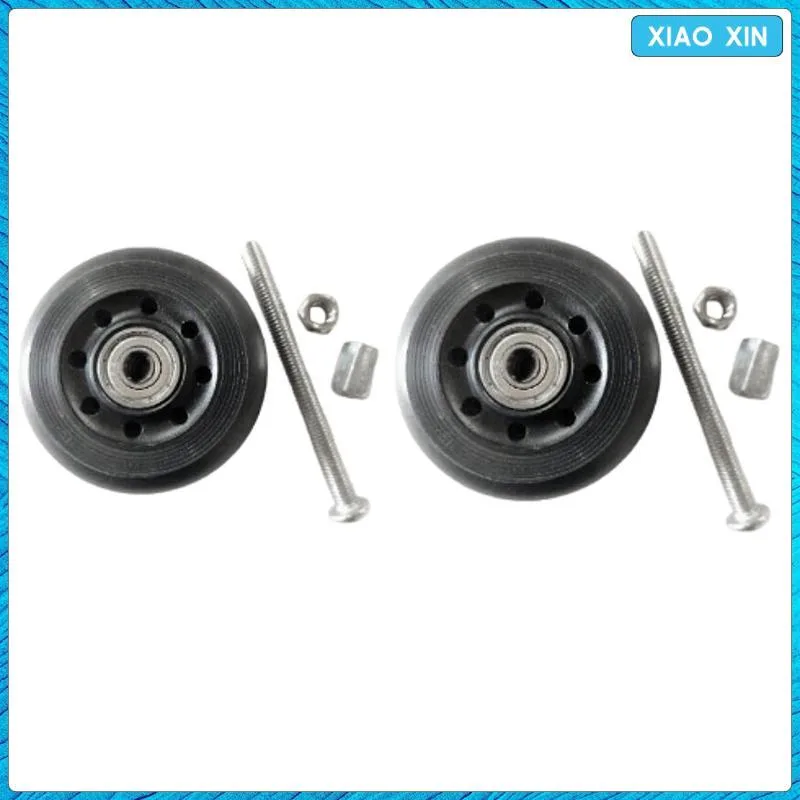
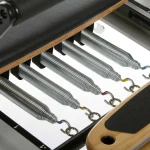
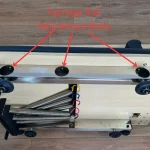
Image source: Web (Bing) / merrithew.com (Web image (fair-use with source credit))
A consistent maintenance schedule keeps tracks clean and prevents premature scoring. Use this table as a reference for cleaning frequencies and materials.
| Frequency | Target Area | Recommended Cleaner | Tool |
|---|---|---|---|
| Daily | Track surface | None (Dry) | Microfiber cloth |
| Weekly | Rail channels and sidewalls | Warm water with mild dish soap | Damp microfiber towel |
| Bi-Weekly | Carriage roller wheels | Warm water with dish soap | Microfiber cloth or soft brush |
| Monthly | Wheel axles and bearings | Dry pick or tweezers | Lint-free detailing cloth |
1. Daily Dry Track Wipe-Down
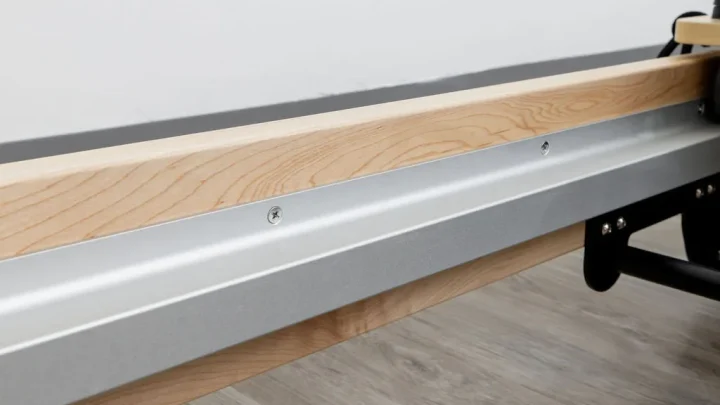
Wipe the entire length of both rails with a dry microfiber cloth after each day of use. Move the carriage to both ends to reach every hidden spot. Never let sweat or studio dust sit on the tracks overnight.
2. Weekly Deep Track Wash
Dampen a clean microfiber cloth with warm water and a tiny drop of mild dish soap. Wipe down the top surface, inner channels, and outer edges of each rail. Follow immediately with a dry towel to remove all moisture.
3. Wheel Tread Degreasing
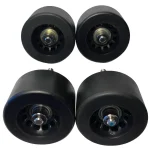
Roll the carriage slowly while holding a damp soapy cloth against each roller wheel. This removes embedded body oil, wax, and sticky grime. Dry the wheels thoroughly before putting the reformer back into service.
4. Axle Debris Extraction
Inspect the wheel hubs for trapped hair and grip-sock lint. Use tweezers or a soft pick to pull hair out of the axle gap. Hair wrapped around the axle ruins wheel bearings and causes the carriage to drag.
How to Check and Calibrate Carriage Wheel Alignment
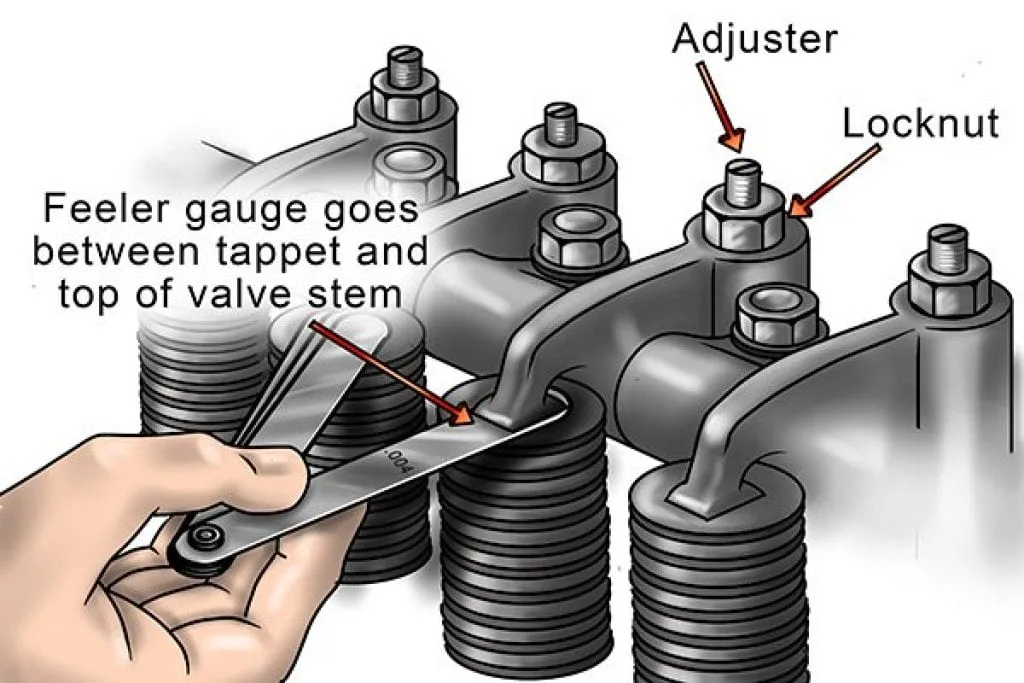
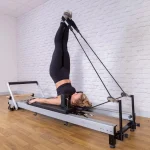
Image source: Bing (Web (fair-use with source credit))
Misaligned side-guide wheels force the carriage against the rail sidewall. This friction wears down the aluminum and creates uneven drag.
Standard manufacturer guidelines specify a 1.0 mm to 1.5 mm gap between the side-guide wheels and the rail wall. You can test this clearance using a standard plastic credit card.
Slide the card between the guide wheel and the inner rail edge. The card should slide through with slight resistance. If the card cannot fit, the wheel is too tight and will score the track wall.
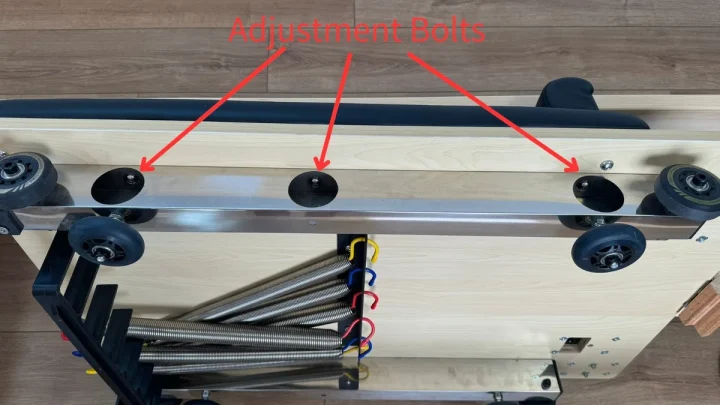
To adjust the clearance, locate the mounting bolt or eccentric spacer on the guide wheel bracket. Loosen the bolt slightly with an Allen wrench. Shift the wheel bracket until you achieve the proper 1.0 mm gap, then tighten the bolt securely.
Check both sides of the carriage to ensure even tracking along the entire length of the frame.
Critical Mistakes That Permanently Ruin Pilates Reformer Tracks
The most destructive mistake is applying spray lubricants like WD-40 or silicone directly onto the rails. Lubricants turn dust into an abrasive paste that rapidly grinds away the track surface. Equipment care standards from manufacturers like Balanced Body confirm that tracks must stay completely dry and degreased.
Another major mistake is using abrasive scouring pads or steel wool to scrub away track marks. Abrasive pads strip the anodized coating off aluminum rails. Once that protective layer is gone, the raw aluminum will oxidize and degrade quickly.
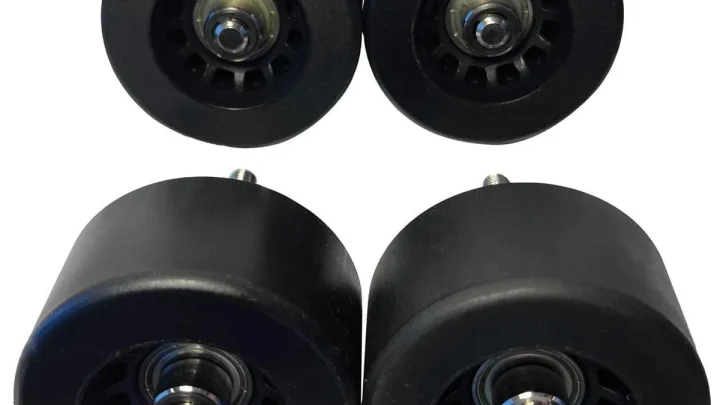
Never ignore cracked or flat-spotted rollers. As of 2026, modern polyurethane wheels are simple to replace, while replacing an entire welded frame rail can cost hundreds of dollars. Running a damaged wheel over your tracks will cause permanent surface pitting within days.
Rail Material Differences and Replacement Cost Realities
Reformer tracks generally use anodized aluminum extrusions or tubular stainless steel runners. Each material handles everyday wear, debris buildup, and cleaning solvents differently.
Anodized aluminum is standard on studio machines. It offers lightweight strength and a smooth glide, but the anodized coating is thin. Once deep grooves cut through that protective layer, the rail cannot be re-anodized in place and requires full replacement.
Stainless steel rails are heavier and more resistant to scratching. However, steel tracks still suffer if grit gets crushed under the wheels, leading to noisy carriage movement.
+---------------------+-----------------------+-----------------------+
| Feature             | Anodized Aluminum     | Stainless Steel       |
+---------------------+-----------------------+-----------------------+
| Scratch Resistance  | Moderate (Vulnerable) | High                  |
| Cleaning Tolerance  | Mild soap / dry only  | Mild soap / alcohol   |
| Wheel Compatibility | Soft polyurethane     | Hard polymer / PU     |
| Average Rail Cost   | $400 to $900+         | $600 to $1,200+       |
| Replacement Wheel   | $30 to $80 per set    | $30 to $80 per set    |
+---------------------+-----------------------+-----------------------+
Neglecting track maintenance carries real financial consequences. Replacing a full set of worn carriage wheels costs around $30 to $80. In contrast, replacing warped or heavily scored rails often exceeds $500 in parts alone, plus professional installation labor.
Frequently Asked Questions About Reformer Track Care
Can you use rubbing alcohol to clean Pilates reformer rails?
Use 70 percent isopropyl alcohol only on stainless steel rails or unanodized metal parts. For anodized aluminum tracks, stick to warm water with mild dish soap. Frequent alcohol use can dry out synthetic roller materials and discolor protective coatings over time.
Why is my reformer carriage making a squeaking noise?
Carriage squeaking usually points to misaligned side-guide wheels rubbing directly against the rail sidewall. Check the guide wheels for trapped hair, dirt buildup, or worn bearings. Make sure you have a uniform 1.0 mm gap between the guide wheel and the track wall.
How often should reformer carriage wheels be replaced?
Studio reformers under heavy daily use need new carriage wheels every one to two years. Home reformers often run smoothly for three to five years before requiring replacement. Replace wheels immediately if you spot flat areas, cracked polyurethane, or surface gouges deeper than 0.5 mm.
Should you lubricate reformer tracks with silicone spray?
Never apply silicone spray, WD-40, or machine oil directly onto reformer tracks. Wet lubricants trap dust, grip-sock lint, and skin flakes. This mixture turns into an abrasive paste that grinds away the track finish and permanently scores the metal.
What causes black dust to form on reformer rails?
Black track dust comes from normal polyurethane wheel shedding mixed with airborne dust and aluminum residue. Heavy user loads and dirty tracks speed up this shedding process. Wiping the tracks daily with a dry microfiber cloth stops this dust from accumulating.

Similar Posts