Pilates Reformer Board vs STAERK Suspension: Which Is Better?
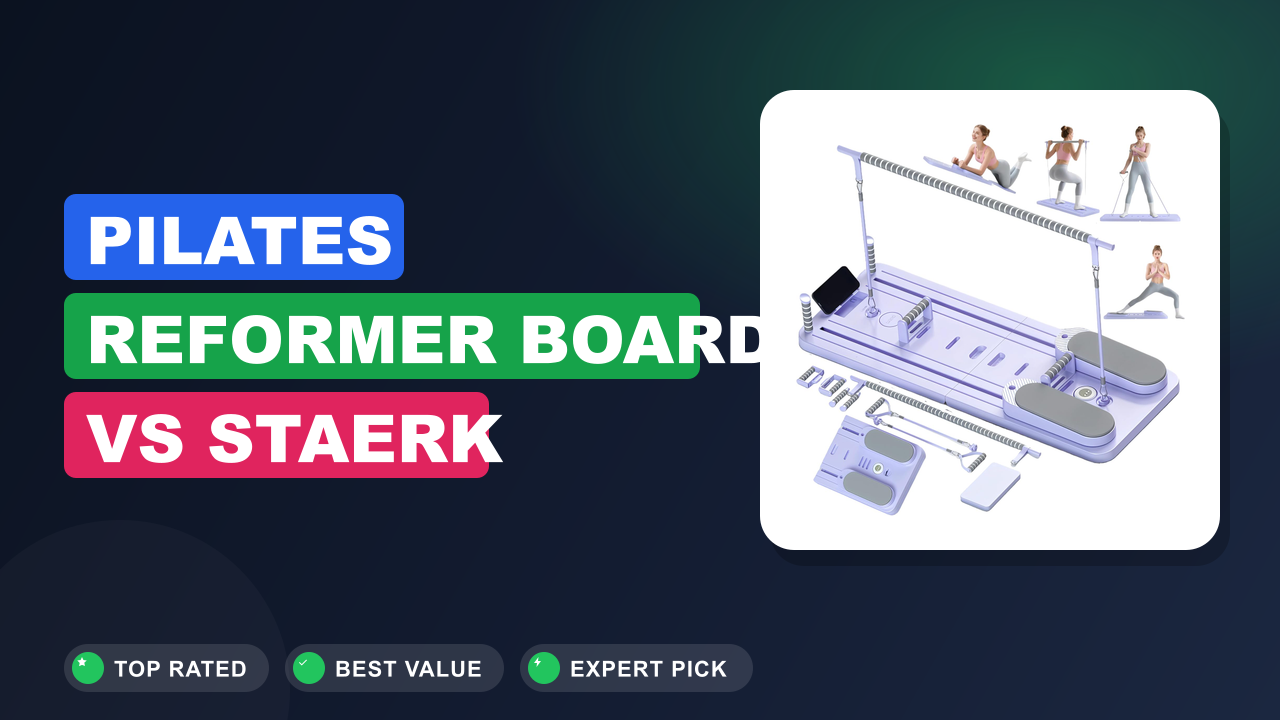
Choosing the right home Pilates setup often comes down to choosing between sliding floor mechanics and overhead bodyweight suspension. In this detailed evaluation of the Pilates Board-Pilates Reformer Board vs STAERK Pilates Suspension Training System, our editorial team analyzes how each format challenges core stabilization, enhances flexibility, and delivers value for home workouts.
Short answer: the Pilates Board-Pilates Reformer Board wins for beginners seeking a grounded sliding platform on a budget, while the STAERK Pilates Suspension Training System wins for practitioners who want studio-grade suspension resistance, joint decompression, and complete full-body versatility. Below is our head-to-head breakdown based on aggregate user feedback, technical specifications, and mechanical engineering analysis.
| Product | Details | Rating | Buy |
|---|---|---|---|
Editor’s Choice  | Pilates Board-Pilates Reformer Board | ★★★★☆4/5 | |
Top Pick  | STAERK Pilates Suspension Training System | ★★★★★5/5 |
At a glance
The Pilates Board-Pilates Reformer Board is an entry-level floor apparatus designed to replicate classic reformer carriage glides using elastic cord tension and low-friction sliding pads. In contrast, the STAERK Pilates Suspension Training System is a premium suspension apparatus engineered around multi-vector bodyweight loading, anchoring to solid doors, ceiling mounts, or overhead beams.
While traditional studio reformers from brands like Balanced Body or Merrithew occupy substantial floor space, both of these systems offer compact alternatives. The floor board caters to users wanting guided linear motion on a tight budget. The STAERK system targets committed practitioners seeking high-grade webbing, infinite angle adjustments, and Cadillac-style suspended movements.
| Spec | Pilates Board-Pilates Reformer Board | STAERK Pilates Suspension Training System |
|---|---|---|
| Equipment Category | Sliding Floor Board & Resistance System | Overhead Bodyweight Suspension System |
| Primary Resistance Mechanism | Latex Elastic Tubes (Fixed Ratings) | User Bodyweight & Variable Vector Angles |
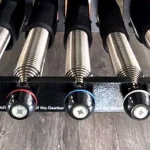
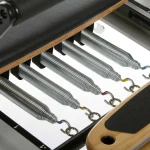
| Hardware & Fasteners | Standard Steel Carabiners & Plastic Eyelets | Aviation-Grade Aluminum Carabiners & Sliders |
| Anchor Requirement | Freestanding (Flat Floor Space) | Structural Door, Overhead Rig, or Wall Mount |
| Weight Capacity | Up to 250 lb (Board Frame Rating) | Tested Beyond 600 lb (Strap Tensile Rating) |
| Unit Footprint & Storage | Foldable Board (Takes Under-Bed Floor Space) | Compact Mesh Travel Bag (Weighs Under 3 lb) |
| Price Tier | Budget / Entry-Level | Premium / Studio-Grade |
| Target User | Beginners wanting linear mat & reformer drills | Intermediate to advanced core & mobility trainers |
1. Pilates Board-Pilates Reformer Board
In our research, the Pilates Board-Pilates Reformer Board serves as an accessible entry point for home exercisers who want reformer-style sliding motion without dedicating an entire room to a studio frame. Aggregate user reviews highlight its foldable footprint and intuitive setup as major advantages for apartment living.
Pilates Board-Pilates Reformer Board: Strengths and Weaknesses
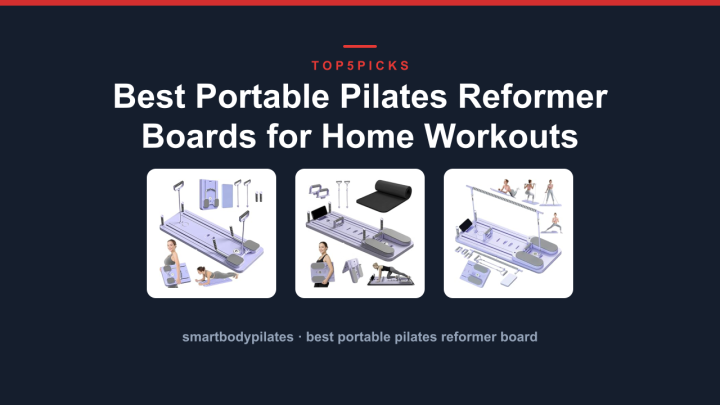
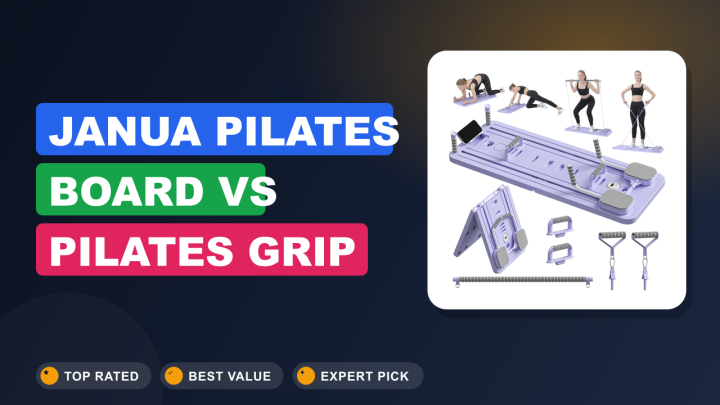
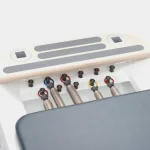
The Pilates Board-Pilates Reformer Board centers on a split-folding platform equipped with glide tracks, foot loops, and elastic resistance cords. It attempts to simulate the linear carriage glide of a standard reformer within a compact plastic footprint.
Where it shines
- Low Barrier to Entry: The all-in-one base station allows users to perform basic reformer exercises such as seated rows, leg presses, and kneeling lunges without purchasing additional anchor hardware.
- Grounded Stability for Beginners: Because exercises are performed directly on the ground, users with balance limitations or recovering from joint issues feel fully supported compared to suspended apparatuses.
- Integrated Multi-Grip Attachments: The package includes dual handles, foot straps, and adjustable tension cords, allowing fast transitions between upper-body pulling and lower-body pressing movements.
- Foldable Storage Profile: The central hinge lets the board fold flat, sliding easily beneath a bed frame or standing upright inside a shallow closet.
- Cost-Effective Home Fitness: It provides functional sliding resistance at a fraction of the cost required for standalone studio reformer machines.
Where it falls short
- Plastic Track Friction: User feedback indicates the sliding pads generate moderate surface friction, lacking the ultra-smooth ball-bearing glide found on professional aluminum reformers.
- Band Tension Inconsistency: Resistance bands lose tension at the bottom of a stroke, meaning peak resistance occurs only at full band extension rather than providing the constant linear pull of metal springs.
- Limited Track Length: Taller users over six feet report running out of track length during extended lunges or full carriage extensions.
- Durability Concerns Under Heavy Loads: The high-impact plastic housing flexes noticeably when dynamic movements are performed by users near the upper weight threshold.
Editorial analysis of customer feedback shows that while the board handles foundational matwork and light resistance routines effectively, advanced users frequently outgrow the stock elastic bands within several months of consistent training.
2. STAERK Pilates Suspension Training System
According to our product analysis, the STAERK Pilates Suspension Training System reimagines reformer and Cadillac exercises through high-tensile suspension webbing. Verified buyer reviews emphasize its professional-grade construction, frictionless adjustment buckles, and immense core stabilization demands.
STAERK Pilates Suspension Training System: Strengths and Weaknesses
The STAERK system utilizes heavy-duty nylon webbing, dual padded foot cradles, and custom aluminum hardware. It anchors to any solid door, overhead pull-up bar, or structural ceiling joist to create a versatile suspension environment.
Where it shines
- Studio-Grade Build Quality: Heavy-duty military-spec webbing, reinforced box stitching, and aviation-grade aluminum carabiners ensure maximum safety under intense dynamic bodyweight loads.
- Infinite Variable Resistance: Resistance is modulated entirely by shifting your center of gravity and foot angle, providing a progression ceiling that never tops out.
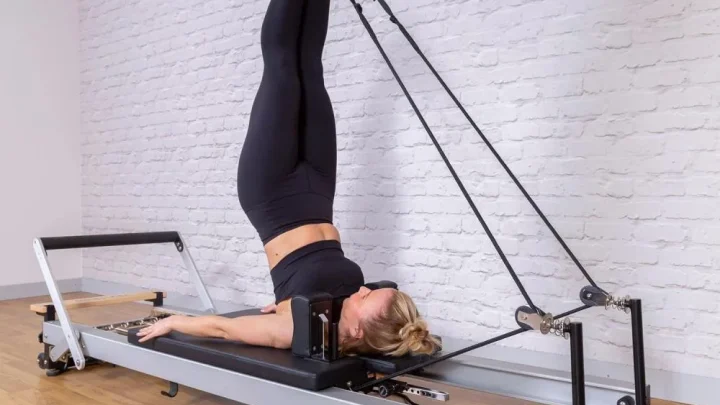
- Cadillac and Reformer Hybrid Movement: By suspending the limbs in space, it allows users to perform advanced suspended pikes, long-spine stretches, and inverted teasers that cannot be replicated on a standard floor board.
- Zero Floor Space Clutter: The entire system packs down into a lightweight carry pouch, making it the superior option for frequent travelers and minimalist home gyms.
- Exceptional Core and Rotator Cuff Recruitment: Unstable strap anchors force deep stabilizing muscles (like the transversus abdominis and serratus anterior) to engage continuously throughout every repetition.
Where it falls short
- Higher Price Tier: The premium engineering and materials come at a significantly higher initial investment than basic plastic floor boards.
- Steeper Learning Curve: Beginners without solid core baseline strength may struggle to maintain proper spinal alignment during unstable suspended planks and lunges.
- Rigid Anchor Requirements: The system requires a solid, standard-height interior door that closes toward the user, or a dedicated overhead ceiling bracket to execute the full movement catalog.
- No Fixed Linear Guide: Without a solid track to guide your limbs, maintaining symmetry requires higher proprioceptive awareness and deliberate technique.
Industry data confirms that suspension-based core training provides high levels of deep abdominal activation. Clinical research cataloged by the National Center for Biotechnology Information demonstrates that unstable suspension surfaces significantly elevate muscle engagement across the core and shoulder stabilizers compared to fixed floor exercises.
Head-to-head
Price-to-Performance
The price gap between these two systems reflects their respective build philosophies and intended user bases. The Pilates Board offers exceptional value for individuals seeking basic reformer-style workouts without spending hundreds of dollars. It includes all necessary straps and basic attachments right out of the box.
On the other hand, the STAERK system commands a premium price tag that reflects its industrial hardware, commercial-grade webbing, and longevity. If your goal is a long-term investment that replicates boutique studio training, STAERK justifies its cost through durable craftsmanship and versatility. For casual workouts, the budget-friendly board delivers solid everyday utility.
Core Stability and Muscle Recruitment
The Pilates Board relies on a stable, two-dimensional sliding plane. Your hands or knees stay in direct contact with the floor or board base, which limits the balance challenge but allows for precise, isolated muscle burn in the glutes and hip flexors.
The STAERK system elevates muscle activation by introducing multidirectional instability. Suspended in air, your stabilizing muscles work overtime to prevent strap wobble during standard movements like chest presses, suspended roll-outs, and single-leg squats. Peer-reviewed fitness research from organizations like the American Council on Exercise underscores that suspension training recruits core stabilizers more intensely than rigid floor apparatuses.
Build Quality and Material Durability
Material choices drastically separate these two products. The Pilates Board utilizes molded ABS plastic for its frame and slide carriages, paired with standard rubber latex cords. Over time, plastic tracks collect dust and debris, causing friction, while latex cords gradually lose elasticity after extended cycles.
STAERK employs high-density nylon webbing, marine-grade stitching, and custom aluminum cam buckles that endure thousands of dynamic repetitions without wear. Its hardware is built to withstand high tensile loads, eliminating concerns about frame cracks or band snapping during strenuous workouts.
Portability and Space Efficiency
While the Pilates Board folds in half, it remains a rigid piece of equipment measuring over three feet long when folded, weighing around 12 to 15 pounds. Storing it requires dedicated under-bed clearance or closet floor space, making it impractical for luggage travel.
The STAERK system weighs under 3 pounds and packs neatly into a compact mesh storage pouch the size of a water bottle. You can toss it into a carry-on suitcase, attach it to a hotel room door, or loop it around a tree branch at an outdoor park, giving it unmatched portability.
Ease of Use for Beginners
Beginners frequently find the Pilates Board less intimidating. Its fixed track provides immediate tactile feedback and restricts movement to a linear path, reducing the risk of falling or hyperextending joints.
Suspension systems require users to understand how body angle dictates resistance. A beginner attempting a suspended plank without adequate lumbar control can experience lower back strain if their hips sag. For complete novices working out without an instructor, the sliding board provides safer structural guardrails.
Which one should you buy?
Pick Pilates Board-Pilates Reformer Board if you…
You want an affordable, self-contained workout platform that emulates the sliding sensation of a traditional reformer carriage on a budget. It is ideal for beginners, seniors, or those rehabilitating joints who need a stable floor base without hanging from door anchors. If your budget is firmly under the premium bracket and you have open floor space, this board meets basic home fitness needs.
Pick STAERK Pilates Suspension Training System if you…
You want a studio-grade, professional suspension rig capable of delivering intense core activation, spinal decompression, and athletic conditioning. It is ideal for intermediate to advanced Pilates practitioners, fitness enthusiasts, and travelers who refuse to skip workouts on the road. If you prioritize long-lasting build quality and an unlimited strength progression ceiling, the STAERK system is worth every penny.
Better alternatives
- TRX Home2 System: A standard suspension trainer that focuses on functional bodyweight fitness, though it lacks the specialized Pilates foot cradles and specific strap textures found on the STAERK.
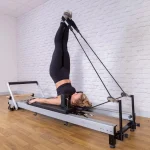
- Merrithew SPX Home Reformer: A full-size traditional metal reformer featuring real spring tension and an authentic gliding carriage, though it costs thousands of dollars and requires a permanent room footprint.
| Best for Budget-Conscious Home Reformer Drills | Pilates Board-Pilates Reformer Board |
| Best for High-Intensity Core & Suspension Training | STAERK Pilates Suspension Training System |
| Best for Frequent Travelers & Small Spaces | STAERK Pilates Suspension Training System |
| Best for Joint Rehab & Complete Beginners | Pilates Board-Pilates Reformer Board |
Frequently Asked Questions (FAQ)
Can the Pilates Board replace a full studio reformer?
A portable Pilates board cannot completely replace a commercial reformer. While it effectively mimics basic linear carriage glides and band rows, it lacks calibrated steel springs, a padded footbar, and frictionless ball-bearing rollers. It serves as a practical, space-saving substitute for home maintenance rather than an identical studio equivalent.
Is the STAERK Suspension System safe for home doors?
Yes, provided you install the anchor on a solid, properly latching door that closes toward you. The STAERK door anchor features a heavy-duty, padded stopper that distributes force evenly across the door frame without damaging the wood or paint. Avoid using it on hollow-core closet doors or sliding bi-fold doors.
How does resistance differ between elastic bands and suspension straps?
Elastic resistance bands provide progressive resistance, meaning the load feels lightest at the start of the motion and heaviest when fully stretched. Suspension straps utilize your body weight and gravity. You adjust resistance instantly by walking your feet closer to or further from the anchor point, providing constant tension throughout the entire movement.
Which system is gentler on the lower back?
The Pilates Board is generally gentler for individuals with active lower back sensitivity because the floor supports your entire pelvis and spine during movement. Suspension training places intense demands on core endurance, which can lead to spinal extension if your abdominal wall fatigues during suspended positions.
Can you wash the straps and pads on these systems?
The STAERK nylon straps and padded handles can be spot-cleaned with mild detergent or hand-washed in cool water and hung to dry. The Pilates Board features plastic housing and foam knee pads that should be wiped clean with a disinfectant towel, keeping moisture away from metal hinges and connection clips.
Final verdict
When comparing the Pilates Board-Pilates Reformer Board (Rating: 4.1/5) against the STAERK Pilates Suspension Training System (Rating: 4.8/5), your choice hinges on your workout style, budget, and fitness background.
Choose the Pilates Board-Pilates Reformer Board if you want an entry-level sliding platform that brings basic reformer mat exercises into your living room at an accessible price. Choose the STAERK Pilates Suspension Training System if you want a premium, studio-grade suspension rig that builds functional core power and travels anywhere without wearing out.
Affiliate disclosure: This post contains affiliate links. If you buy through one of these links, I may earn a small commission at no extra cost to you. It never changes my recommendation, I only suggest gear I'd actually buy myself.

Similar Posts