How to Protect Pilates Reformer Upholstery From Cracking
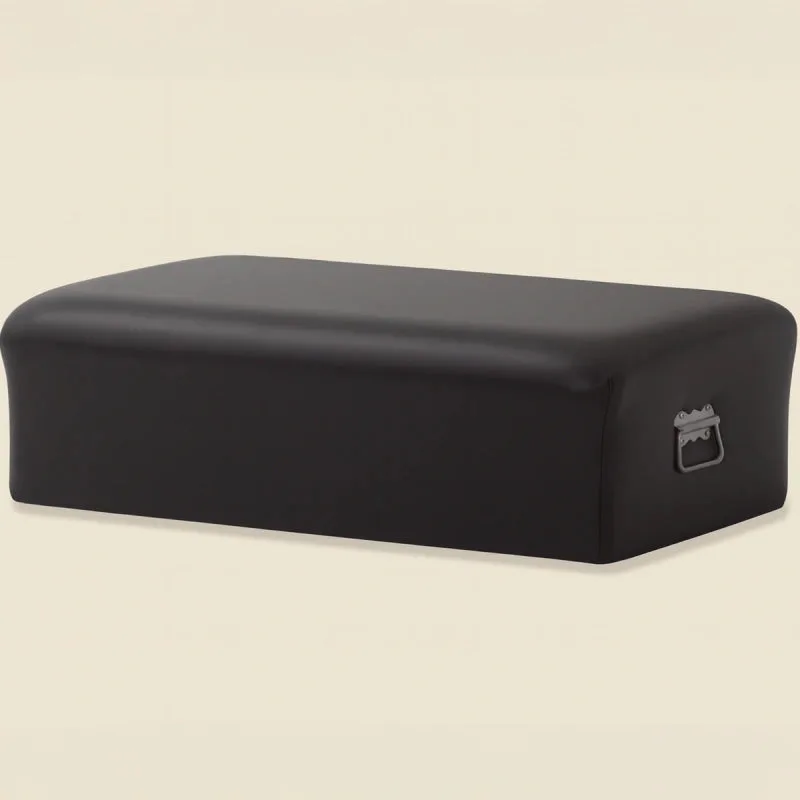
Pilates reformers face constant friction, sweat, and chemical exposure every single day. Learning how to protect reformer upholstery from cracking is essential if you want to avoid costly carriage replacements. Upholstery damage usually starts beneath the surface long before visible peeling appears.
Most commercial reformers use marine-grade polyvinyl chloride (PVC) engineered to withstand 50,000 to 100,000 double rubs on the Wyzenbeek abrasion scale. Even tough vinyl fails quickly if exposed to improper cleaning agents or poor hygiene routines. Understanding the material science behind your carriage vinyl is the best way to keep it supple.
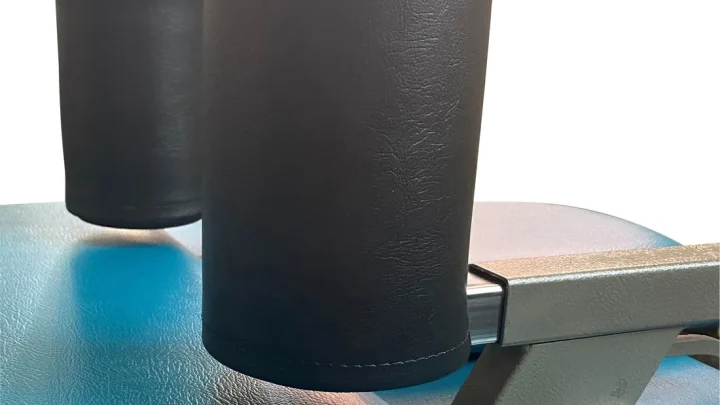
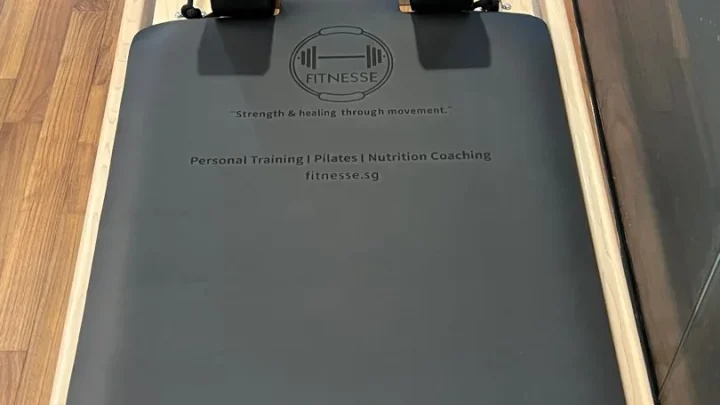
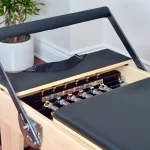
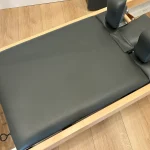
Image source: Bing (Web (fair-use with source credit))
Quick Answer
To protect reformer upholstery from cracking, clean it daily with mild soapy water. Always dry the vinyl immediately using a clean microfiber towel. Never use alcohol, bleach, or harsh solvent wipes.
Apply a dedicated vinyl protectant once every month. Keep reformers away from direct sunlight and heat sources.
Why Reformer Vinyl Cracks (The Science Behind the Damage)
Plasticizer Migration: How Upholstery Loses Its Flex
Reformer upholstery is made of marine-grade PVC or polyurethane faux leather. Manufacturers add oily chemical compounds called plasticizers to make rigid PVC soft and pliable.
Over time, heat, body oils, and harsh cleaners pull these plasticizers out of the vinyl matrix. Once the plasticizers leach away, the vinyl hardens and shrinks. The material becomes brittle and develops spiderweb cracks under normal client weight.
The Destructive Chemistry of Everyday Disinfectants
Standard gym wipes are the leading cause of premature reformer vinyl failure. High-alcohol wipes, bleach dilutions, and quaternary ammonium compounds strip the factory clear coat.
Chemical degradation leaves the synthetic leather dry and stiff within months. Commercial disinfectants also break down the cross-linked polymer chains on the surface. Always choose neutral formulations designed for synthetic leather.
Sweat, Friction, and Mechanical Wear
Human sweat contains mineral salts, urea, and natural body oils. When sweat evaporates on the carriage pad, microscopic salt crystals remain behind.
As clients move, those sharp crystals grind into the vinyl topcoat like fine sandpaper. Trapped skin sebum also softens the topcoat over time. This chemical reaction accelerates mechanical wear at heavy contact points.
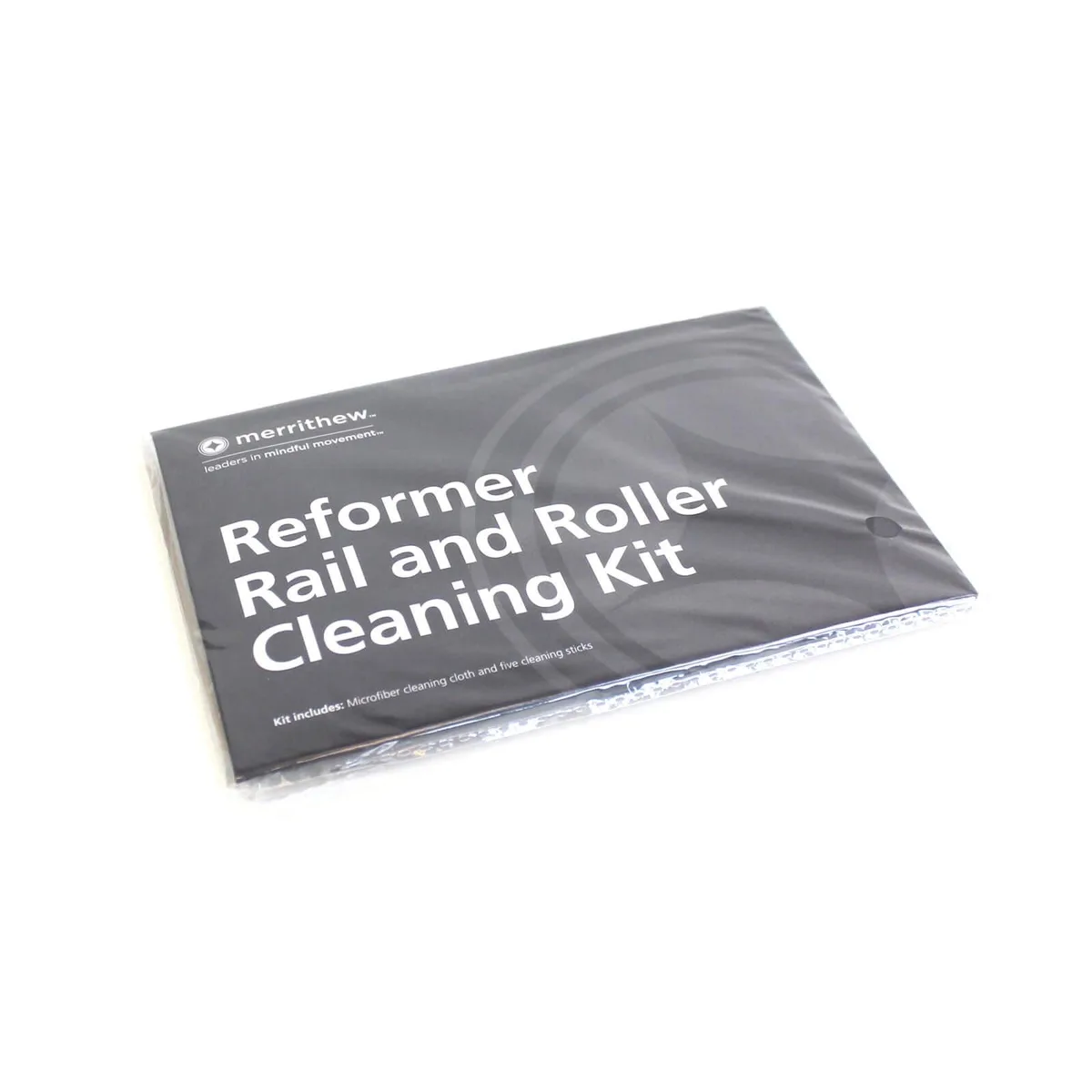
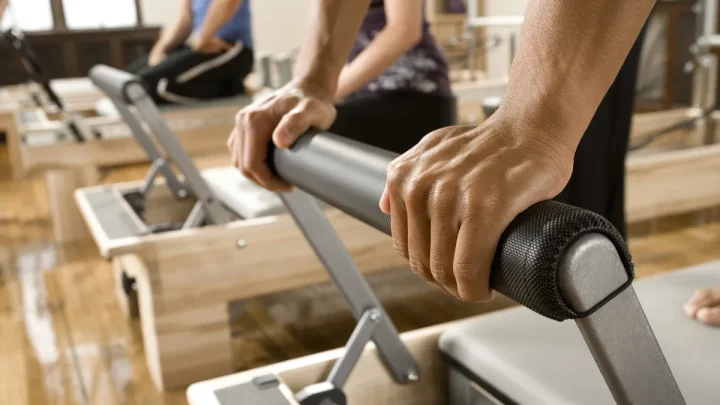
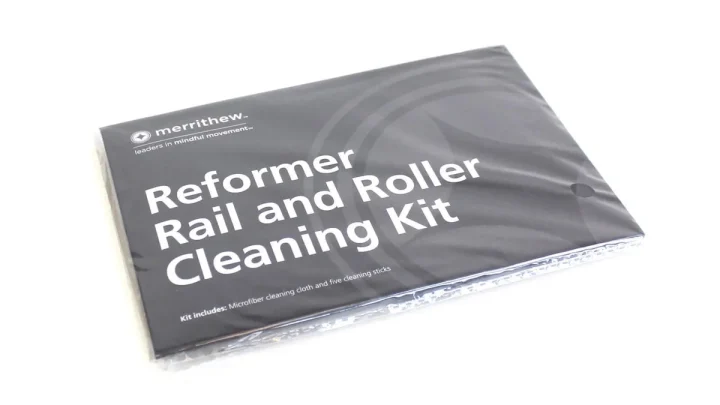
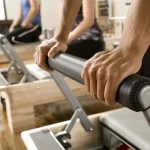
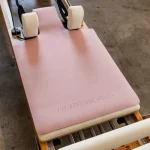
Image source: Web (Bing) / merrithew.com (Web image (fair-use with source credit))
The Daily & Weekly Upholstery Care Workflow
The 2-Cloth Wipe-Down Technique (Post-Session)
Never let liquid disinfectant air-dry on your carriage vinyl. Use the two-cloth method after every workout session.
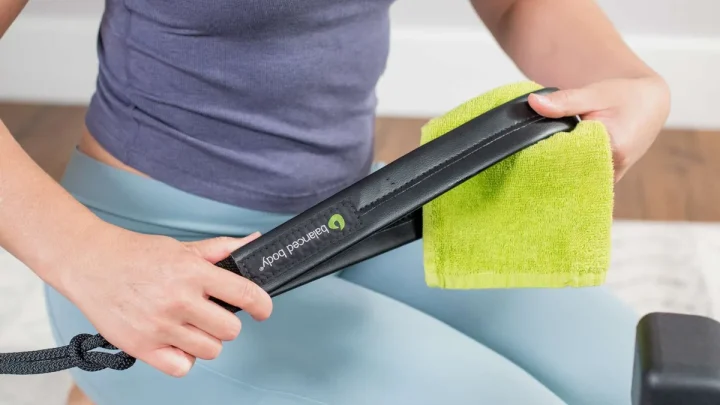
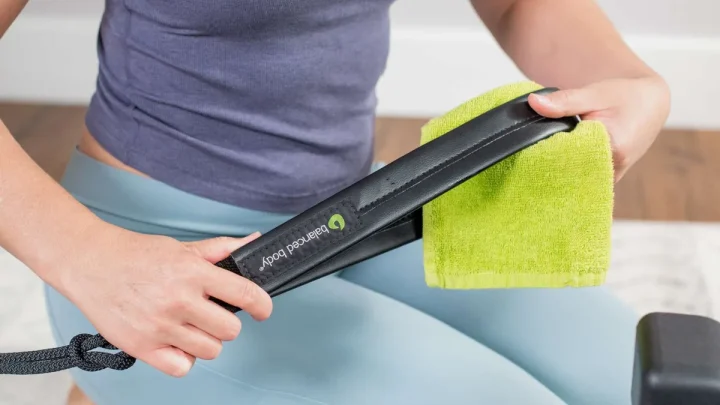
Dampen your first microfiber cloth with your cleaning solution. Wipe down the carriage, headrest, and shoulder rests thoroughly. Follow immediately with a second dry microfiber cloth to remove all chemical residue.
The Weekly Deep-Clean and Sebum Removal Routine
Set aside time once a week for a deeper surface wash. Mix a few drops of mild, fragrance-free dish soap with warm distilled water.
Gently scrub the carriage using circular motions with a plush microfiber pad. Wipe the surface down with a clean, damp cloth to lift the trapped dirt. Buff the entire surface dry with a clean towel.
Safe Chemistry vs. Harmful Cleaners: What to Use and What to Ban
Understanding chemical compatibility protects your upholstery and preserves your warranty. Equipment guidelines from manufacturers like Balanced Body emphasize avoiding solvents, citrus cleaners, and abrasive pads.
| Cleaner Category | Chemical Examples | Impact on Vinyl | Recommended? |
|---|---|---|---|
| Safe Surfactants | Mild dish soap (pH 6.5-7.5), distilled water | Cleans dirt and oils without stripping plasticizers | Yes (Daily & Weekly) |
| Approved Sanitizers | Quat-based, alcohol-free disinfectants | Kills bacteria without drying out the topcoat | Yes (Wipe dry quickly) |
| Harmful Solvents | Isopropyl alcohol (>10%), bleach, acetone | Leaches plasticizers and causes rapid embrittlement | Never |
| Natural Cleaners | Pure vinegar, tea tree oil, citrus oils | Acidic compounds eat through protective topcoats | Avoid |
The Environment Decision Tree: Studio vs. Home Reformer Care
Commercial Studio Workflow (High-Volume Turnover)
If your reformer runs five to ten classes per day, rapid turnover is your main challenge. Instructors or clients should wipe down equipment between every single session.
Use an alcohol-free, hospital-grade sanitizer with a neutral pH. Mandate the two-cloth dry-wipe rule to prevent chemical pooling. Perform a weekly soap wash to strip off dried sanitizing salts.
Home Gym Workflow (Low-Volume, Longevity Focus)
If you own a personal reformer, skip heavy disinfectant sprays entirely. A simple wipe with warm water and a drop of dish soap is plenty.
Wipe the carriage down after your workout to remove body sweat. Apply a vinyl protectant once every six to eight weeks. This routine keeps the material soft for decades.
Climate Controls: Managing UV Exposure and Humidity
Environmental conditions degrade vinyl just as fast as friction and chemicals. Direct ultraviolet light breaks down polymer bonds, causing surface chalking and discoloration.
As of 2026, many modern studios install UV-filtering window tinting on large glass windows. Maintain an indoor relative humidity between 40% and 60% to prevent polyurethane hydrolysis.
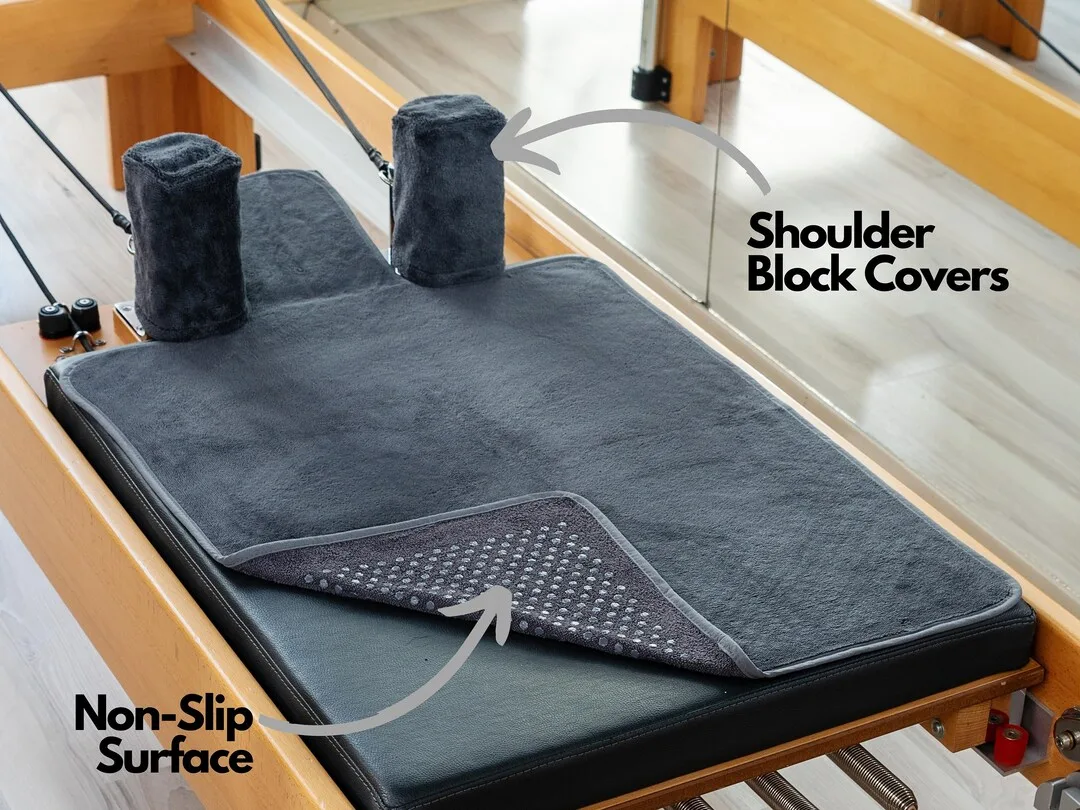
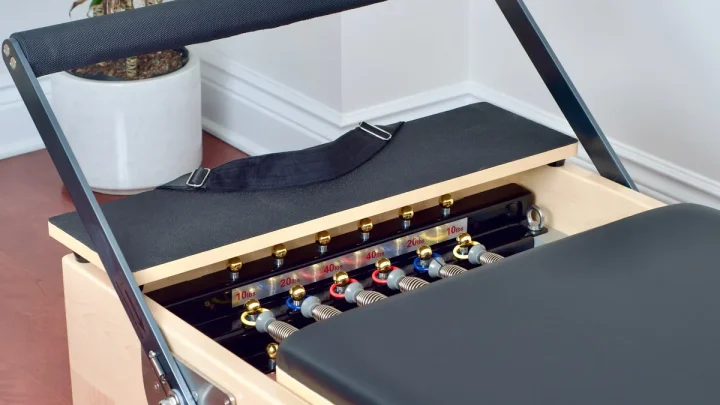
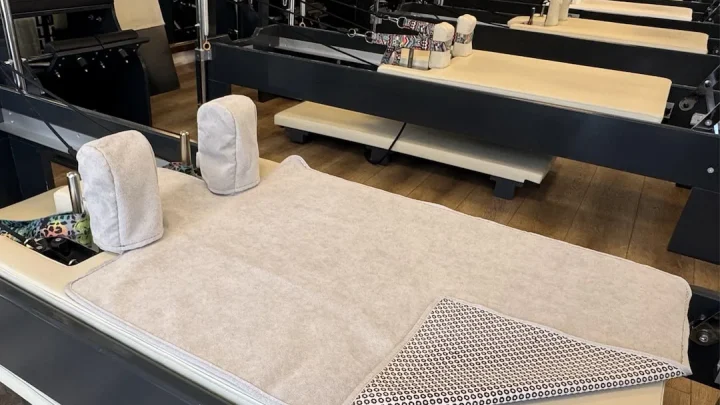
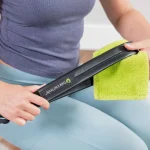
Image source: Bing (Web (fair-use with source credit))
Physical Protection Strategies That Extend Vinyl Life
Carriage Mats and Fitted Towel Grippers
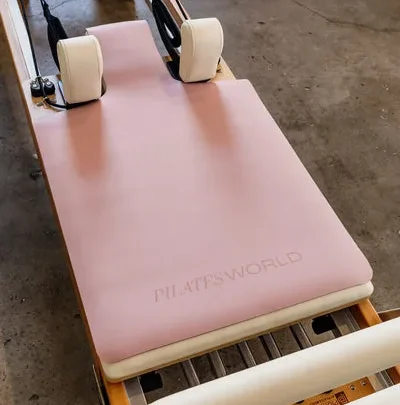
Adding a physical barrier is the easiest way to prevent surface damage. Thin microfiber carriage mats with non-slip silicone backings absorb sweat during high-intensity classes.
These mats shield the vinyl from body heat, cosmetics, and friction. Toss the mats into the washing machine weekly to maintain studio hygiene.
Studio Dress Code Policies That Save Your Carriage
Enforce a clear apparel policy to prevent physical punctures and tears. Ban workout tights with back zippers, metal rivets, or rough decorative seams.
Require clean grip socks for all clients and instructors. Grip socks stop hard skin, calluses, and toenails from gouging the carriage pad during footwork.
Strategic Headrest and Shoulder Rest Rotation
Shoulder rests and headrests take the brunt of hair oils, makeup, and heavy body weight. These parts wear down much faster than the flat carriage platform.
If your reformer design allows it, swap the left and right shoulder rests once a month. Rotating these pads spreads the mechanical wear evenly across both components.
Common Maintenance Mistakes That Ruin Reformer Upholstery
The "Spray and Walk Away" Dwell Time Error
Spraying disinfectant directly onto the reformer and walking away ruins the material. Liquid pools along seams and seeps through the needle holes.
As the liquid evaporates, concentrated chemical salts stay behind on the vinyl. Always spray cleaner onto a cloth first, or wipe the carriage completely dry within thirty seconds.
Using Household Essential Oils and "Natural" DIY Solutions
Natural cleaners are often very aggressive on synthetic vinyl coatings. Essential oils like tea tree, lavender, and eucalyptus contain natural solvents that dissolve vinyl topcoats.
These oils make the surface feel sticky before it turns brittle and cracks. Vinegar is also too acidic for regular use on PVC upholstery.
Over-Saturating Seams and Stitch Lines
The perimeter seams and underside staples are the most vulnerable areas on a reformer pad. When excess liquid penetrates the stitching, the foam core absorbs it like a sponge.
Trapped moisture rots the fabric backing and breaks down the inner foam core. Keep cleaning cloths damp rather than soaking wet when wiping near seams.
When to Recondition vs. When to Reupholster
Diagnostic Check: Evaluating Surface Health
Catching vinyl degradation early lets you save the material before cracks split open. Run your bare fingers across high-contact zones like the headrest and carriage center.
If the vinyl feels slightly stiff or dry, a gentle deep clean and protectant treatment will restore its flexibility. If the surface shows visible spiderweb micro-fissures, the topcoat has already failed. Once the underlying polyester or cotton fabric backing shows through, conditioning products can no longer help.
Repair Costs vs. Reupholstery Timelines
Knowing when to repair versus replace keeps studio maintenance budgets predictable. A bottle of vinyl conditioner costs around $15 to $30 and lasts several months across multiple machines.
According to guidelines from the Chemical Fabrics and Film Association, vinyl subjected to proper surface care maintains tensile strength for five to seven years. When severe cracking happens, complete carriage pad replacement or professional reupholstery costs between $250 and $600 per machine. Catching wear early saves hundreds of dollars per unit over its working life.
Frequently Asked Questions About Reformer Upholstery Care
Can you use baby wipes on reformer vinyl?
No, baby wipes are not recommended for reformer upholstery. Many baby wipe brands contain moisturizers, aloe, and mineral oils that leave a greasy film on the carriage. This residue attracts dirt, compromises client grip, and slowly degrades the protective factory clear coat over time.
How often should you condition reformer upholstery?
Commercial Pilates studios should condition reformer vinyl once a month. Home reformer owners only need to condition their upholstery every two to three months. Regular conditioning replenishes lost moisture and protects the vinyl from drying out under artificial indoor air and daily friction.
Does leather conditioner work on reformer vinyl?
No, standard leather conditioners do not work well on vinyl upholstery. Real leather is porous and absorbs heavy animal fats or waxes, whereas synthetic PVC vinyl is non-porous. Heavy leather creams will sit on top of vinyl, creating a slippery surface that attracts dust and grime.
Can cracked reformer upholstery be repaired?
Small surface cuts or micro-tears can be temporarily patched with a commercial vinyl repair adhesive kit. However, widespread cracking from plasticizer loss cannot be reversed. Once the vinyl hardens and develops large cracks across stress zones, reupholstering the carriage pad is the only safe solution.
What is the best disinfectant for Pilates reformers?
The best disinfectant is a neutral-pH, alcohol-free quaternary ammonium formula approved for vinyl and synthetic leather. Always avoid bleach, ammonia, and high-percentage alcohol sprays. Apply the solution with a microfiber cloth and wipe the surface completely dry within thirty seconds.

Similar Posts