Best 12° Pilates Wedge for Reformer & Mat Work
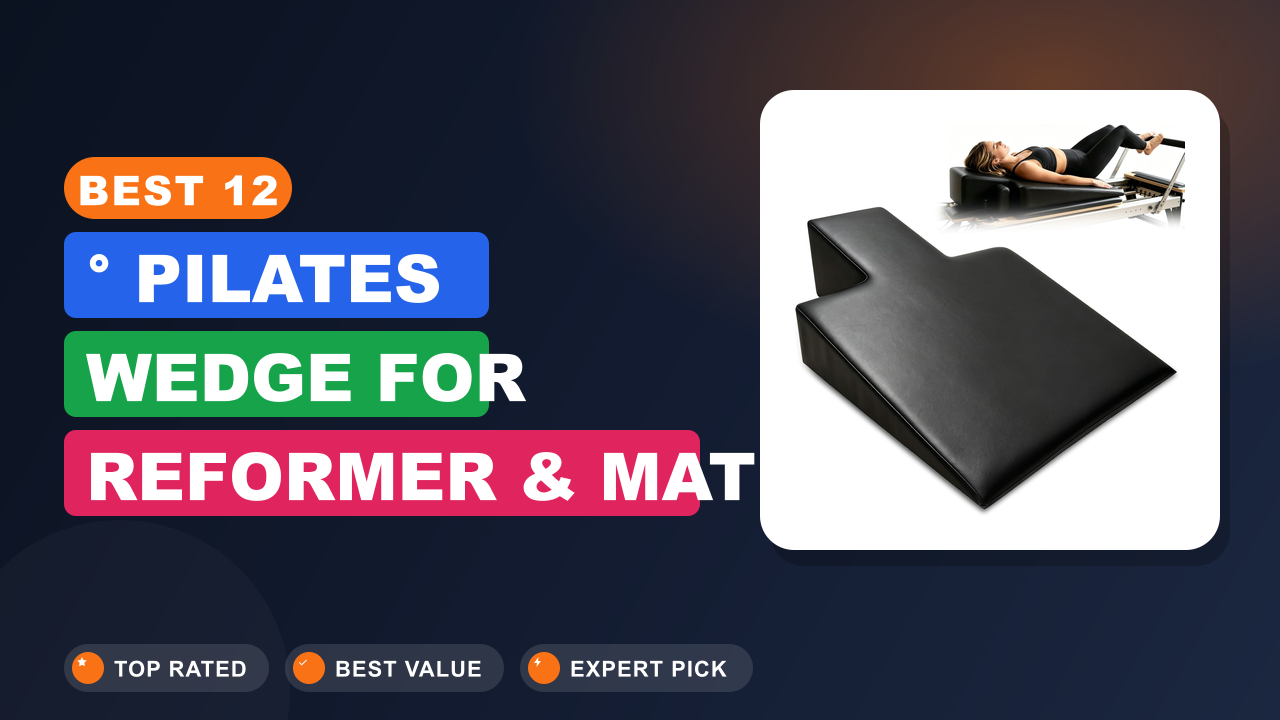
Elevating your upper body during carriage work can completely transform your comfort if you struggle with neck tension, reflux, or supine dizziness. The 12° Pilates Wedge is engineered to provide a gentle incline on standard carriage beds, making traditional horizontal exercises accessible for prenatal routines and rehabilitation.
Editorial research reveals that this wedge offers an affordable, lightweight entry point for home practitioners seeking mild incline support. However, aggregate user reviews show mixed sentiment regarding foam firmness and grip stability under dynamic movement. Below is our complete breakdown of specs, user feedback, and practical performance to help you decide if it fits your workout routine.

What it is
A Pilates incline wedge is an angled positioning cushion that raises the head, neck, and chest above the pelvis during supine reformer and mat routines. Clinical exercise guidelines from the American College of Obstetricians and Gynecologists emphasize avoiding prolonged flat-back positioning after the first trimester to prevent supine hypotensive syndrome. By angling the upper body at approximately 12 degrees, this pad reduces inferior vena cava compression while keeping the spine aligned.
This specific model positions itself as an accessible alternative to premium studio accessories from brands like Balanced Body, Merrithew, and Elina Pilates. Rather than using rigid wooden frames or dense composite foam, it utilizes a lightweight foam block encased in a textured non-slip sleeve. It sits directly on top of the reformer vinyl carriage between the shoulder rests.
1. 12° Pilates Wedge Non-Slip Reformer Mat
In our market analysis, this wedge targets home users seeking functional torso elevation without paying commercial apparatus prices. Verified buyer feedback shows that while the 12-degree slope provides noticeable relief for prenatal routines, expectations around foam rigidity need careful management.
Setup & first impressions
Editorial analysis of buyer unboxing reports shows that this wedge arrives in compact, compressed packaging. Users report that the foam core expands to its full 12-degree profile within a few hours of opening. The exterior cover features a lightweight synthetic fabric with dotted silicone friction beads on the base to resist movement on carriage upholstery.
The immediate tactile feel is significantly softer and lighter than commercial studio barrels or reformer wedges. Verified buyer feedback notes that the entire unit weighs under two pounds, making it simple to lift with one hand. At the same time, reviewers frequently point out that the cover material feels thin compared to heavy-duty studio vinyl.
The initial setup requires simply laying the wedge flush against your reformer headrest or shoulder blocks.
| Incline Angle | 12 Degrees |
| Core Material | Polyurethane / EVA Foam Core |
| Cover Type | Textured Fabric with Dotted Non-Slip Base |
| Product Weight | Approximately 1.8 lbs (0.8 kg) |
| Primary Use Case | Prenatal Reformer, Acid Reflux, Neck Offloading |
| Apparatus Compatibility | Universal (Fits standard 22-inch to 24-inch carriage beds) |
| Maintenance | Spot clean with mild detergent and damp cloth |
Daily-use experience
Prenatal and restorative ergonomics
In practical use, a 12-degree incline creates an immediate difference for users who cannot tolerate lying flat on a hard carriage. Aggregate user reviews from pregnant practitioners highlight that footwork, bridging, and strap exercises become significantly more comfortable. The incline prevents dizziness by elevating the heart and chest slightly above the abdominal cavity.
Users managing cervical spine stiffness also report reduced strain during long series like the Hundred. Because your head rests on a natural taper, there is less need to aggressively tuck the chin or stack multiple flat headrest pillows. For restorative, slow-paced movement sequences, the geometric shape succeeds in offloading sensitive joint areas.
Stability and carriage grip
Grip performance on the carriage is where user reports show notable variance. The bottom surface relies on friction dots to hold the wedge in place against smooth reformer vinyl. During static exercises like footwork against light spring tension, the cushion remains reasonably stable.
However, during dynamic movements involving rapid carriage recoil or heavy footbar presses, verified buyer feedback notes that the wedge can shift. Placing the wide end firmly against the shoulder rests helps anchor the unit. If your reformer lacks standard shoulder blocks or features an extra-slick upholstery finish, you may need a separate rubberized grip mat underneath.
Foam density and compression under load
The structural firmness of the foam core represents the single biggest point of discussion across customer evaluations. Commercial studio wedges typically employ ultra-dense bonded foam that maintains its angle even under 200 pounds of distributed bodyweight. This model uses a lower-density cushioning foam that yields noticeably when you lie down.
Lighter practitioners find the give comfortable and cushioning against bony spinal prominences. In contrast, heavier users report that the 12-degree slope compresses down to roughly 6 to 8 degrees under full upper body weight. This compression diminishes the intended elevation angle during high-load exercises.
Cleaning and studio maintenance
Keeping the wedge clean is straightforward for home use, but requires caution in shared environments. The fabric cover resists basic moisture, allowing you to wipe it down using a mild disinfectant cloth between sessions. Because it is not sealed vinyl, you should avoid saturating the cover with heavy liquid sprays.
Stitching around the zipper and perimeter shows moderate durability in residential settings. However, studio owners running back-to-back classes report that repeated friction from client clothing can cause seam wear over several months. For personal home studio setups, it holds up adequately when handled with reasonable care.
✓ Pros
- 12-degree slope effectively offloads the vena cava and cervical spine during supine routines
- Ultra-lightweight 1.8-pound build makes moving it on and off the carriage effortless
- Universal dimensions fit comfortably between shoulder rests on most major carriage models
- Provides a budget-friendly home option compared to expensive commercial studio wedges
- Wipeable fabric exterior manages light perspiration during low-impact workouts
✗ Cons
- Softer foam core compresses significantly under heavier bodyweight, reducing effective elevation
- Base friction dots can slide on slick carriage vinyl during dynamic carriage movements
- Fabric cover and seams are less durable than commercial-grade marine upholstery
- Low aggregate user satisfaction score (2.5 out of 5) reflects mixed buyer expectations on firmness
Who should buy it
Buy it if you…
You should consider this wedge if you practice Pilates at home during pregnancy and need a gentle, cost-effective incline to avoid lying completely flat. It is also well suited for practitioners who experience mild vertigo, acid reflux, or neck discomfort during supine footwork and want a lightweight pad that is effortless to store.
Skip it if you…
Skip this model if you manage a commercial studio where accessories undergo dozens of intense client sessions each week. You should also bypass it if you are a heavier individual who requires rigid, high-density foam that will not compress under torso weight during advanced reformer choreography.
Better alternatives
- Balanced Body Incline Mat: A commercial standard offering heavy-duty vinyl upholstery, dense foam, and exact carriage sizing for high-traffic studios.
- Merrithew Spine Corrector / Foam Incline: A firmer composite wedge that provides rigid structural support and integrated handles for versatile studio programming.
Frequently Asked Questions (FAQ)
Why is a 12-degree angle recommended for prenatal Pilates?
A 12-degree elevation prevents the gravid uterus from compressing the inferior vena cava and aorta during supine exercise. According to obstetric exercise principles, keeping the upper torso slightly inclined maintains healthy venous blood return to the heart and fetus.
Will this wedge fit between standard reformer shoulder blocks?
Yes, the wedge is sized to rest comfortably on standard reformer carriages measuring between 22 and 24 inches wide. It can be positioned directly against the shoulder rests to provide added stability and prevent slipping during movement.
Can you use this wedge for floor mat workouts?
You can easily use this cushion for floor mat exercises, stretching routines, and restorative yoga. Its lightweight foam core makes it simple to move from your reformer carriage onto a standard floor mat for core or pelvic floor work.
How do you prevent the wedge from sliding on smooth vinyl?
Placing the wide edge firmly against your shoulder blocks helps lock it into position during footbar work. If your reformer lacks blocks or has very smooth vinyl, placing a thin non-slip silicone mat underneath will eliminate unwanted shifting.
Does the foam lose its shape over time?
Customer feedback indicates that the lower-density foam softens with regular use, especially under concentrated bodyweight loads. For occasional home prenatal use, it maintains sufficient slope, but it will compress faster than commercial bonded foam props.
Final verdict
We rate the 12° Pilates Wedge Non-Slip Reformer Mat at 2.5 out of 5 stars. It fulfills a specific need for budget-conscious home practitioners who require mild upper body elevation for prenatal modifications or cervical offloading. However, its lower foam density, modest grip traction, and mixed buyer satisfaction make it less suitable for rigorous commercial studio environments.
Affiliate disclosure: This post contains affiliate links. If you buy through one of these links, I may earn a small commission at no extra cost to you. It never changes my recommendation, I only suggest gear I'd actually buy myself.

Similar Posts