Why Reformer Ropes Slip Off Pulleys (And How to Fix It)
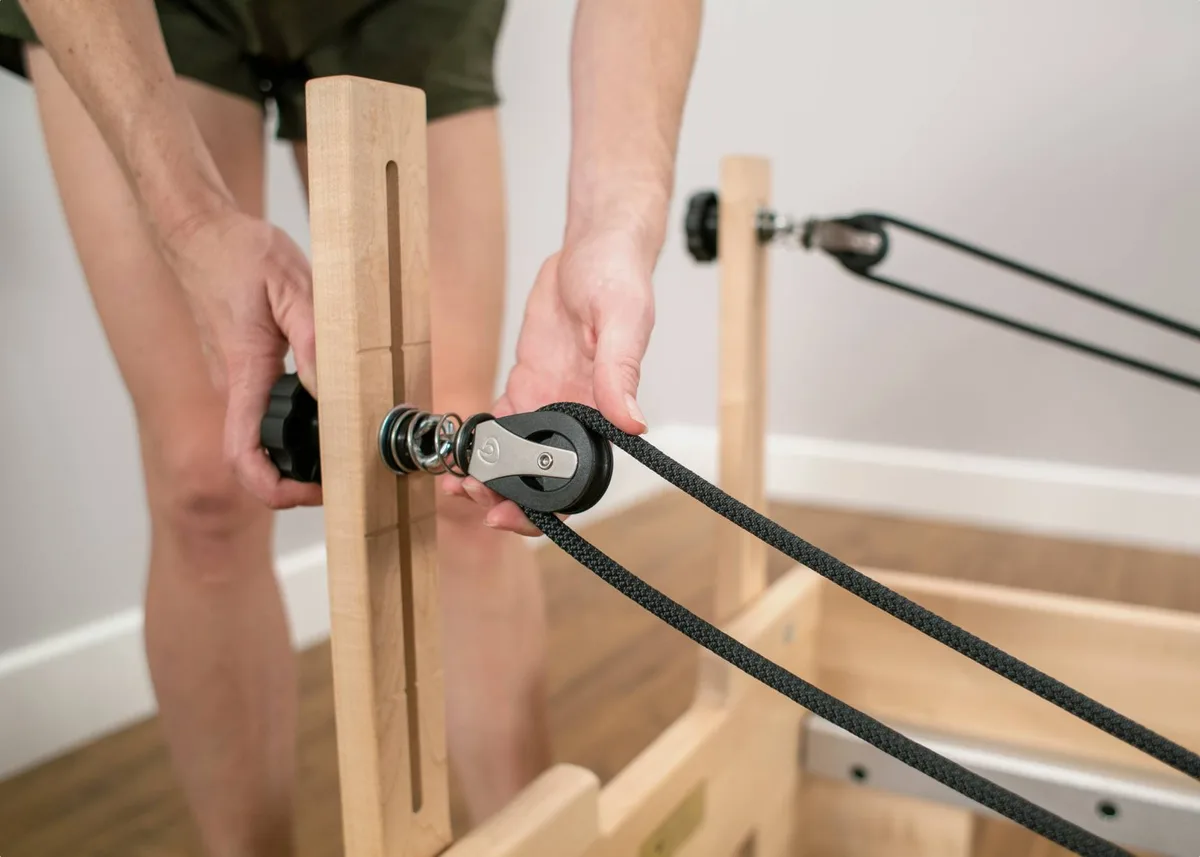
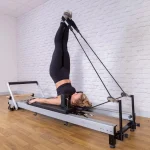
A Pilates session instantly grinds to a halt when your line slips its track. If you are wondering why does reformer rope keep coming off pulley wheels during a workout, the issue usually boils down to sudden rope slack, stuck swivel brackets, or flattened rope fibers.
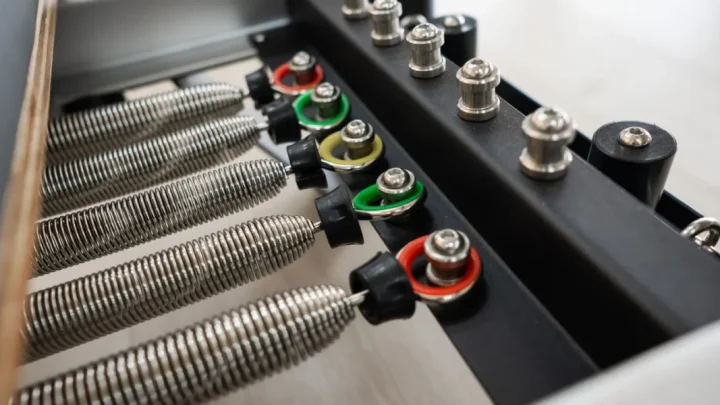
Modern studio reformers rely on marine-grade sailing blocks rated for standard 8mm to 10mm synthetic ropes. When hardware loosens by even two millimeters or carriage recoil outpaces user control, the rope slips out of the sheave groove. Let us look at what causes this track jump and how to fix it fast.
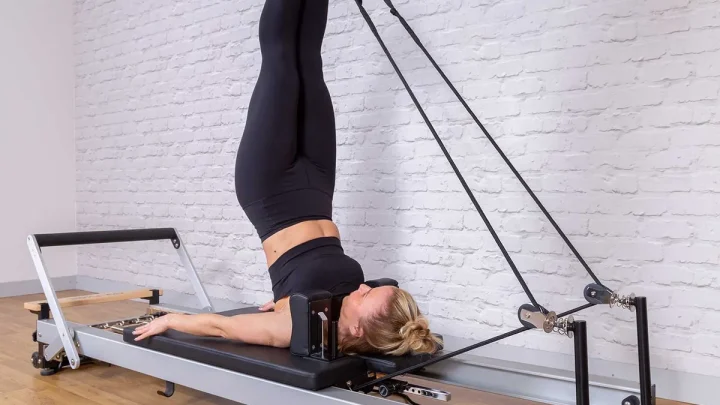
Image source: Bing (Web (fair-use with source credit))
Quick Answer
A reformer rope keeps coming off the pulley because of rapid line slack or misaligned hardware. Uncontrolled carriage returns create momentary loops that bounce off the wheel. Stiff pulley swivels fail to track wide pulling angles.
Worn, flattened ropes slip out of deep sheave grooves easily. Tightening loose risers and controlling the return stroke solves most track jumps.
Why Your Reformer Rope Keeps Jumping the Pulley Wheel
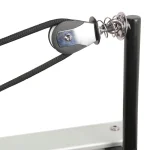
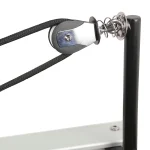
A reformer pulley relies on continuous dynamic tension to keep the rope seated inside the sheave groove. The sheave is the rotating wheel inside the pulley block. When you pull the straps, tension forces the line deep into the center channel.
As long as tension stays constant and the line enters at a clean angle, the rope cannot jump out.
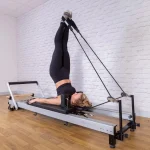
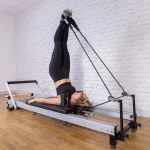
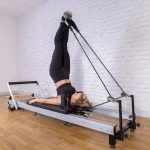
Mechanical derailing happens the moment that tension drops to zero. During dynamic exercises like jumpboard work or kneeling arm series, rapid movements can cause carriage recoil. If the carriage snaps home faster than your hands or feet follow, the rope loses all tension.
The slack line buckles, bounces against the housing, and hops over the sidewall.
Hardware wear accelerates this problem. Over years of daily classes, commercial studio hardware takes thousands of rotational cycles. If the swivel post binds or the internal bearings seize, the pulley stops turning toward your body.
Pulling a line across a frozen, sideways pulley forces the rope directly over the retaining lip.
The Diagnostic Flowchart: Pinpointing the Root Cause
To stop the slipping, you need to match your specific symptom to the underlying mechanical fault. Use this diagnostic breakdown to isolate the exact cause on your machine.
Condition 1: The Rope Drops Out During Fast Carriage Returns (Slack & Recoil)
If the rope slips off primarily during the return phase of an exercise, carriage speed is outrunning your control. The springs pull the carriage back toward the headrest with significant acceleration. If you release arm tension too quickly, the rope goes completely limp for a split second.
That brief slack allows the line to whip sideways and jump the groove.
Condition 2: The Rope Derails on Wide-Angle Pulls (Swivel Lock & Angle Deflection)
If the rope jumps during side-arm work, kneeling twist variations, or wide feet-in-straps circles, check the pulley swivel. Marine-grade blocks should rotate smoothly on their vertical axis. If dust, hair, or dried lubricant locks the swivel in place, the pulley stays facing forward.
Pulling wide forces the rope against the outer cheek of the housing, peeling it off the wheel.
Condition 3: The Rope Pops Off Continuously on One Side (Sheave Play & Bracket Cant)
If one specific side constantly fails regardless of the exercise, inspect the riser post and axle pin. Riser posts held by loose thumb screws can lean inward under spring load. A tilted post creates an angled entry point that constantly pulls the rope toward one rim.
Wobbly sheave bearings with more than one millimeter of lateral play will cause the same issue.
Condition 4: The Rope Rests Flat or Jams Between Wheel and Housing (Rope Wear)
Standard reformer ropes use a round, tightly braided kernmantle construction. Over years of friction and cleat clamping, the internal core fibers break down and flatten out. A flattened, ribbon-like rope lacks the dimensional stability to stay seated in a round U-shaped groove.
Once flat, it easily wedges into the narrow gap between the wheel and the outer bracket.
How to Fix Hardware Misalignment and Worn Components
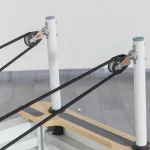
Fixing most pulley issues takes basic hand tools and ten minutes of bench time. The goal is to restore free rotation to the swivel and ensure the wheel spins without side-to-side wobble.
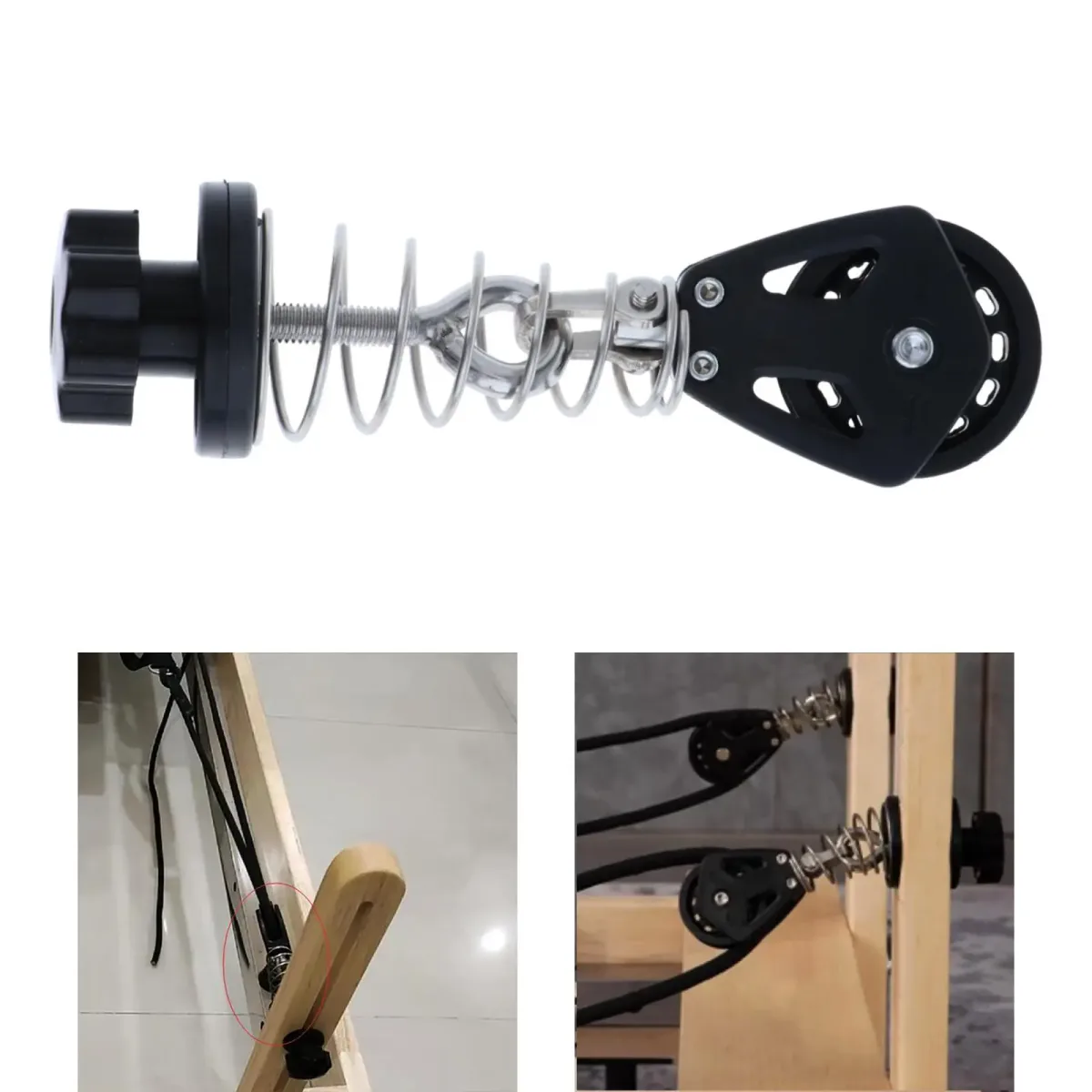
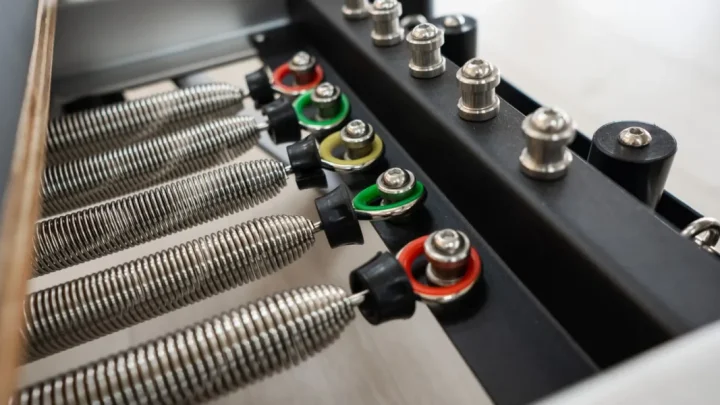
Image source: Bing (Web (fair-use with source credit))
Start by checking your riser hardware. Loosen the riser adjustment knobs, straighten the post so it sits perpendicular to the frame, and tighten the lock collars firmly. If your machine uses elevated eye-bolt posts, verify that the lock nuts beneath the wooden or aluminum frame have not backed off.
Next, inspect the pulley block itself. High-end apparatus from manufacturers like Balanced Body utilize premium sailing hardware designed for smooth tracking under load. Spin the sheave by hand.
It should spin freely without squeaking, grinding, or catching. Wiggle the wheel side to side. If you feel noticeable play on the center axle pin, the internal bearings are spent and the entire pulley block requires replacement.
| Component Issue | Diagnostic Sign | Required Action |
|---|---|---|
| Stiff Swivel Post | Pulley resists turning toward the user | Clean out debris, apply dry PTFE lube |
| Axle Bearing Play | Sheave wobbles sideways >1mm | Replace the pulley block assembly |
| Loose Riser Post | Post leans inward under spring tension | Re-align vertically, tighten lock bolts |
| Core Collapse | Rope feels flat, soft, or ribbon-like | Replace with OEM braided rope |
| Bent Rope Guide | Retainer pin rubs against the line | Straighten guard wire with pliers |
Never use wet lubricants like standard WD-40, motor oil, or thick grease on reformer pulleys. Wet oils attract studio dust, hair, and clothing lint, creating an abrasive sludge that ruins sealed bearings. Always apply a dry silicone spray or PTFE dry lubricant directly to the swivel pivot point.
Movement Tweaks: Eliminating Lateral Vector and Recoil Slack
Not every rope derailment stems from broken hardware. Movement patterns and setup choices directly influence how cleanly a rope tracks through the block.
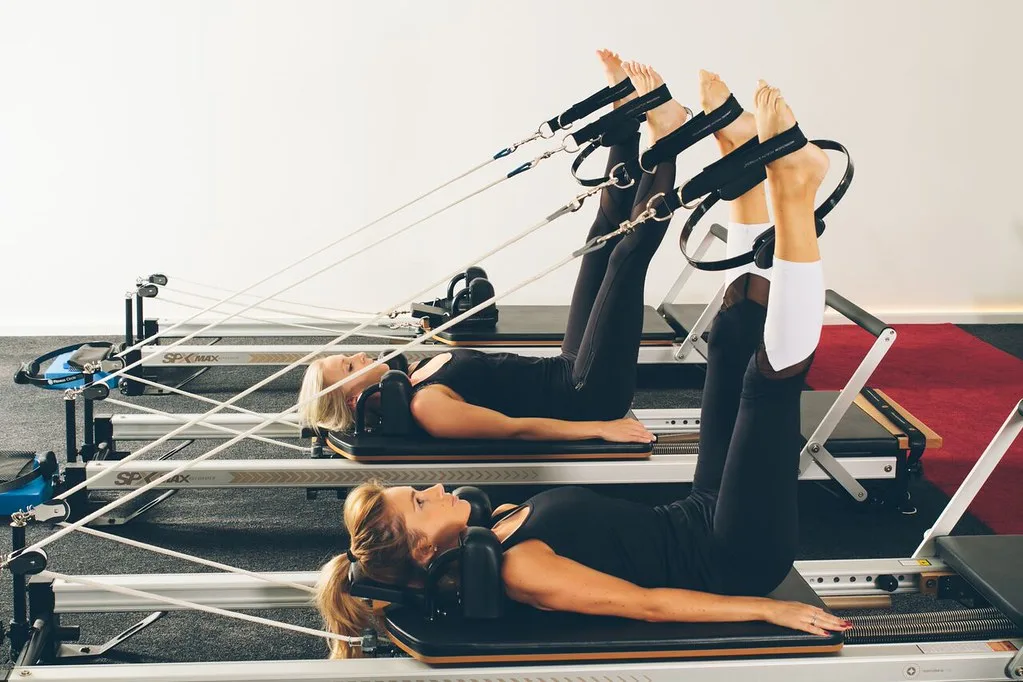
Image source: Bing (Web (fair-use with source credit))
When performing wide rowing or lateral deltoid pulls, check your eye-level vector. Pulling excessively wide past the outer edge of the frame puts high side loads on the pulley cheek. Adjust the riser height upward to create a cleaner approach angle if your reformer features adjustable pulley stems.
Higher pulley settings improve rope tracking for seated and kneeling exercises.
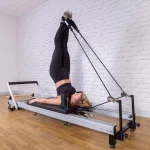
The eccentric return phase requires active resistance. As of 2026, modern instructor training emphasizes continuous eccentric control over carriage speed. Coach clients or remind yourself to resist the springs all the way back to the stopper.
Maintaining light, unbroken tension on the handles throughout the entire range of motion prevents the slack loops that cause ropes to hop their tracks.
Studio vs. Home Reformer Maintenance Checklist
Commercial studios put massive cyclical stress on tracking components compared to single-user home setups. A studio machine running thirty hours weekly requires a different service frequency than a living room setup used three times a week.
Follow this schedule to catch loose risers and worn sheaves before a rope derails during a session:
- Weekly Studio / Monthly Home: Check the eyelets and pulley brackets by hand. Spin the wheel to test for smooth rotation. Wipe the sheave channel with a microfiber cloth to remove rope dust.
- Monthly Studio / Quarterly Home: Check torque on all riser lock knobs, frame bolts, and cleat screws. Inspect the rope core where it rests on the wheel at home position. Feel for flat spots, core separation, or exterior fraying.
- Bi-Annual Studio / Annual Home: Remove the pulley blocks. Wash out pivot shafts using warm water and mild detergent. Let them dry completely, then lubricate the swivel points with dry PTFE spray.
According to safety guidelines published by the National Pilates Certification Program, daily visual inspections are recommended for commercial studios to ensure hardware integrity and user safety. Home users should inspect their lines every time they vacuum around the frame rails.
Mistakes That Ruin Reformer Pulleys and Ropes
Minor maintenance mistakes can cause repeat derailments and damage high-end sailing blocks.
The biggest error is applying silicone spray directly to the wheel groove or the rope itself. Lubricant on the sheave track causes synthetic ropes to slip laterally instead of rolling cleanly. Keep dry lube strictly on the metal pivot pin of the swivel housing.
Other common mistakes include:
- Mismatched Rope Diameters: Buying generic hardware store cord that is too thick (over 10mm) or too thin (under 8mm). Thin cords slide into the side housing gaps. Thick cords ride on the outer rim instead of the groove center.
- Over-Tightening Swivel Nuts: Cranking lock nuts down until the bracket cannot rotate freely. The bracket must swing laterally to track arm movements.
- Ignoring Missing Keeper Pins: Running pulleys after the wire rope guard has broken off. The keeper bar prevents dynamic slack loops from jumping over the cheek plates.
- Using Uneven Rope Lengths: Uneven line lengths pull the carriage crookedly, forcing one line against its pulley wall on every single repetition.
Frequently Asked Questions About Reformer Ropes and Pulleys
Why does my reformer rope make a squeaking or clicking noise?
A clicking noise usually signals a worn internal ball bearing or a flat spot on the sheave axle. Squeaking typically means dry metal-on-metal friction at the swivel pivot. Clean the swivel housing and apply a small shot of dry PTFE spray to the pivot point.
How often should I replace reformer ropes?
Commercial studios should replace reformer ropes every 12 to 24 months to prevent line flattening and sudden failure. Home users can expect three to five years of safe use. Replace lines immediately if you spot core bunches, fraying, or diameter reduction near the cleats.
Can I use any sailing pulley as a replacement?
You can use marine-grade sailing blocks (such as Ronstan or Harken) if they match your original equipment specifications. The replacement must support 8mm to 10mm line diameters, provide 360-degree axial swivel, and match the safe working load of your reformer model.
Why does the rope only jump off when using the jumpboard?
Jumpboard exercises generate high carriage velocity and sudden changes in direction. If your feet leave the board while the carriage returns quickly, line tension drops instantly. The resulting slack wave travels down the line and pops the rope out of the sheave.
Should reformer pulleys swivel completely freely?
Yes, the pulley bracket must rotate smoothly around its vertical post. This swivel action allows the sheave to align automatically with your pull vector. If the bracket sticks, wide arm pulls will force the line over the side wall.
Decision Matrix: Adjust, Repair, or Replace?
Use this decision matrix to determine whether you need a quick adjustment, a simple hardware repair, or brand-new replacement parts:
| Symptom | Primary Root Cause | Recommended Action |
|---|---|---|
| Rope hops out only during rapid jumpboard sets | Carriage recoil outpaces line control | Adjust: Focus on continuous eccentric resistance; maintain slight line tension. |
| Rope slips on wide pulls; bracket points forward | Swivel pivot is jammed with dust or lint | Repair: Clean pivot shaft; apply dry PTFE spray; check swivel bolt torque. |
| Sheave wiggles side-to-side more than 1mm | Internal ball bearings or axle pin are worn out | Replace: Install a new OEM or marine-grade pulley block assembly. |
| Riser leans inward when springs are loaded | Mounting hardware under frame is loose | Adjust: Re-square the riser post to 90 degrees; tighten base lock nuts. |
| Rope appears flat, frayed, or binds in housing | Internal kernmantle core fibers have collapsed | Replace: Install a new set of factory-spec braided reformer ropes. |
Addressing alignment, line condition, and user control keeps your reformer operating quietly, smoothly, and safely through every workout.

Similar Posts