How to Fix Gritty Carriage Movement: Step-by-Step
When an automated gantry or 3D printer toolhead resists travel, learning how to fix gritty carriage movement protects both your print quality and your mechanical drive hardware. Gritty movement causes skipped steps, layer shifting, and premature wear on drive belts and motors. Catching friction issues early prevents permanent surface scarring along your guide rails.
According to motion guide standards under ISO 12090 for linear profile systems, running contaminated or improperly preloaded bearings drastically reduces component lifespan. Most carriage friction stems from over-tightened fasteners, debris in the ball tracks, or dried factory shipping oil. Understanding the exact mechanical source lets you restore buttery-smooth axis travel in minutes.
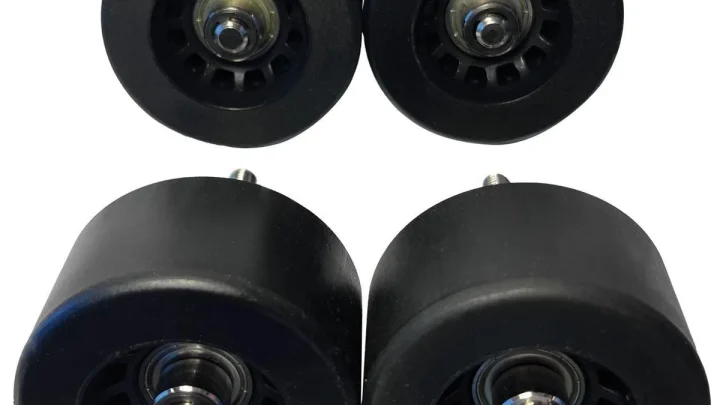
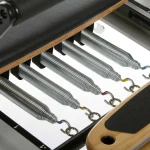
Image source: Web (Bing) / autolinearmotion.en.made-in-china.com (Web image (fair-use with source credit))
Quick Answer
To fix gritty carriage movement, disconnect the drive belt first. Slide the carriage by hand to isolate guide friction from motor drag. If using POM wheels, adjust the eccentric spacer by 10 to 15 degrees.
For linear rails, flush out debris with 99 percent isopropyl alcohol. Lubricate raceways with synthetic grease. Realign parallel rails before tensioning belts.
The Anatomy of a Gritty Carriage (And Why It Binds)
A carriage assembly translates rotational motor torque into linear motion across an axis. Smooth travel relies on rolling elements maintaining uniform contact with hardened raceways or aluminum profiles. When dirt, swarf, or misaligned tension alters this contact patch, rolling resistance spikes sharply.
Gritty feedback usually originates from one of four core mechanical issues:
- Debris contamination: Ambient dust, stray plastic strands, and metal filings enter the bearing tracks.
- Over-preload: Over-tightened eccentric spacers compress Delrin wheels against the extrusion, creating rolling resistance.
- Surface brinelling: Hard impacts or severe over-tightening create tiny indentations along the steel raceway.
- Racking and misalignment: Dual guide rails mounted out of parallel force the carriage blocks to pinch as they travel.
As of 2026, modern high-speed machines expose minor guide flaws much faster than older units. High accelerations generate heat and quickly cook unlubricated ball channels. Identifying the friction mechanism early saves you the cost of replacing damaged rails.
Step 1: Isolate the Motion System to Pinpoint the Friction
Never attempt to diagnose carriage friction while the drive belts remain attached. Stepper motors naturally produce magnetic resistance, known as detent torque or cogging. This resistance feels remarkably similar to a gritty bearing when pushed by hand.
First, power down the machine completely. Unplug the unit to eliminate the risk of sending electrical back-EMF into the mainboard. Loosen the belt tensioner and slip the GT2 timing belt off the carriage mount.
Now, push the bare carriage back and forth across the entire stroke length. If the carriage glides effortlessly with the belt removed, your guide system is perfectly fine. In that scenario, your gritty feeling comes from a bad idler pulley, a bent stepper shaft, or over-tightened belt tension.
If the crunching or resistance remains, the issue sits squarely inside your carriage mechanics.
Diagnostic Decision Tree: Identifying Your Exact Motion Hardware
Different motion systems fail in distinct ways. Before grabbing tools, run through this diagnostic logic to determine your exact repair path:
| Guide Hardware System | Physical Symptom When Moved | Most Likely Root Cause | Immediate Action Required |
|---|---|---|---|
| V-Slot POM Wheels | Rhythmic "thump" or bump every few inches | Flat spot on wheel from excessive compression | Adjust eccentric nut or replace worn wheel |
| V-Slot POM Wheels | Continuous sandpaper drag across whole rail | Aluminum groove dust build-up or worn wheel powder | Clean extrusion groove with IPA wipe |
| Linear Profile Rail (MGN) | Crunching, metallic clicking, or variable drag | Contaminated ball tracks or dried shipping preservative | Flush carriage block with solvent and repack grease |
| Linear Profile Rail (MGN) | Smooth in the center, binds near the axis ends | Non-parallel dual rails or twisted mounting extrusion | Loosen rail bolts, realign parallel spacing, re-torque |
| Smooth Rods (LM8UU) | Scraping sound, heavy drag, axial wiggle | Scored shaft or missing recirculating ball bearings | Replace damaged rod and install fresh greased bearings |
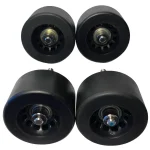
How to Fix Gritty V-Slot POM Wheel Systems
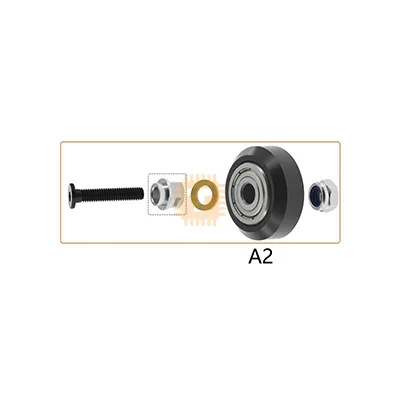
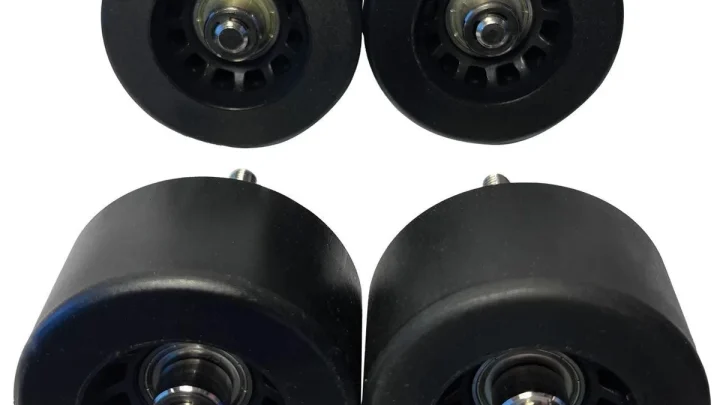
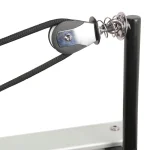
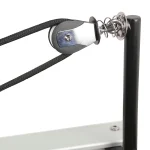
Image source: Web (Bing) / tronic.lk (Web image (fair-use with source credit))
V-slot systems rely on polyoxymethylene (POM or Delrin) wheels seated into the V-grooves of aluminum extrusions. They are cost-effective but highly sensitive to incorrect mechanical preload.
Relieving Eccentric Spacer Over-Preload
Most V-wheel carriages feature fixed top wheels and an adjustable eccentric hex spacer on the bottom wheel. Turning this spacer changes the distance between the top and bottom wheels. If tightened too much, the wheels deform and roll with heavy resistance.
Take an open-end wrench and turn the eccentric spacer by roughly 5 to 10 degrees. You want to reach the exact point where carriage wobble disappears, but the wheels still turn with light finger pressure. If you can spin the wheel with your thumb while holding the gantry still, your tension is balanced.
Fixing Flat Spots and Cleaning V-Groove Extrusions
When a machine sits idle for weeks under high wheel tension, POM wheels develop flat spots. These flat spots cause noticeable rhythmic bumping during movement. In minor cases, loosening the eccentric spacer and running the axis back and forth allows the plastic to recover its shape.
If the bumps persist, the wheel must be replaced. Always clean the extrusion grooves using a microfiber cloth dampened with 99 percent isopropyl alcohol. Never apply wet liquid oils or lithium grease to external POM wheels, as lubricants attract abrasive dust and accelerate wheel degradation.
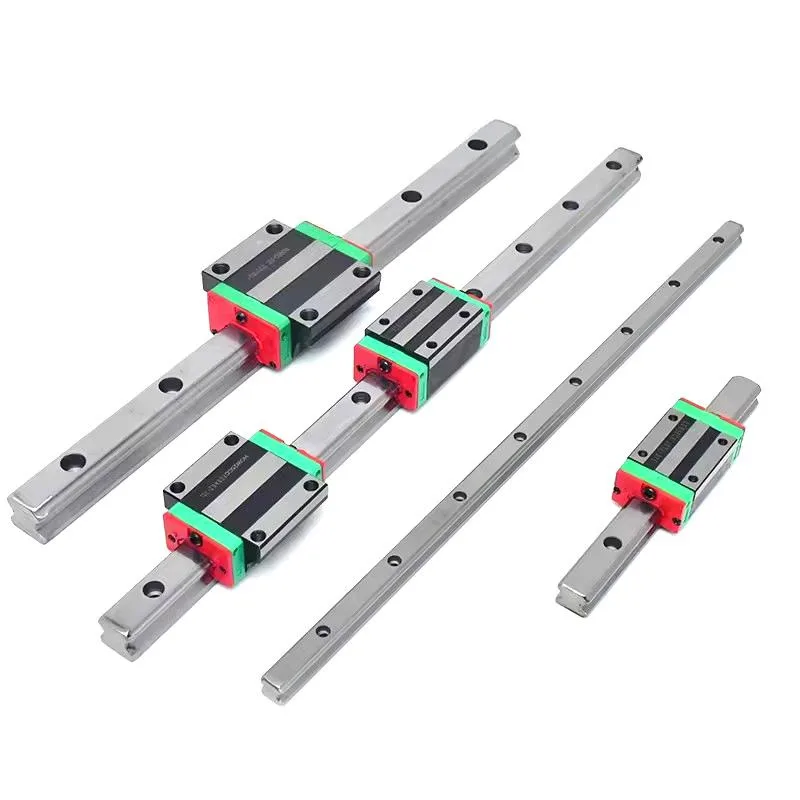
How to Fix Gritty Linear Profile Rails (MGN Series)
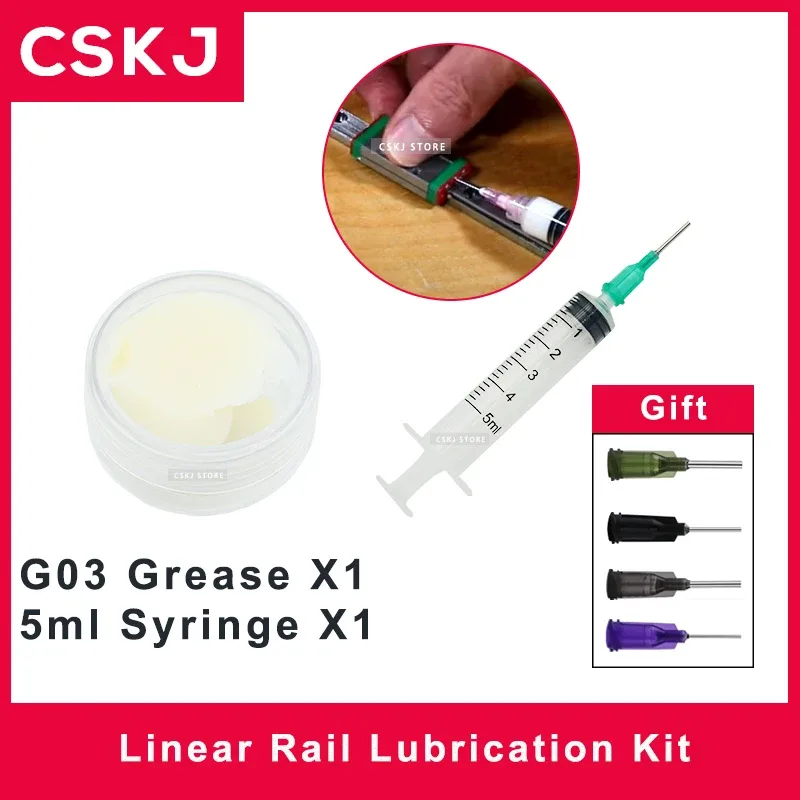
Image source: Web (Bing) / aliexpress.com (Web image (fair-use with source credit))
Linear guide systems like MGN9 or MGN12 rails provide high rigidity and precision. However, their tiny internal ball bearings easily bind when clogged with debris.
Flushing Factory Packing Oil and Debris
New linear rails arrive coated in an anti-corrosion shipping preservative. This fluid prevents rust in transit, but it is not an operating lubricant. It is sticky and traps dirt inside the recirculating ball channels.
Slide the carriage off the rail onto a plastic guide block to keep the loose bearings contained. Submerge the carriage block in a small dish of 99 percent isopropyl alcohol. Swirl the block gently to flush out discolored factory oil, machining debris, and grit.
Use compressed air at low pressure to dry the component thoroughly.
Deep Cleaning and Repacking Recirculating Bearings
Once the carriage block is clean and dry, inspect the tiny steel spheres inside the recirculation grooves. If any balls appear pitted, dull, or missing, replace them with matched high-grade steel bearing balls.
Inject an NLGI Grade 2 synthetic grease directly into the carriage lubrication port using a syringe or needle-tip grease gun. Slide the block gently onto the rail. Run the carriage back and forth ten times to evenly spread lubricant across the raceways.
Wipe away any excess grease that pushes out past the rubber end-seals.
Correcting Rail Parallelism and Fastener Racking
When running dual linear rails, binding often happens even if both individual carriages are spotless. If the two rails deviate by more than 0.05 mm across their length, the carriage blocks fight each other and bind.
To fix this, loosen the mounting screws on one of the rails so it floats slightly. Move the connected carriage from one end of the stroke to the other. Tighten the rail screws progressively down the line while the carriage passes over them.
This allows the moving carriage to align the floating rail into perfect parallel orientation.
How to Fix Gritty Smooth Rods and Linear Bushings (LM8UU / Igus)
Smooth ground steel rods paired with recirculating ball bushings or solid polymer sleeves require a different maintenance approach. Because steel rods lack deep raceways, they are especially vulnerable to surface scoring and axial misalignment.
Checking for Rod Brinelling and Bearing Pinch
Linear ball bushings like LM8UU units route tiny ball bearings directly against the chrome plating of the smooth rod. If a printed carriage mount clamps down too tightly, it distorts the thin metal casing of the bushing. This bearing pinch locks the balls in place and scratches the shaft.
Slide the carriage off and inspect the steel rod under bright light. If you see straight parallel score lines etched into the chrome, the rod is brinelled. Rotate the rod by 45 degrees to present a fresh, unscarred surface to the ball tracks, or replace the rod entirely if gouges are deep.
Re-greasing LM8UU vs. Servicing DryLin Solid Polymer Bushings
Traditional metal LM8UU bearings require proper grease packed inside their internal plastic ball cages. Flushing them with solvent and injecting synthetic grease with Syncolon or PTFE restores smooth rolling. Simply wiping oil on the outside of the rod is not enough, because the internal wiper seals push external oil away.
If your machine uses solid polymer bushings like Igus DryLin sleeves, do not apply wet lubricants. Polymer bushings are engineered to run completely dry. Applying grease or wet oils to polymer bushings creates heavy hydraulic suction, turning the carriage sluggish and gritty.
For solid polymer setups, clean the rod with a dry microfiber wipe and leave it unlubricated.
Crucial Lubrication Rules and Mistakes That Ruin Motion Systems
Using the wrong lubricant is one of the quickest ways to ruin precision motion hardware. Standard household penetrating sprays like standard WD-40 act as degreasers rather than lubricants. They strip out existing grease, flash off quickly, and leave the bare metal exposed to moisture and rapid abrasive wear.
Stick to these established lubrication practices across your motion hardware:
- Linear rails and ball bushings: Use high-quality NLGI Grade 1 or Grade 2 synthetic grease with PTFE additives.
- POM wheels and aluminum extrusions: Keep them clean and completely dry.
- Solid polymer bushings: Run dry, cleaning the steel shafts with 99 percent isopropyl alcohol.
- Light machine oils: Use ISO VG 32 or 46 oil only on high-speed rail applications that specify liquid oil lubrication ports.
Avoid mixing different grease bases, such as clay-based and lithium-soap greases. Incompatible chemical thickeners react and break down into a sticky, gummy residue. When switching lubricant types, completely flush the old grease out with solvent before repacking the carriage block.
Frequently Asked Questions About Carriage Movement and Binding
Can I use standard WD-40 to fix a sticky carriage?
No, standard multi-use WD-40 is a solvent and water displacer, not a long-term lubricant. It washes away essential factory grease and evaporates rapidly. This leaves the internal ball bearings unprotected against friction, corrosion, and metal wear.
Use dedicated synthetic grease instead.
How tight should linear rail carriage screws be?
Mounting screws for linear rails should be torqued lightly and evenly, typically between 0.6 and 1.2 Nm depending on thread size. Over-tightening mounting screws can distort the steel rail raceway. This distortion introduces localized binding spots directly above each screw hole.
Why does my carriage bind only at the ends of travel?
End-of-travel binding usually indicates rail or extrusion misalignment rather than dirty bearings. When dual rails or smooth rods are not parallel, the distance between them changes along the stroke. The carriage moves freely where spacing is correct, then wedges tightly where the guides taper together.
How often should I clean and lubricate motion guides?
Under standard hobbyist operating conditions, clean and inspect linear rails every 200 to 300 operating hours. Production environments or dusty workshops require monthly cleaning. POM wheel tracks should be wiped down with isopropyl alcohol every few weeks to remove accumulated ambient dust.
Do solid polymer bushings like Igus DryLin need grease?
No, solid polymer bushings are self-lubricating and designed to operate completely dry. Adding grease or oil creates fluid drag and attracts abrasive dirt into the clearance gap. Wipe the guide rods clean with a dry cloth and leave them free of wet lubricants.

Similar Posts