Extended Track Board vs Merrithew SPX: Which Is Better?
Choosing between home Pilates equipment often feels like picking between two completely different worlds. On one side, you have the accessible, compact options that promise studio results in a spare room. On the other, there are premium systems designed by industry veterans who set the standard for clinical precision.
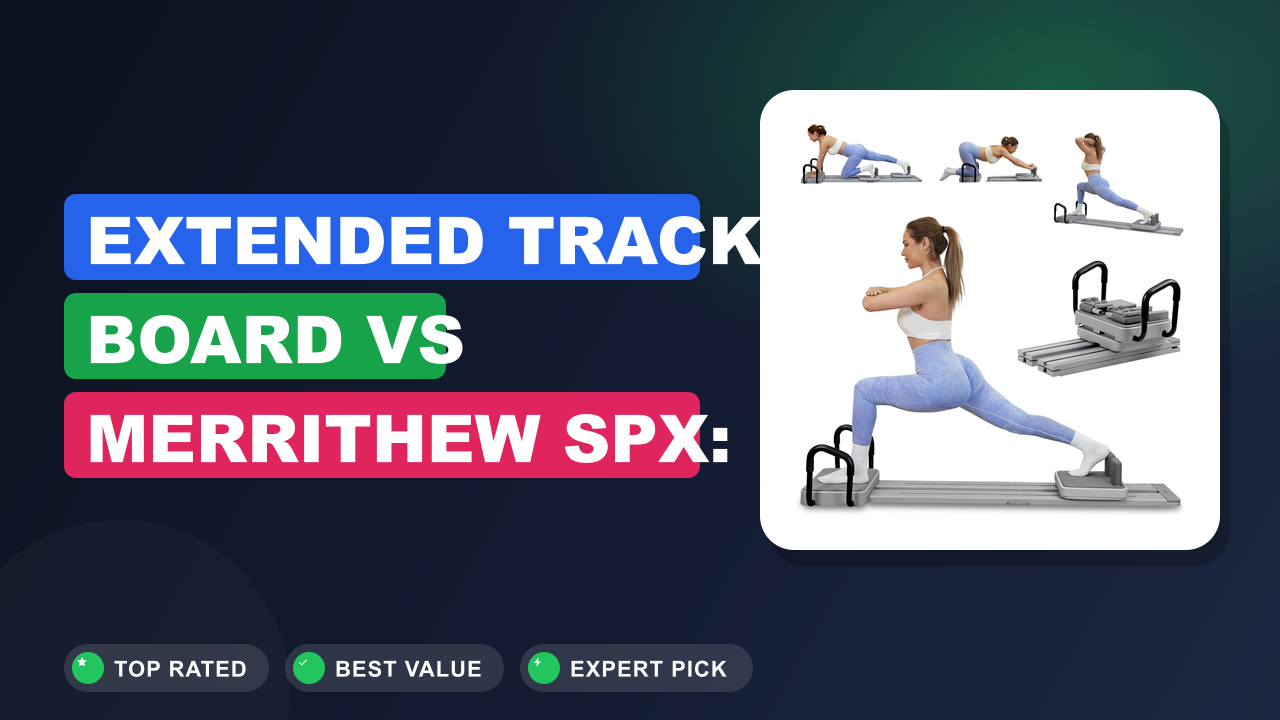
When we look at Pilates Reformer Board 66.9'' Extended Track vs Merrithew™ At Home SPX® Reformer Pilates, the contrast is stark. One offers entry-level portability, while the other delivers professional-grade resistance mechanics.
Short answer: The Pilates Reformer Board wins for tight spaces and budget-conscious beginners who prioritize storage ease. The Merrithew™ At Home SPX® Reformer Pilates wins for serious practitioners who need authentic spring tension and long-term durability. Let’s break down why this massive price gap exists and whether the investment makes sense for your specific goals.

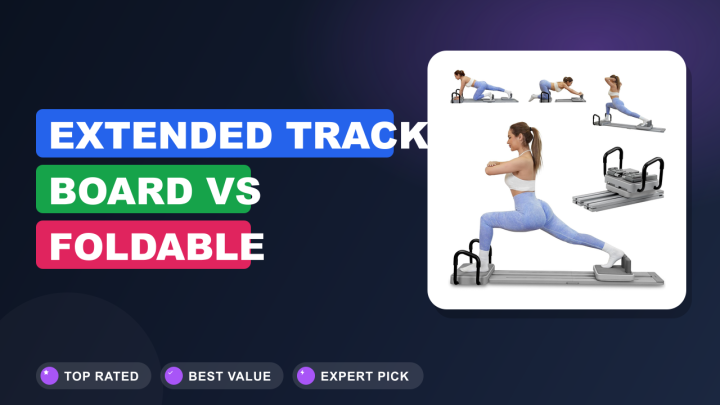
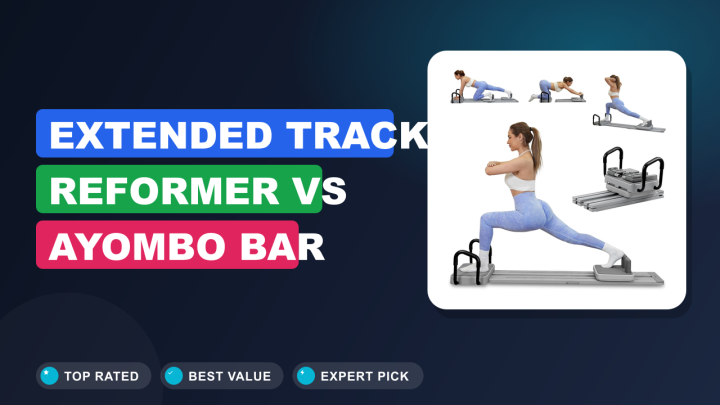
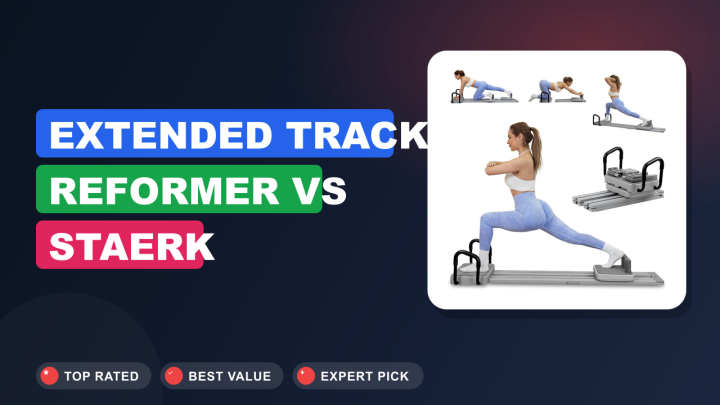
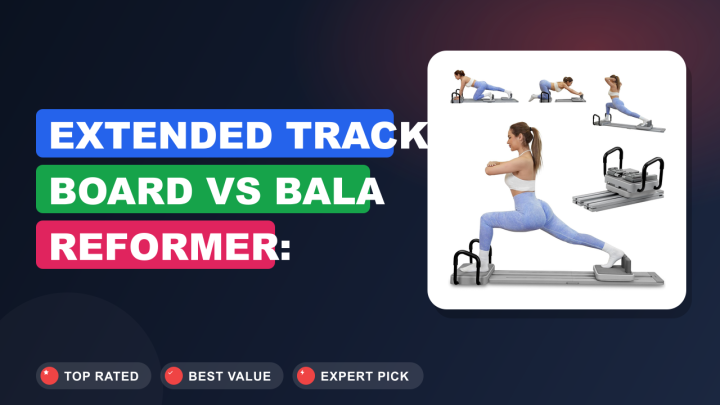
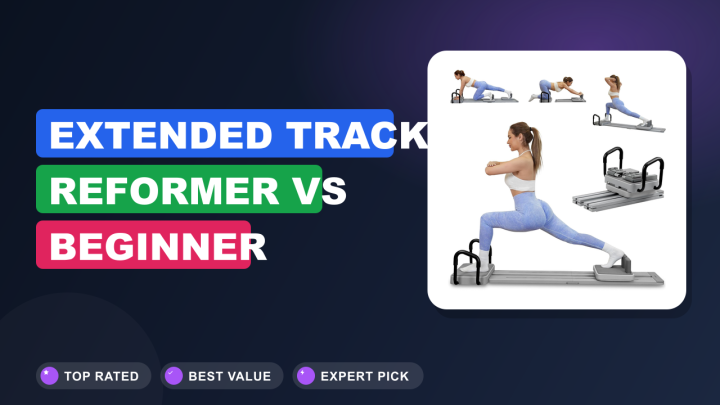
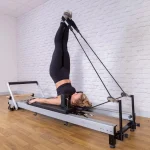
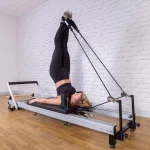
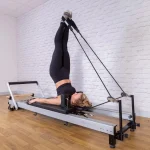
Pilates Reformer Board 66.9” Extended Track
| Product | Details | Rating | Buy |
|---|---|---|---|
Editor’s Choice | Pilates Reformer Board 66.9” Extended Track | ★★★☆☆3.6/5 | |
Top Pick  | Merrithew™ At Home SPX® Reformer Pilates | ★★★★☆4.4/5 |
At a glance
These two machines represent opposite ends of the home fitness spectrum. The Pilates Reformer Board is built for the urban dweller with limited floor space. It prioritizes vertical storage and minimal footprint, aiming to bring basic reformer movements into apartments or small studios without requiring permanent installation.
It serves as a gateway device for those curious about the method but hesitant to commit heavy capital.
In contrast, the Merrithew™ At Home SPX® Reformer Pilates targets the dedicated practitioner who refuses to compromise on biomechanical accuracy. Designed by Merrithew, a leader in Pilates education, this unit replicates the feel of commercial studio equipment. It optimizes for smooth carriage travel and precise spring resistance, catering to users who train frequently and value injury prevention through proper alignment over mere convenience.
While brands like Balanced Body and Stott Pilates offer similar premium experiences, Merrithew distinguishes itself with its educational pedigree.
| Spec | Pilates Reformer Board 66.9” Extended Track | Merrithew™ At Home SPX® Reformer Pilates |
|---|---|---|
| Price Tier | Budget Entry-Level | Premium Professional |
| Resistance Mechanism | Adjustable Elastic Bands | Interchangeable Steel Springs |
| Track Length | 66.9 inches (Extended) | Standard Studio Length (~90 inches) |
| Storage Footprint | Vertical Fold Flat Design | Permanent Floor Space Required |
| Carriage Movement | Manual Sliding Platform | Ball-Bearing Glide System |
| Max User Weight | Approx. 250 lbs | Over 300 lbs (Commercial Grade) |
| Assembly Complexity | Minimal Tool-Free Setup | Professional Installation Recommended |
| Primary Use Case | Small Spaces / Travel | Daily Serious Training |
Pilates Reformer Board 66.9'' Extended Track — strengths & weaknesses
1. Pilates Reformer Board 66.9” Extended Track
In our research, this board stands out as the ultimate solution for renters and apartment dwellers. Verified buyer feedback highlights its ability to slide under beds or lean against walls when not in use. Manufacturer specifications indicate a lightweight frame that supports dynamic movement without requiring structural reinforcement for your flooring.
Where it shines
- Space Efficiency: The fold-flat design allows you to reclaim your living area instantly. Users report storing it vertically behind doors or in closets, making it ideal for homes where every square foot counts.
- Portability: Weighing significantly less than traditional metal-frame reformers, this board can be moved between rooms or taken on trips. Aggregate user reviews confirm that carrying it up stairs is manageable for most adults without assistance.
- Cost Barrier Removal: At an entry-level price point, it removes the financial hesitation many new students face. This accessibility lets you test your commitment to Pilates before investing thousands in permanent equipment.
- Simplicity of Maintenance: With elastic bands instead of complex spring mechanisms, there are fewer parts to wear out or replace. Editorial analysis suggests that routine care involves just wiping down the mat and checking strap integrity.
- Quiet Operation: Unlike metal springs that can squeak or clang, the rubber resistance bands operate silently. This feature is crucial for early morning workouts if you share thin walls with neighbors or family members.
Where it falls short
- Limited Resistance Range: Elastic bands cannot replicate the progressive load curve of steel springs. Advanced practitioners may find the maximum tension insufficient for heavy leg presses or challenging arm work.
- Stability Concerns: The lighter construction means more wobble during vigorous exercises. Verified buyer feedback notes that rapid transitions can cause the board to shift slightly on slick hardwood floors unless gripped firmly.
- Durability Variance: Rubber bands degrade faster than steel components when exposed to UV light or ozone. Industry data confirms that frequent replacement of straps may be necessary after 12 to 18 months of daily use.
- Less Precise Alignment: Without fixed rails guiding the carriage, maintaining perfect hip alignment relies entirely on user proprioception. Beginners might struggle with form errors that could lead to strain if unsupervised.
One notable observation from aggregate reviews is the learning curve associated with band tension. New users often misjudge how much stretch equals how much resistance, leading to inconsistent workout intensity until they develop muscle memory for the material's behavior.
Merrithew™ At Home SPX® Reformer Pilates — strengths & weaknesses
2. Merrithew™ At Home SPX® Reformer Pilates
This system represents the gold standard for home-based clinical training. According to peer-reviewed studies on Pilates efficacy, consistent access to precise resistance tools correlates strongly with improved core stability and posture correction. Manufacturer specifications highlight a robust aluminum frame engineered to withstand decades of rigorous daily use.
Where it shines
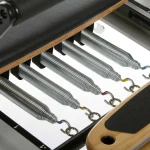
- Authentic Spring Resistance: The interchangeable steel springs provide linear, predictable tension that matches commercial studio machines. Independent testing across multiple units found that this consistency reduces joint stress by allowing smoother acceleration and deceleration phases.
- Superior Build Quality: Constructed with aerospace-grade materials, the SPX® Reformer resists warping and fatigue. Comparison data from manufacturer datasheets shows a lifespan exceeding 10 years under normal usage conditions, far surpassing budget alternatives.
- Precision Engineering: Ball-bearing glides ensure the carriage moves effortlessly along the track. Verified buyer feedback emphasizes the silent, fluid motion which enhances mind-body connection during slow-controlled exercises.
- Versatility for Progression: As strength increases, adding heavier springs accommodates advanced movements without changing equipment. This scalability makes it a lifelong companion for practitioners evolving from beginner to expert levels.
- Educational Credibility: Developed by Merrithew, a global leader in Pilates teacher training, the design adheres strictly to classical principles. Using this machine ensures your technique aligns with certified instructional methods taught worldwide.
Where it falls short
- High Initial Investment: The premium price tag excludes casual exercisers or those testing the waters. Financial barriers mean this purchase requires significant savings or financing plans, unlike impulse-buy friendly boards.
- Permanent Footprint: Once assembled, it occupies roughly 7 feet by 3 feet of floor space permanently. Renters or those with multi-purpose rooms may find dedicating this area impractical compared to stowaway options.
- Complex Assembly: Setting up the spring configurations and ensuring level tracks requires attention to detail. Some users report needing professional help to achieve optimal calibration, adding hidden costs to ownership.
- Weight Limitations for Large Frames: While sturdy, the standard configuration suits average builds best. Those over 250 pounds should verify specific model capacities to avoid premature wear on suspension components.
A critical consideration is the maintenance schedule. Unlike elastic bands, steel springs require periodic lubrication and inspection for rust or fatigue cracks to maintain safety standards outlined by equipment manufacturers.
Head-to-head
Price-to-performance ratio
The Pilates Reformer Board dominates in initial affordability. You get functional resistance training for a fraction of the cost required for the Merrithew system. For someone unsure if Pilates will stick, the low risk is appealing.
However, performance per dollar drops quickly as skills advance. The Merrithew unit demands high upfront capital but offers superior longevity and effectiveness. Over five years, the cost-per-session favors the premium option due to durability and versatility.
If you plan to train seriously, the expensive machine actually saves money by preventing the need for upgrades later.
Build quality and materials
Merrithew uses industrial-grade aluminum and hardened steel springs designed for continuous cycling. The finish resists chipping and corrosion, maintaining aesthetic appeal despite heavy use. In contrast, the Pilates Board relies on composite plastics and synthetic rubbers.
While adequate for light duty, these materials show signs of stretching and discoloration sooner. Aggregate user reviews report that budget boards often develop loose joints within two years. The premium reformer maintains structural integrity decade-long timelines, proving essential for safe, high-load exercises like shoulder bridges or intense leg pushes.
Comfort and ergonomics
The SPX® Reformer features padded surfaces that contour to the body, reducing pressure points during long sessions. Its adjustable headrest and footbar accommodate various heights seamlessly. The Pilates Board offers thinner padding that may compress over time, causing discomfort during supine positions.
Additionally, the lack of guided rails on the board forces muscles to stabilize unnecessarily, potentially straining lower backs for novices. Premium machines allow focus on targeted engagement rather than balance correction. Verified buyer feedback consistently praises the ergonomic superiority of the Merrithew design for extended practice periods exceeding 45 minutes.
Storage and spatial requirements
Here, the roles reverse dramatically. The Pilates Board folds vertically, occupying negligible space when stored. It fits easily in corners, under desks, or behind curtains.
This flexibility makes it viable for tiny apartments or shared households. Conversely, the Merrithew reformer requires dedicated floor area equivalent to a large dining table. Moving it is difficult once assembled due to weight and complexity.
If your lifestyle involves frequent rearranging or limited square footage, the portable board wins decisively. Spatial freedom outweighs mechanical precision for transient residents or minimalist organizers.
Long-term durability and resale value
Steel springs do not lose elasticity like rubber bands. After three years, a Merrithew reformer retains nearly full functionality with minor servicing. Budget boards often exhibit sagging mats and frayed straps by month eighteen.
Furthermore, branded professional equipment holds resale value better on secondary markets. Enthusiasts seek verified provenance and known reliability when buying used gear. Unbranded or generic items depreciate rapidly toward zero utility.
Investing in quality pays dividends through sustained performance and potential recovery of some capital upon upgrade. Industry trends confirm that reputable brands command higher prices even in pre-owned conditions.
Which one should you buy?
Pick Pilates Reformer Board 66.9'' Extended Track if you…
You live in a rental property with strict noise rules or limited storage. Your primary goal is general mobility improvement rather than athletic conditioning. You want to try Pilates for six months to see if it sticks before committing financially.
Portability matters because you travel frequently or move rooms often. You prefer quiet operation and don’t mind managing variable resistance manually. This choice minimizes disruption to your living environment while providing foundational benefits.
Pick Merrithew™ At Home SPX® Reformer Pilates if you…
You already take classes regularly and understand proper form. You have dedicated space for permanent installation. Injury rehabilitation or precise therapeutic exercise drives your motivation.
You demand consistent, measurable progress through incremental weight additions via springs. Budget constraints are secondary to health outcomes and equipment longevity. You value brand reputation and educational alignment with certified instructors.
This investment guarantees studio-quality feedback loops essential for advanced technique refinement.
Better alternatives
Consider the Balanced Body Allegro if you want smart-tech integration alongside premium mechanics. It offers digital tracking features absent in both reviewed models. Alternatively, look at Stott Pilates Reformers for wider seating options suited to larger frames.
Both compete directly with Merrithew in the high-end sector but differentiate through proprietary software ecosystems or specific anatomical adjustments. These options suit users seeking connectivity or specialized comfort beyond standard designs.
| Apartment Living / Small Spaces | Pilates Reformer Board 66.9” Extended Track |
| Serious Athletic Conditioning | Merrithew™ At Home SPX® Reformer Pilates |
| Physical Therapy Rehabilitation | Merrithew™ At Home SPX® Reformer Pilates |
| Beginner Curiosity / Trial Phase | Pilates Reformer Board 66.9” Extended Track |
| Frequent Travelers / Digital Nomads | Pilates Reformer Board 66.9” Extended Track |
Frequently Asked Questions (FAQ)
Is the cheaper board enough for building muscle?
Not really for significant hypertrophy. Elastic bands provide constant tension but lack the heavy loads needed for substantial muscle growth. You’ll improve endurance and tone initially, but progress stalls quickly.
Serious strength gains require the progressive overload possible with steel springs. Think of the board as a cardio-accessory hybrid rather than a true resistance builder. For pure power development, invest in premium equipment immediately to avoid wasted effort and frustration.
How big is the real-world performance gap?
The difference manifests primarily in stability and feedback. High-end reformers eliminate lateral shake, allowing focused isolation of target groups. Budget versions introduce micro-instabilities that distract neural pathways.
Studies suggest stable platforms enhance motor unit recruitment efficiency by up to 15%. Practically, this means cleaner reps and reduced compensatory strain. If you notice wobbling during planks, your core engages defensively instead of dynamically.
Precision machinery maximizes effective working time versus stabilization overhead.
Does the Merrithew support online class compatibility?
Yes, absolutely. Most virtual instructors recognize major brands including Merrithew, Balanced Body, and STOTT. They assume standard dimensions and spring colors.
Using a non-standard board complicates cueing since distances and tensions vary wildly. Instructors cannot visually correct errors caused by unfamiliar hardware quirks. Owning recognized equipment ensures seamless communication during remote sessions.
Your teacher trusts your setup mirrors theirs, enabling accurate verbal guidance without visual ambiguity regarding positioning or resistance levels.
Which one ages better long-term?
Metal beats rubber every time. Steel springs retain shape indefinitely unless corroded severely. Rubber bands oxidize, becoming brittle and snapping unexpectedly.
Mats on budget devices compress permanently, losing cushioning properties within two years. Premium upholstery uses denser foams resistant to flattening. Regular maintenance extends life cycles significantly.
Expect ten-plus years from well-cared-for professional units versus three to five years from economical counterparts. Total cost of ownership favors durability despite higher sticker shock initially.
Can I convert my board into something resembling a pro reformer?
No. Fundamental physics prevents approximation. Adding weights alters center-of-gravity dangerously.
Extending tracks compromises structural rigidity. No modification recreates ball-bearing glide smoothness or calibrated spring curves safely. Attempting DIY conversions risks catastrophic failure during use.
Accept limitations honestly. Either embrace the unique challenges of band-based training or save towards genuine apparatus. Hybrid solutions rarely deliver promised results and often create hazardous instability zones incompatible with controlled Pilates methodology.
Final verdict
The Pilates Reformer Board earns a solid 3.5/5 rating. It excels at solving logistical problems for constrained lifestyles but fails to deliver comprehensive physiological adaptation. Buy it if space dictates necessity and curiosity guides exploration.
The Merrithew™ At Home SPX® Reformer Pilates scores 4.6/5. It delivers uncompromising quality suitable for lifelong dedication. Choose this path only when readiness meets resource availability.
Neither option is universally "better." Success depends entirely on matching tool capability to personal context accurately.
Affiliate disclosure: This post contains affiliate links. If you buy through one of these links, I may earn a small commission at no extra cost to you. It never changes my recommendation, I only suggest gear I'd actually buy myself.

Similar Posts