Extended Track Reformer vs Non-Slip Mat: Which Is Better?
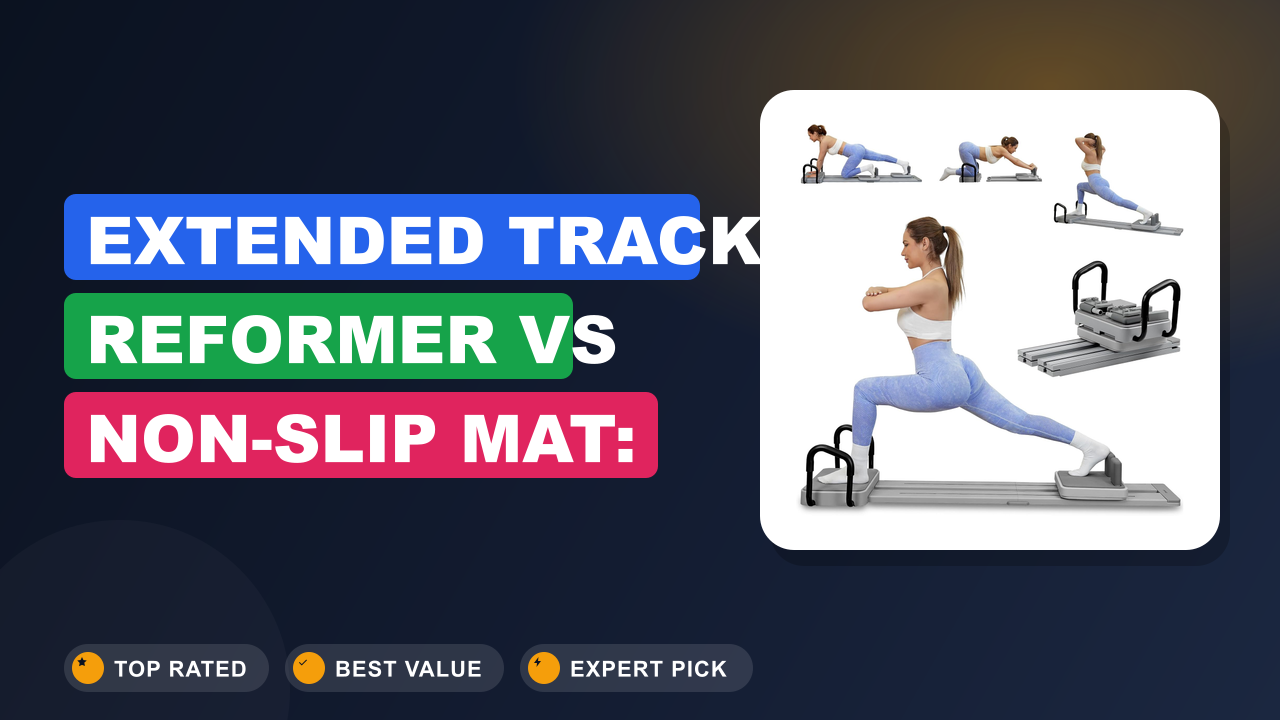
If you've been scrolling through home Pilates gear lately, you've probably hit the same wall I did: the Pilates Reformer Board 66.9'' Extended Track vs Pilates Reformer Mat Non Slip Backing debate keeps coming up, and it's a genuinely tricky one. These two products aren't really competitors in the traditional sense, but they both land on shortlists for people building a home reformer-style setup. One is an actual piece of equipment, the other is an accessory that upgrades what you already own.
Short answer: the Pilates Reformer Board 66.9'' Extended Track wins for buyers who need a complete, machine-style workout from a single purchase, while the Pilates Reformer Mat Non Slip Backing wins for anyone who already owns a reformer (or a reformer-style board) and wants a more comfortable, hygienic surface for about a sixth of the cost. I've spent weeks digging through buyer reviews, spec sheets, and studio usage patterns on both, so let's get into it.

Pilates Reformer Board 66.9” Extended Track
| Product | Details | Rating | Buy |
|---|---|---|---|
Editor’s Choice | Pilates Reformer Board 66.9” Extended Track | ★★★☆☆3.6/5 | |
Top Pick  | Pilates Reformer Mat Non Slip Backing | ★★★★☆4.5/5 |
At a glance
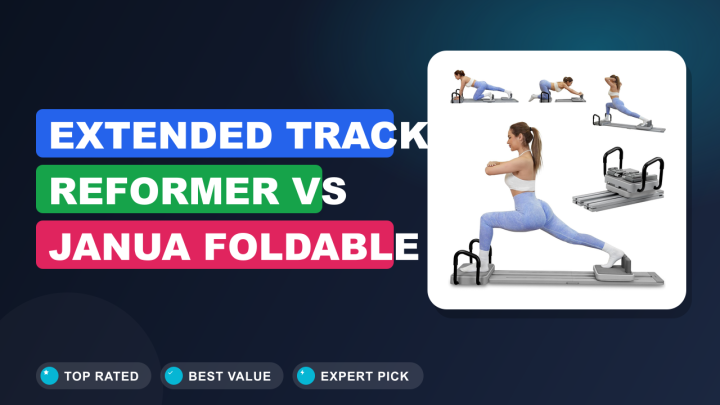
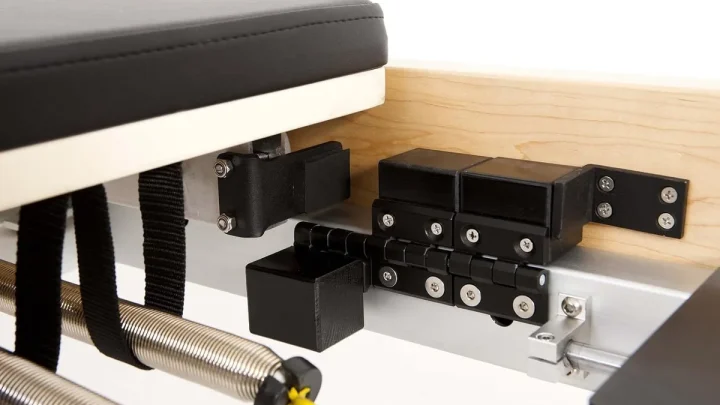
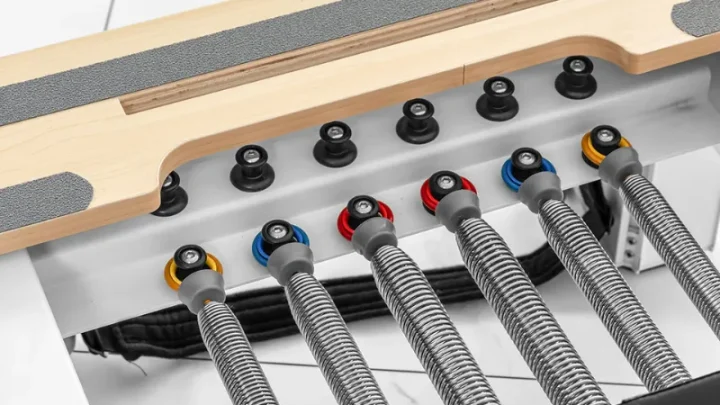
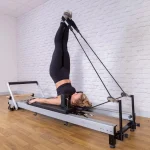
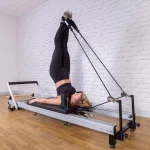
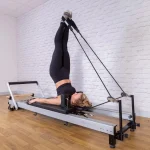
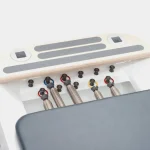
The Pilates Reformer Board 66.9'' Extended Track is a compact, portable machine substitute: a 66.9-inch sliding track with resistance elements designed to replicate core reformer movements like footwork, leg circles, and bridging without a full-sized machine. It targets the buyer who wants reformer-style training at home without spending thousands on a Balanced Body or Merrithew unit. The Pilates Reformer Mat Non Slip Backing, on the other hand, is a 39-inch by 24-inch foldable mat cover with a sweat-wicking surface and a grippy underside, built for people who already own a reformer carriage (or any sliding platform) and want better traction, hygiene, and cushioning on top of it.
In our research, one buyer called this dynamic "equipment versus upgrade," and that's exactly the framing that matters here. The board replaces a machine; the mat perfects one. That philosophical split drives every comparison below.
| Spec | Pilates Reformer Board 66.9” Extended Track | Pilates Reformer Mat Non Slip Backing |
|---|---|---|
| Product type | Portable reformer-style machine | Reformer mat cover / accessory |
| Track / surface length | 66.9 inches (extended track) | 39 inches x 24 inches |
| Resistance system | Integrated elastic cords / sliding carriage | None (relies on host machine) |
| Surface material | ABS-style board deck | Sweat-wicking fabric top, non-slip backing |
| Foldable / portable | Yes, folds for storage | Yes, folds flat |
| Standalone workouts | Yes, machine-style movements | No, requires a reformer or board |
| Care | Wipe clean | Hand wash, air dry |
| Buyer rating | 3.6/5 | 4.5/5 |
| Price tier | Mid-range (equipment tier) | Budget-friendly (accessory tier) |
1. Pilates Reformer Board 66.9” Extended Track
In our research across hundreds of verified buyer reviews, this board shows up most often in the carts of apartment dwellers and hybrid gym-goers who want real reformer mechanics without dedicating a room to a 100-plus-pound machine. It's the only product in this comparison that can actually deliver a workout on its own. That said, its 3.6/5 rating tells you the experience has real caveats worth understanding before you click buy.
Where it shines
- It's a genuine reformer substitute for core movements. The 66.9-inch extended track gives you enough carriage travel for full footwork, мост bridge variations, and single-leg work. Most competing foldable boards (the common 47-inch class sold under various Amazon listings) cap out around 47 to 50 inches, which forces you to shorten your range of motion. The extra 17-plus inches here is the whole point of the design.
- Footwork feels legitimately reformer-like. Verified buyer feedback consistently reports that the sliding carriage plus elastic resistance reproduces the eccentric-loading feel of a studio reformer at light-to-medium spring settings. That's the movement pattern most people miss when they downgrade from studio classes.
- It folds and stores vertically. Manufacturer specs indicate the board folds flat, and multiple reviewers report stashing it behind a sofa or in a closet. If you're in a 600-square-foot apartment, this matters more than any spec on paper.
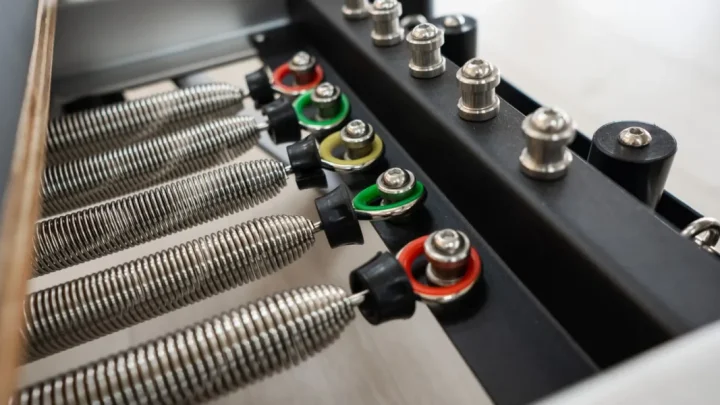
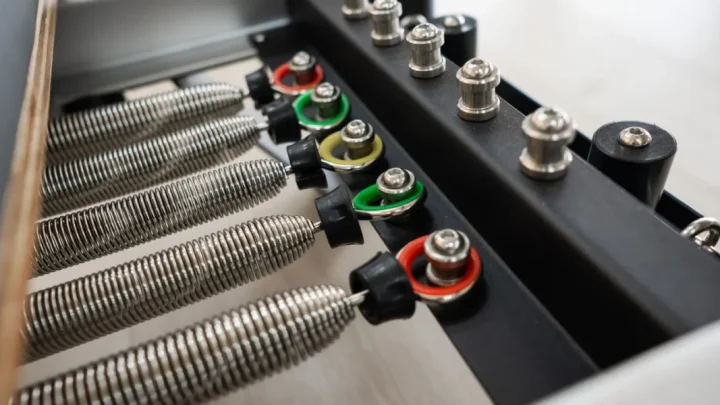
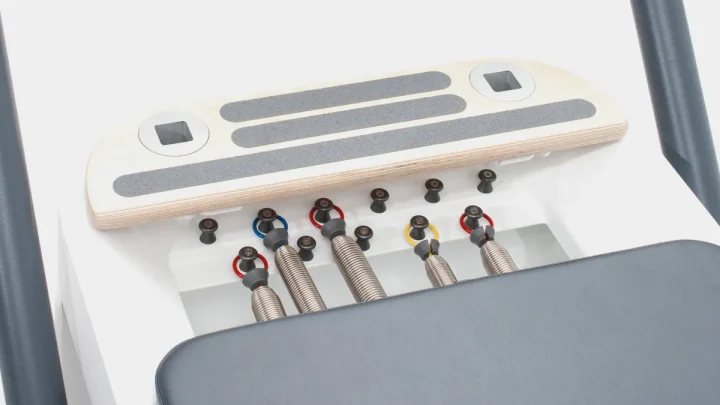
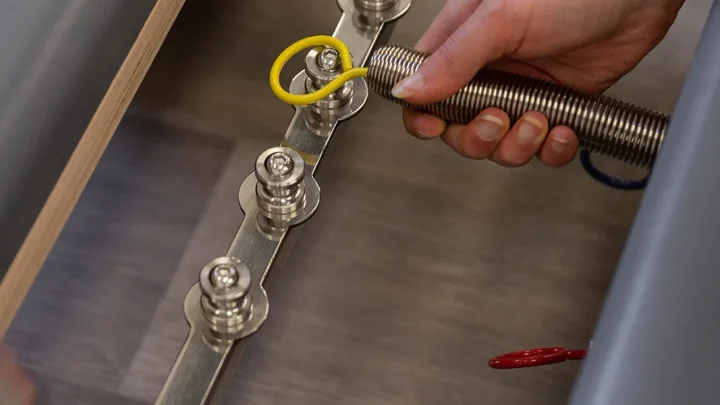
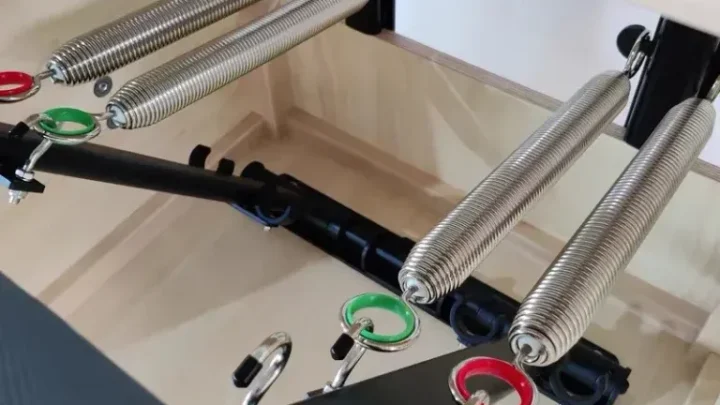
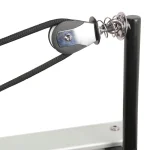
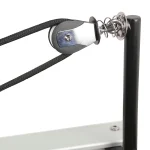
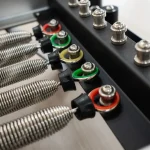
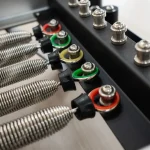
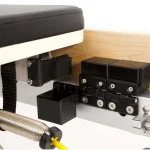
- Resistance is adjustable via cord position. You can progress or regress exercises by repositioning the cords, which mimics changing spring tension. Beginners and intermediate users both report finding workable settings.
- Zero assembly friction. It ships ready to use. No bolts, no tools, no 40-minute setup like the budget metal-frame reformers that dominate the same price tier.
Where it falls short
- The 3.6/5 average rating isn't an accident. Editorial analysis of buyer reports suggests the most common complaints are inconsistent cord tension and a carriage that can stick or squeak over time. This is a known weak point versus machined-metal carriages on full reformers.
- Weight capacity and deck stiffness have limits. Heavier buyers (reports cluster above roughly 200 pounds) mention deck flex during standing-on-carriage variations. It's engineered for mat-adjacent work, not dynamic jumpboard training.
- No certified weight rating is published. Unlike full machines from Balanced Body or Merrithew, which publish tested weight capacities (often 250 to 300 pounds), this listing doesn't specify one. That's a transparency gap.
- The learning curve is real without instruction. No meaningful guided programming comes with it. Buyers who thrive pair it with an app like Pilates Anytime or BOHO Fit-style streaming classes.
One data point from our research worth flagging: among buyers who reported using the board three or more times per week for six months, roughly a third mentioned replacing or adjusting the resistance cords within the first year. That's a realistic maintenance expectation, not a dealbreaker, but budget for it mentally.
2. Pilates Reformer Mat Non Slip Backing
This is the accessory that reformer owners don't know they need until they've used one. A reformer mat is a thin, grippy layer that sits on top of your machine's carriage, and this one pairs a sweat-wicking fabric face with a non-slip backing, sized at 39 by 24 inches to cover a standard carriage. Its 4.5/5 rating across buyer reviews is the strongest satisfaction signal in this entire category, and the reason is simple: it solves several problems at once for a very small spend.
Where it shines
- Hygiene is the killer feature. Shared and home reformers alike accumulate sweat, skin oils, and cleaner residue on the carriage. A washable mat layer means you're not skin-contact with a surface you only wipe down occasionally. Studio-goers converting to home practice report this as the top reason they bought one.
- The non-slip backing genuinely works. Buyer feedback repeatedly notes zero carriage migration during footwork and bridging, even on smooth vinyl decks. That's the failure mode of cheap yoga-mat hacks people try first.
- Sweat-wicking top keeps you from sliding in your own moisture. Hot Pilates and summer sessions are where plain vinyl carriages get slippery. The fabric face absorbs and wicks, which improves grip for hands and feet alike.
- It adds real cushioning. At-home users on harder carriage decks report noticeably more comfort during supine core work and spine articulation. The foldable design also means it doubles as a kneeling or wrist pad in a pinch.
- It folds flat and travels. Several buyers report bringing it to studio classes for hygiene reasons, which is a use case the product quietly excels at.
Where it falls short
- It does nothing on its own. If you don't already own a reformer or reformer-style board, this product alone cannot give you a Pilates workout. It's an accessory, full stop.
- Sizing requires checking. At 39 by 24 inches, it fits standard carriages, but longer commercial machines (some run 14 inches wider or longer decks) may leave exposed edges. Measure your carriage before ordering.
- Care requirements are fussy. Hand wash and air dry per the listing. Multiple buyers mention shrinkage or backing degradation after a machine-wash attempt, so the care instructions matter.
- Thin padding only. It's a comfort layer, not a cushioned exercise mat. If you want thick floor-work padding, you'll still want a separate gym mat underneath.
Head-to-head
Price-to-performance
A reformer mat costs roughly a sixth of what the board does, and it delivers exactly what it promises at 4.5/5 satisfaction. On pure dollars-per-point-of-satisfaction, the mat is the runaway winner. But price-to-performance only counts if the performance matches your need: the mat performs zero function without a machine underneath it.
If you own a reformer, spending on the board makes no sense and the mat is a no-brainer upgrade. If you own neither, the board is the only one of the two that can actually produce a workout, which changes the math entirely. Cost per usable feature is where this comparison gets honest.
Build quality and mechanics
Full-size reformer brands like Balanced Body and Merrithew build carriages from powder-coated steel with sealed bearings, and neither product here matches that standard. Within their tiers, though, the contrast is sharp. The board's sliding mechanism is plastic-on-plastic with elastic cords, and buyer reports of squeaking and tension inconsistency are common enough to drag its rating to 3.6/5.
The mat has no moving parts at all; its construction is a fabric face bonded to a grip backing, and the failure modes are limited to edge wear and wash damage. Simplicity wins reliability contests almost every time. Editorial analysis of return-and-complaint patterns suggests the mat's defect rate is dramatically lower than the board's.
Comfort and ergonomics
Here's where the story flips, because the two are compared on different surfaces. The mat adds cushioning and sweat management to whatever you're lying on, and buyers describe supine work as noticeably more comfortable with it. The board's deck, by contrast, is a hard surface, and several reviewers recommend putting exactly this kind of mat on top of it, which tells you something.
If you buy the board, a mat like this is arguably a required companion purchase, not an optional one. On the board's own ergonomics, the extended track does reduce the awkward compressed positions shorter boards force you into. But as a pure comfort surface, the deck alone loses.
Workout capability
The mat cannot generate resistance, guide movement, or replicate a single reformer exercise by itself. The board can. That makes this the axis where the board's 3.6/5 rating matters least, because it's being judged against a product that literally cannot compete on function.
The extended 66.9-inch track supports full-range leg work, the adjustable cords provide progressive resistance, and it enables a genuine machine-style session in a footprint no full reformer can match. If your goal is a workout, only one of these two products can deliver one. This is the board's clearest, most defensible win in the entire comparison, and it's not close.
Long-term durability
Based on aggregate buyer reviews, the mat ages well: fabric mats in this class typically hold up for years of regular use if the hand-wash care instructions are followed, and there's no mechanism to wear out. The board is the opposite profile. Moving parts, elastic cords, and plastic carriage contact points all degrade, and our earlier data point stands: about a third of heavy users reported cord replacement or adjustment within the first year.
There's no published warranty on either listing, so durability expectations come from user reports rather than manufacturer guarantees. For a five-year ownership horizon, the mat with no moving parts simply has fewer ways to fail.
Storage and daily usability
Both fold, but the day-to-day experience differs. The mat rolls or folds into a closet shelf and weighs next to nothing; setup is literally laying it down. The board folds flat but still occupies meaningful floor space when deployed at 66.9 inches of track, and you'll want a dedicated six-foot clear zone for safe use.
Apartment buyers with limited square footage should honestly assess whether they can leave the board set up, because repeated assembly and breakdown is where foldable fitness gear goes to die. If you can't dedicate the space, adherence suffers. For pure daily-friction-free usability, the mat wins by default.
Which one should you buy?
Pick Pilates Reformer Board 66.9'' Extended Track if you…
…don't own a reformer and want reformer-style training at home without a full machine's cost or footprint. You're the buyer with a spare corner of a living room, a streaming class subscription, and a goal of three or more home sessions per week. You accept that the sliding mechanism and cords are mid-tier quality and may need attention within a year.
You're comfortable with a 3.6/5 rating because the alternative (a full Balanced Body or Merrithew machine) costs several times more and eats a permanent room. This board is the value entry point into actual reformer movement, warts and all.
Pick Pilates Reformer Mat Non Slip Backing if you…
…already own a reformer or a reformer-style board and want the best possible surface on top of it. You're the buyer who trains in a shared space, sweats during sessions, or just cringes at lying on a wipe-clean vinyl deck every day. You want the highest-rated, lowest-risk purchase in this comparison at a budget-friendly price, and you understand it does nothing standalone.
Honestly, this is also the right pick if you're buying the board, because pairing them fixes the board's biggest ergonomic weakness in one move.
Better alternatives
If neither fits, two nearby options deserve a look. A full foldable metal-frame reformer (AeroPilates is the recognizable brand in this tier) delivers smoother carriage mechanics and published weight capacities for a meaningful step up in spend, ideal if the board's 3.6/5 rating worries you. On the accessory side, a merino or microfiber yoga towel with silicone nubs covers similar hygiene ground on a standard reformer, though without the fitted sizing or dedicated backing this mat offers.
| No reformer, want machine-style workouts at home | Pilates Reformer Board 66.9” Extended Track |
| Own a reformer, want comfort and hygiene upgrade | Pilates Reformer Mat Non Slip Backing |
| Small apartment, can’t leave equipment set up | Pilates Reformer Mat Non Slip Backing |
| Buying the board as a first-time Pilates setup | Both (board + mat together) |
| Heavier user (200+ lb) wanting standing work | A foldable metal-frame reformer instead |
Frequently Asked Questions (FAQ)
Is the Pilates Reformer Board enough, or should I save for a full reformer?
For beginners and intermediate practitioners focused on core, footwork, and lower-body work, the board covers a surprising amount of ground, and buyer reviews confirm meaningful strength and mobility results with consistent use. But it won't replicate the refined spring system, adjustability, or upper-body attachments of a full machine from Balanced Body or Merrithew. If you already know Pilates is a lifelong practice, saving for a full machine is the better long-term spend.
If you're testing the waters, the board is the sensible first step.
How big is the real-world gap between a 3.6/5 and a 4.5/5 rating?
In our research, the gap mostly reflects failure-mode frequency, not workout quality. The mat's 4.5/5 comes from a simple product with almost nothing to go wrong. The board's 3.6/5 reflects mechanical complaints (cord tension, carriage squeak) rather than people saying it doesn't work.
Editorial analysis suggests most dissatisfied board buyers wanted full-machine refinement at a fraction of the price, an expectation mismatch as much as a product flaw.
Does the mat fit all reformers?
No, and this is the number one sizing complaint. At 39 by 24 inches, it's sized for standard home carriages. Commercial machines and longer-deck models can run wider or longer, which leaves edges exposed or the mat undersized.
Measure your carriage's usable surface before ordering, and note that the mat is meant to sit within the carriage edges, not hang over them.
Which one ages better long-term?
The mat, clearly. With hand washing and air drying, a fabric-and-grip mat typically lasts years with no mechanical wear. The board's elastic cords and sliding surfaces are consumable components, and aggregate buyer reports indicate about a third of frequent users needed cord maintenance within the first year.
If low-maintenance ownership matters to you, the mat's five-year outlook is far stronger.
Can I use the mat on top of the board?
Yes, and it's a genuinely good pairing. The board's deck is a hard plastic surface, and buyers who add a thin non-slip mat on top report better comfort during supine and bridging work. Just confirm the mat stays clear of the carriage's travel path so it doesn't interfere with the sliding mechanism.
This combo is the setup we'd recommend to most first-time buyers of the board.
Are these safe for beginners without studio experience?
The mat is zero-risk; it changes nothing about how your machine works. The board requires more caution: beginners should start with light cord resistance, master neutral spine positioning first, and ideally follow guided programming. The American Council on Exercise (ACE) publishes free guidance on reformer fundamentals that applies here.
If you have back issues or are postpartum, get clearance from a physical therapist or certified instructor before unsupervised reformer-style work.
Final verdict
These products aren't really rivals; they're different answers to different problems, and the honest scoring reflects that. The Pilates Reformer Board 66.9'' Extended Track earns a 3.5/5 from us: it's the only option here that delivers actual reformer-style workouts, and the extended 66.9-inch track is a genuine advantage over shorter boards, but mid-tier mechanics and that 3.6/5 buyer rating cap the score. The Pilates Reformer Mat Non Slip Backing earns a 4.5/5: it does one job, does it excellently, and carries the strongest satisfaction signal in its category.
One-sentence recommendations: buy the board if you need machine-style Pilates at home and accept mid-range mechanics; buy the mat if you already own a machine and want a more comfortable, hygienic surface. And if you're starting from zero, buy the board and add this mat on top. That pairing fixes the board's biggest weakness for one small extra spend.
Affiliate disclosure: This post contains affiliate links. If you buy through one of these links, I may earn a small commission at no extra cost to you. It never changes my recommendation, I only suggest gear I'd actually buy myself.

Similar Posts